

 Español
Content
Why the Right Luggage Trolley Makes a Real Difference
Luggage trolleys serve a wide range of purposes beyond simply moving suitcases through an airport. Hotels, hospitals, warehouses, and event venues all rely on trolleys designed for specific load capacities, surface conditions, and frequency of use. Choosing a trolley that matches its intended environment prevents common frustrations such as wheels that jam on uneven flooring, frames that buckle under heavier loads, or handles that become uncomfortable during extended use. A trolley that seems perfectly adequate in a showroom can perform very differently once it faces daily wear in a busy airport terminal or a warehouse floor covered in debris.
Understanding the practical differences between trolley types, materials, and wheel configurations helps buyers avoid purchasing equipment that looks capable on paper but fails to hold up under real conditions. This is especially true for businesses purchasing multiple units, where a poor choice multiplied across dozens of trolleys can lead to significant repair costs and operational downtime.
Matching Trolley Type to Load and Setting
Different environments call for distinctly different trolley designs. Airport-style trolleys typically feature a flat platform with a low center of gravity, designed to carry multiple stacked suitcases while remaining maneuverable through crowded terminals. Hotel luggage trolleys often include a more vertical frame with straps or rails to secure individual bags upright, since hotel staff frequently need to transport a mix of suitcase sizes and shapes without items sliding or falling during transit.
Warehouse and industrial trolleys prioritize weight capacity and durability over compact folding design, often built with reinforced steel frames capable of handling loads well beyond what a standard airport trolley could support. Folding trolleys, popular for personal or small business use, sacrifice some load capacity and stability in exchange for portability and storage convenience, making them suitable for occasional use rather than continuous daily operation.
Trolley Types and Their Best Use Cases
| Trolley Type | Best Suited For |
| Airport Flatbed | Multiple stacked suitcases, high traffic areas |
| Hotel Vertical Rail | Mixed bag sizes, upright transport |
| Industrial/Warehouse | Heavy loads, continuous daily use |
| Folding Personal | Occasional use, compact storage |
Evaluating Frame Materials for Durability and Weight
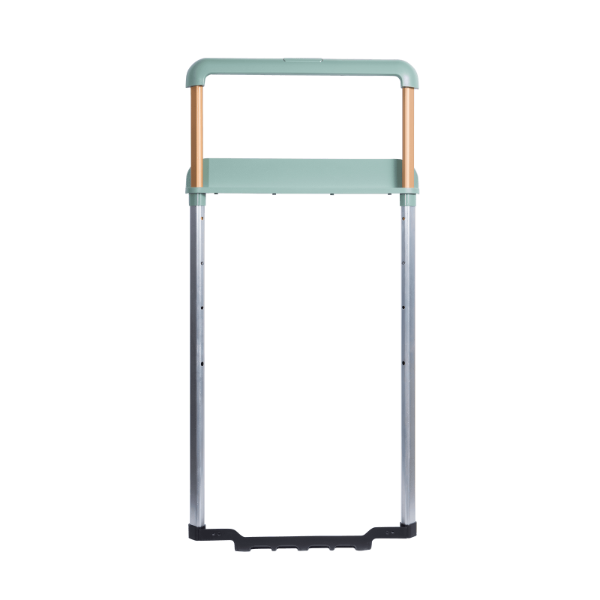
Frame material affects both how much weight a trolley can safely carry and how easy it is to maneuver over time. Aluminum frames offer a strong balance of durability and light weight, making them a common choice for airport and hotel trolleys that need to be pushed or pulled frequently throughout a shift without causing excessive fatigue for staff. Steel frames provide superior weight capacity and resistance to bending under heavy loads, making them the preferred choice for industrial and warehouse settings, though the added weight of the frame itself can make maneuvering more physically demanding.
Plastic or composite frames, while lighter and often more affordable, generally cannot match the load capacity or long-term durability of metal frames, and they tend to show visible wear such as cracking or warping sooner, particularly in outdoor or high-traffic conditions. For businesses purchasing trolleys that will see daily heavy use, investing in metal-framed options typically proves more cost-effective over time despite the higher initial price.
Frame Material Considerations
- Aluminum: lightweight, corrosion resistant, good for frequent handling
- Steel: higher load capacity, better for heavy or industrial use
- Plastic/Composite: affordable but lower durability under heavy use
Wheel Design and Its Effect on Maneuverability
Wheel type has a significant impact on how easily a trolley moves across different surfaces and how much control the operator has when navigating tight spaces. Swivel casters, which rotate a full 360 degrees, allow for tight turns and easy directional changes, making them ideal for crowded environments like airport terminals or hotel lobbies. Fixed wheels, which only roll forward and backward, offer more stability when pushing heavy loads in a straight line but sacrifice maneuverability in confined spaces.
Wheel material also matters considerably. Rubber wheels provide better shock absorption and quieter operation, which is particularly valuable in hotels or hospitals where noise levels need to be kept low. Polyurethane wheels tend to be more durable and resistant to wear from rough or outdoor surfaces, making them a common choice for warehouse trolleys that regularly cross uneven concrete or debris-covered floors. Buyers should also check wheel diameter, since larger wheels generally roll more smoothly over bumps and thresholds than smaller ones.
Maintaining Trolleys for Long-Term Reliability
Routine maintenance extends the working life of any luggage trolley considerably. Periodically checking wheel bearings for debris buildup and applying appropriate lubrication prevents wheels from sticking or squeaking during use. Inspecting frame joints and welds for early signs of stress or cracking allows for repairs before a minor issue develops into a structural failure that could pose a safety risk to staff or guests. For trolleys used outdoors or in humid environments, checking for rust on metal components and applying protective coatings where needed helps prevent corrosion from weakening the frame over time.
Establishing a simple maintenance schedule, particularly for businesses managing a fleet of trolleys, helps catch problems early and reduces the likelihood of unexpected equipment failure during busy periods. Keeping a log of which trolleys have received maintenance and when also makes it easier to identify units that may be nearing the end of their useful service life and should be considered for replacement before they become a liability.