

 Español
Content
- 1 What Makes Luggage Wheels "Universal"
- 2 Common Wheel Types Found on Modern Luggage
- 3 How to Measure Your Existing Wheels for a Proper Match
- 4 Materials Used in Replacement Wheel Construction
- 5 Step-by-Step Process for Replacing Luggage Wheels
- 6 Signs That Indicate Wheel Replacement Is Needed
- 7 Extending the Life of Your Replacement Wheels
What Makes Luggage Wheels "Universal"
Universal luggage wheels are replacement wheel components designed with standardized mounting dimensions and hardware, allowing them to fit a wide range of suitcase brands and models rather than being manufactured for one specific luggage line. Instead of requiring a proprietary part from the original luggage manufacturer, universal wheels use common axle sizes, bolt patterns, and housing shapes that match the mounting points found on the majority of hardside and softside luggage produced today.
This standardization has become increasingly valuable as travelers look for cost-effective ways to repair a favorite suitcase rather than replacing the entire bag when only the wheels have failed, which is one of the most common points of damage on checked luggage due to the repeated impact of being dropped, dragged, and loaded onto conveyor systems during air travel.
Common Wheel Types Found on Modern Luggage
Before selecting a replacement, it helps to understand the different wheel configurations used across various luggage designs, since not all universal wheels are interchangeable between wheel types.
Two-Wheel Configuration
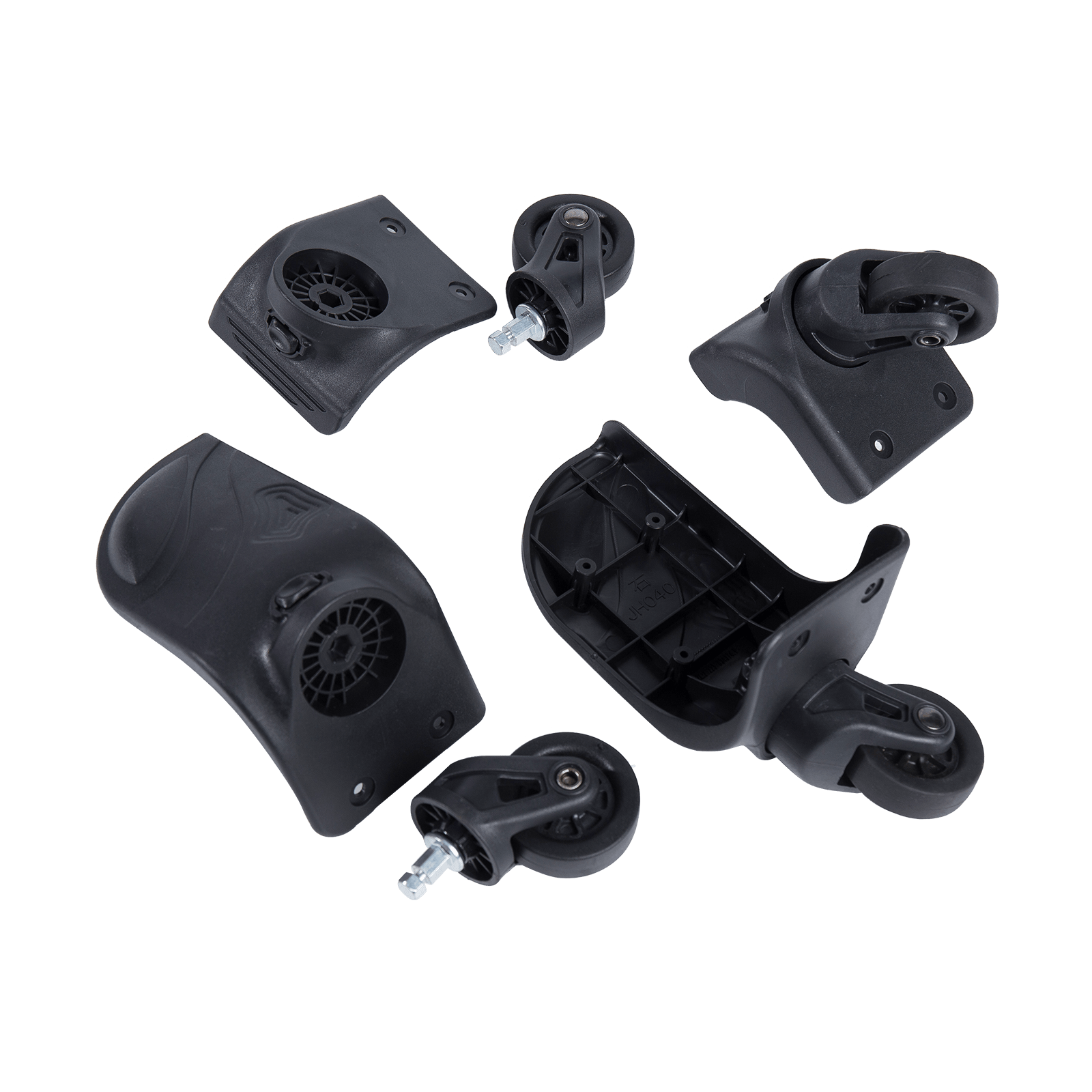
Traditional two-wheel luggage uses a pair of fixed wheels mounted at the base corners, designed to be tilted and pulled behind the traveler at an angle. These wheels typically experience more direct impact and wear since the full weight of the bag rests on just two points during use.
Four-Wheel Spinner Configuration
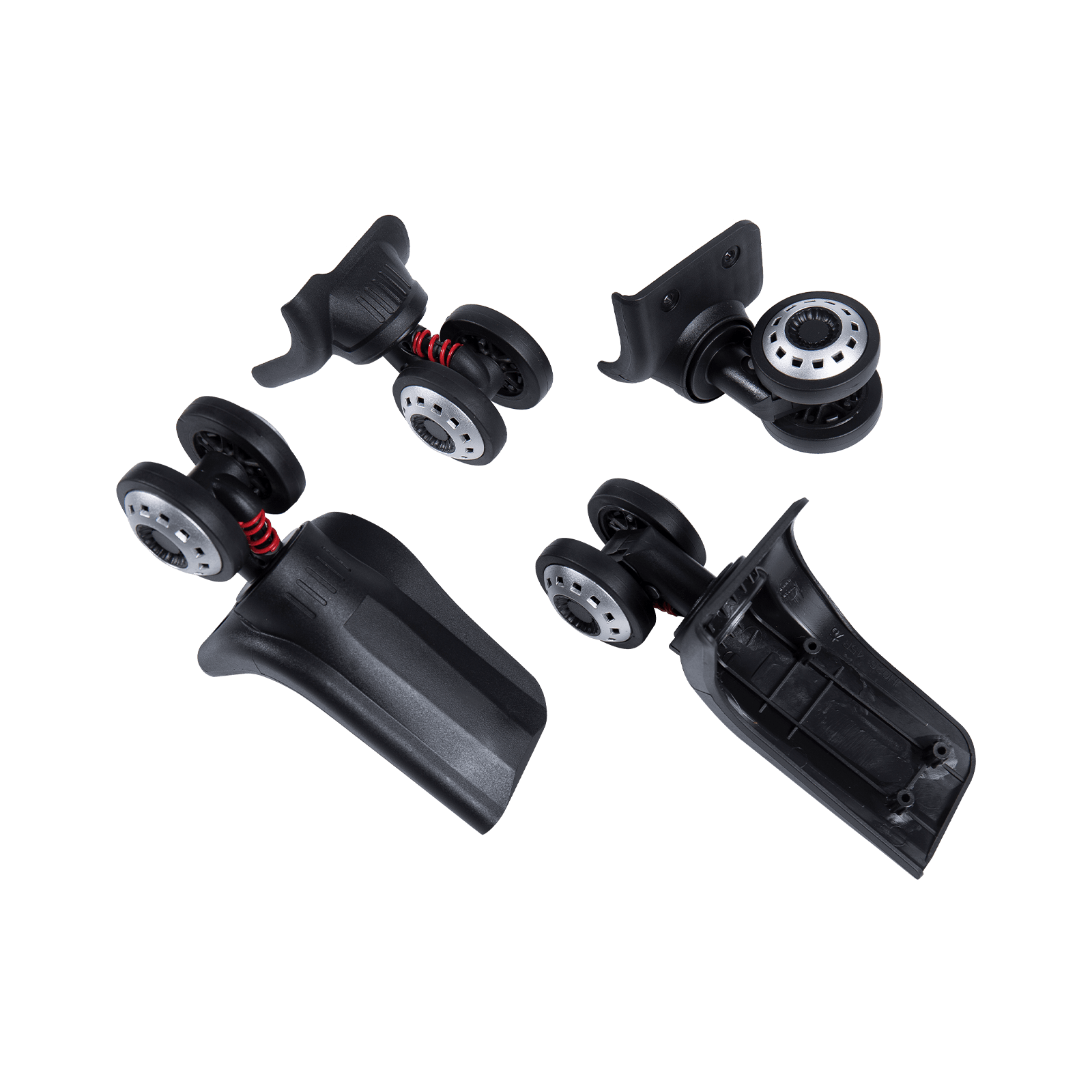
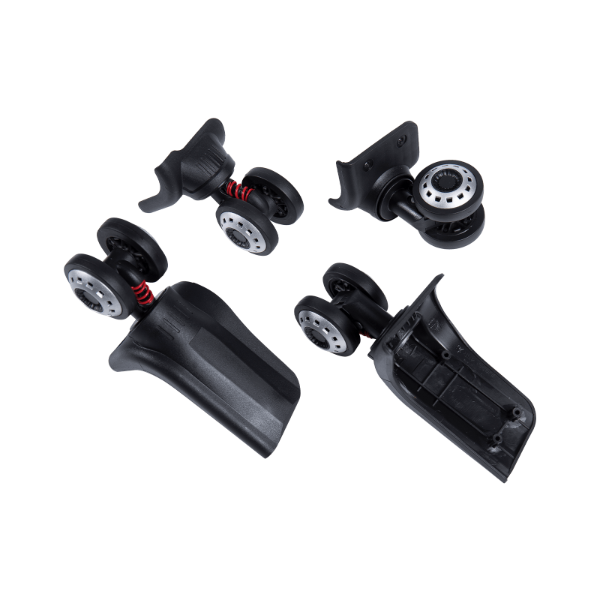
Spinner luggage uses four independently rotating wheels mounted on swivel bases, allowing the bag to be pushed upright in any direction. Because spinner wheels distribute weight across four contact points and rotate a full 360 degrees, they generally experience different wear patterns than fixed two-wheel designs, often showing wear on the swivel mechanism itself rather than just the wheel tread.
Recessed Wheel Housings
Some luggage models use recessed wheel housings that are partially built into the suitcase shell, offering better protection from impact but sometimes complicating the replacement process since access to the mounting hardware may be limited compared to externally mounted wheel assemblies.
How to Measure Your Existing Wheels for a Proper Match
Taking accurate measurements of the existing wheel assembly before ordering a replacement helps avoid the frustration of receiving a universal wheel that does not fit the mounting points on your specific luggage.
| Measurement | What to Check |
| Wheel Diameter | Measure across the full width of the wheel, typically ranging from 40mm to 60mm |
| Axle Hole Diameter | Measure the diameter of the center mounting hole on the wheel |
| Mounting Bracket Style | Identify whether the bracket is bolt-on, riveted, or clip-style |
| Swivel Base Width | For spinner wheels, measure the width of the base plate where it attaches to the luggage |
Photographing the existing wheel assembly from multiple angles before removal can also serve as a useful reference when comparing against product listings or asking a retailer for guidance on the closest matching replacement.
Materials Used in Replacement Wheel Construction
The material composition of a luggage wheel affects how it performs on different surfaces and how long it lasts under regular travel conditions.
- Polyurethane wheels offer a good balance of durability and quiet rolling performance on smooth airport floors and pavement
- Nylon wheels tend to be lighter in weight but may produce more noise and wear faster on rough surfaces
- Rubber-coated wheels provide better shock absorption and grip, particularly useful on cobblestone streets or uneven sidewalks
- Sealed bearing wheels reduce internal wear from dust and debris, extending the smooth rolling life of the wheel
Travelers who frequently navigate rougher terrain, such as gravel parking areas or historic city streets with uneven paving, often benefit from choosing rubber-coated replacement wheels over harder nylon alternatives, even if it means a slightly heavier wheel assembly overall.
Step-by-Step Process for Replacing Luggage Wheels
Replacing universal luggage wheels is typically a manageable task that most travelers can complete at home with basic tools, provided the correct replacement wheel has already been sourced.
Removing the Damaged Wheel
Most wheel assemblies are secured with either a bolt and nut combination, a screw, or a rivet. Bolted assemblies can usually be removed with a wrench or screwdriver, while riveted assemblies require drilling out the rivet before the wheel can be detached from the luggage frame.
Installing the Replacement Wheel
Once the old wheel is removed, the new universal wheel is aligned with the existing mounting holes and secured using the provided hardware, or new rivets if the original mounting method used rivets rather than bolts. It is important to tighten hardware securely without over-torquing, which can crack the plastic housing surrounding the mounting point.
Testing Before Travel
After installation, rolling the luggage across a flat surface and checking for smooth rotation, absence of wobble, and secure attachment helps confirm the replacement was successful before relying on it during an actual trip.
Signs That Indicate Wheel Replacement Is Needed
Recognizing the early signs of wheel wear can help travelers replace components before a complete failure occurs during a trip, which is far less convenient than addressing the issue at home in advance.
- Visible flat spots or uneven wear patterns on the wheel tread
- Wobbling or uneven rolling motion even on smooth, flat surfaces
- Cracking or splitting visible around the wheel housing or axle area
- Increased noise or grinding sounds while rolling the luggage
- Difficulty maintaining a straight rolling path without pulling to one side
Addressing these signs promptly not only prevents inconvenience while traveling but also reduces strain on the surrounding luggage frame, since a damaged or wobbling wheel can place uneven stress on the mounting bracket and surrounding shell material over time.
Extending the Life of Your Replacement Wheels
Once new universal wheels are installed, a few simple habits can help extend their usable life and delay the need for future replacement. Periodically wiping down wheel surfaces to remove accumulated dirt and debris helps prevent buildup that can interfere with smooth rotation, while avoiding dragging luggage across especially rough surfaces when a smoother path is available reduces unnecessary impact stress. For travelers who check their luggage frequently, choosing a slightly more durable wheel material, such as polyurethane or rubber-coated options, during replacement can provide better long-term value despite a marginally higher upfront cost compared to basic nylon wheels.