

 Español
Content
Luggage wheels rarely get much attention until they fail at the worst possible moment, whether that means a wobbly spinner in a crowded airport terminal or a cracked roller wheel that leaves a suitcase dragging across cobblestones. Wheel type, material, and construction quality directly affect how a bag handles on different surfaces, how much noise it makes, and how long it lasts before repairs are needed. This guide breaks down the differences between wheel types and offers practical advice for choosing luggage that will hold up to real-world travel.
Spinner Wheels vs Roller Wheels: The Core Difference
The most fundamental choice in luggage wheel design is between spinner wheels and traditional roller wheels, and this decision affects nearly every aspect of how a bag performs during travel.
Spinner wheels consist of four individual wheels, each mounted on a 360-degree swivel, positioned at the corners of the suitcase. This design allows the bag to be pushed upright in any direction without needing to be tilted or dragged, making it easier to maneuver through narrow aisles, weave around crowds, or navigate tight elevator spaces. Roller wheels, by contrast, are typically two fixed wheels mounted at the base of the bag, requiring the traveler to tilt the suitcase and pull it behind them at an angle.
| Feature | Spinner Wheels | Roller Wheels |
| Number of Wheels | 4 (dual or single per corner) | 2 |
| Maneuverability | 360-degree movement | Forward and backward only |
| Stability on Rough Terrain | Lower | Higher |
| Durability Under Heavy Load | Moderate | Higher |
| Best Use Case | Airports, smooth indoor floors | Uneven outdoor surfaces, heavy loads |
Travelers who primarily move through airports, hotels, and other smooth indoor environments tend to prefer spinner wheels for their ease of movement, while those who frequently navigate gravel paths, cobblestone streets, or uneven sidewalks often find roller wheels more stable and less prone to tipping.
Wheel Materials and What They Mean for Performance
The material used in a wheel's construction significantly influences how smoothly it rolls, how much noise it produces, and how well it resists wear over time.
Polyurethane Wheels
Polyurethane is widely regarded as the premium choice for luggage wheels because it offers a strong balance of durability, shock absorption, and quiet operation. These wheels tend to resist cracking and flat-spotting better than harder plastics, making them a common feature on higher-end luggage lines.
Hard Plastic Wheels
Hard plastic wheels are typically found on budget luggage. While inexpensive to produce, they tend to be louder on hard flooring and more prone to cracking when subjected to impacts, such as being dropped from a curb or bumped against stairs.
Rubber-Coated Wheels
Rubber-coated wheels provide additional cushioning and grip, which can be especially useful on uneven or slippery surfaces. The tradeoff is that rubber coatings can wear down faster than polyurethane under heavy, frequent use.
Single vs Double Wheel Spinner Systems
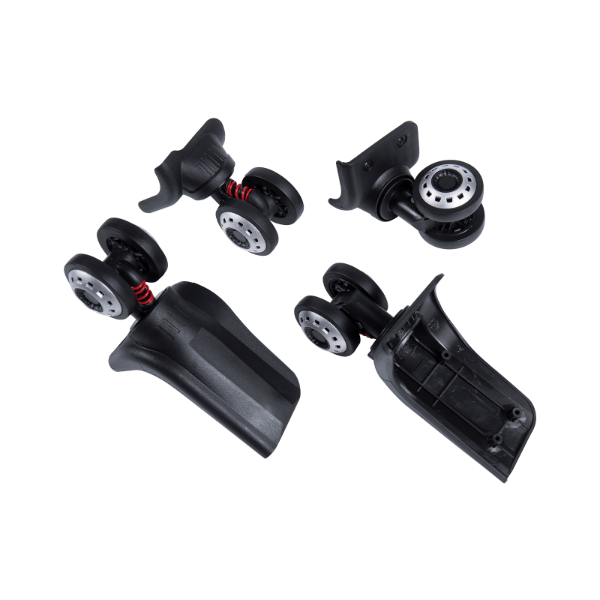
Within the spinner category, luggage manufacturers offer both single-wheel and double-wheel (sometimes called dual-wheel or hinomoto) configurations, and the difference matters more than many shoppers realize.
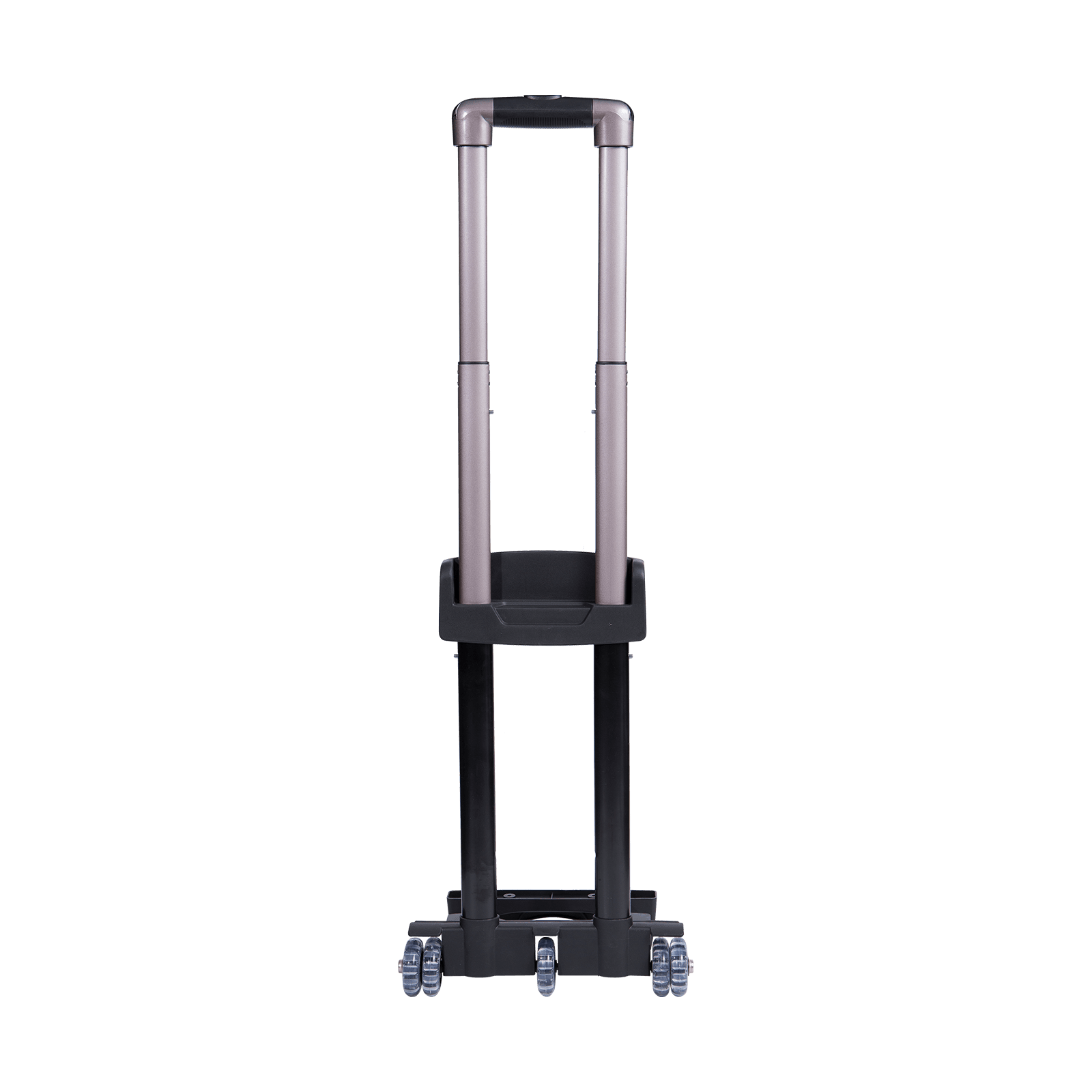
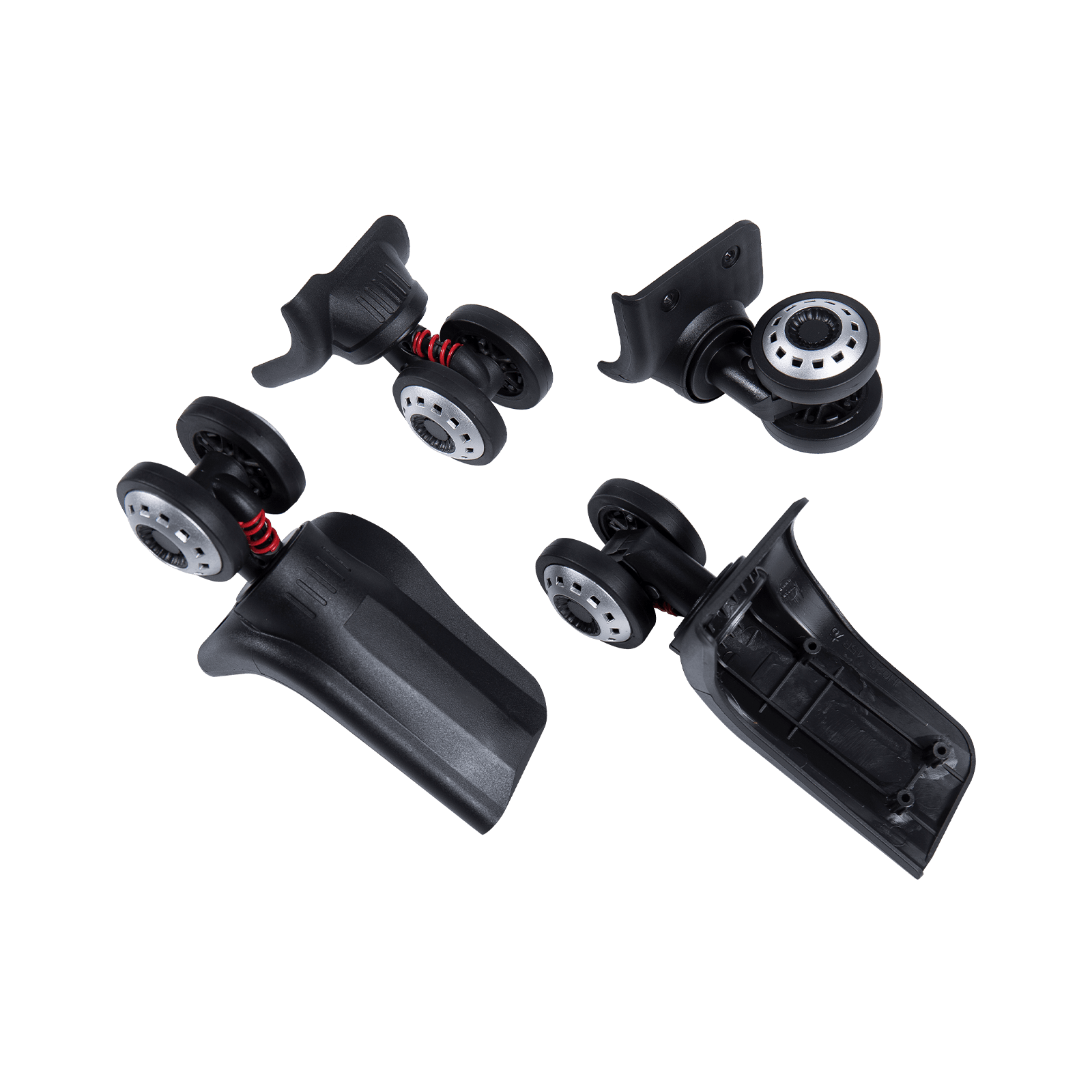
Double-wheel spinners use two smaller wheels mounted closely together at each corner, distributing weight more evenly and reducing strain on any single wheel. This design generally results in smoother rolling, quieter operation, and better resistance to wobbling over time compared to single, larger wheels. Many premium luggage brands have shifted toward double-wheel systems specifically because they hold up better to the repeated stress of frequent travel and heavier packing loads.
How Wheel Placement and Housing Design Affect Durability
Beyond the wheel material itself, the way wheels are mounted to the suitcase frame plays a major role in long-term reliability. Recessed wheel housings, where the wheel sits partially protected within the corner structure of the bag, tend to hold up better against impacts than wheels that protrude entirely outside the bag's frame, since the housing absorbs some of the shock from drops or curb impacts.
The quality of the axle and bearing assembly also matters significantly. Sealed ball-bearing axles generally roll more smoothly and resist dust and debris intrusion better than simple pin-and-socket designs, which can become gritty and stiff after repeated exposure to airport floors and outdoor terrain.
Signs of Wheel Wear and When to Replace Them
Recognizing early signs of wheel deterioration can help travelers avoid being caught with a malfunctioning bag mid-trip.
- Flat spots or visible cracks on the wheel surface
- Increased noise or grinding sounds while rolling
- Wobbling or uneven rolling, especially at higher speeds
- Difficulty spinning freely in one or more directions
- Visible gaps or looseness between the wheel and its housing
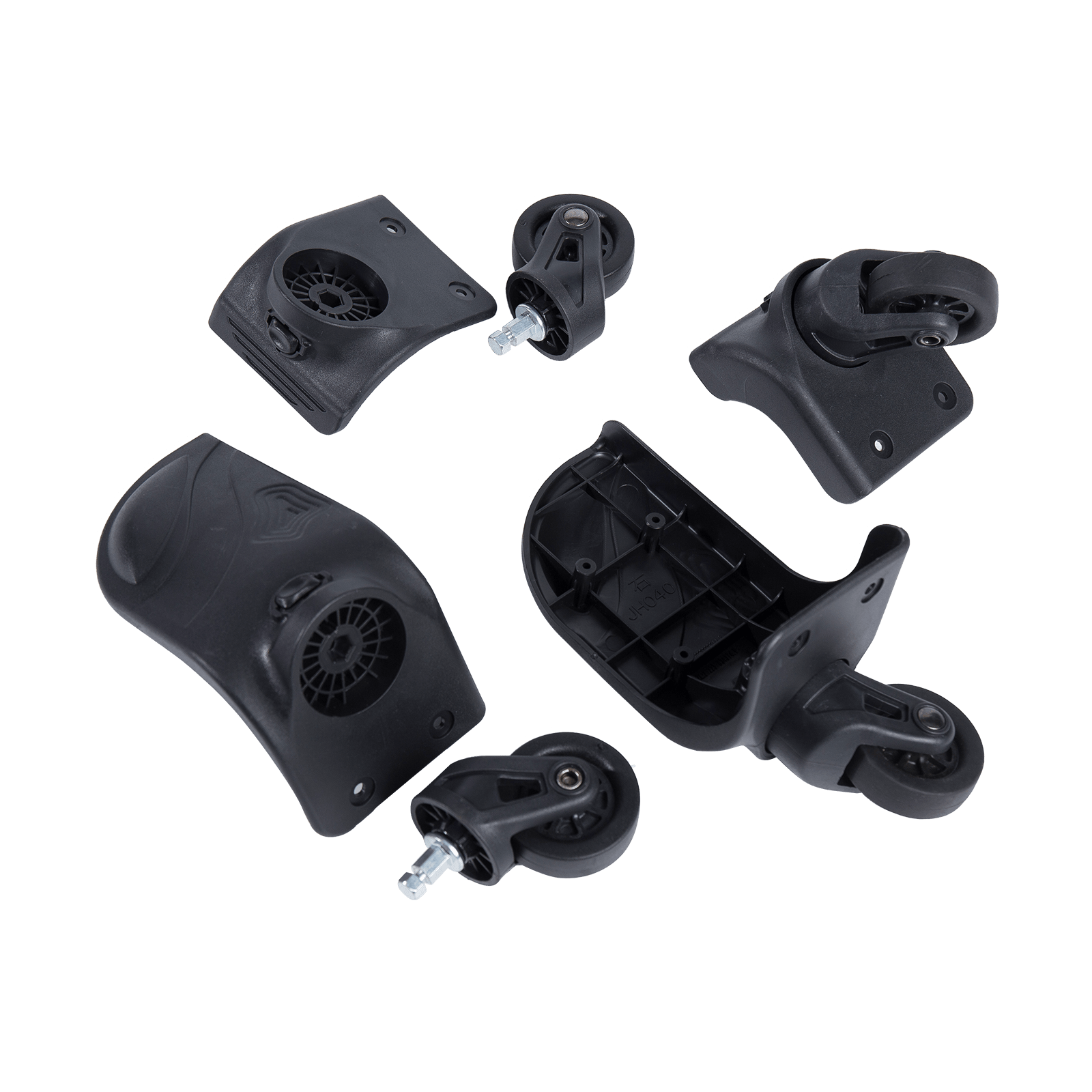
Many luggage brands sell replacement wheel kits that can be installed with basic tools, which is often far more cost-effective than replacing an entire suitcase simply because of worn wheels. It is worth checking whether a manufacturer offers standardized replacement parts before purchasing, since this can extend the usable life of an otherwise functional bag by several years.
Choosing the Right Wheels for Your Travel Style
Selecting the best wheel type ultimately comes down to matching the luggage to how and where it will actually be used. Frequent flyers who spend most of their time navigating smooth airport terminals and hotel lobbies will likely benefit most from double-wheel spinner systems made with polyurethane, since these prioritize maneuverability and quiet operation.
Travelers heading to destinations with rougher terrain, such as historic city centers with cobblestone streets or rural areas with unpaved paths, may find that two-wheel roller luggage with reinforced housings offers more reliable performance and resists damage more effectively than spinner designs. Business travelers checking bags frequently should also pay close attention to wheel housing protection, since checked luggage handling systems are a common source of wheel damage. By weighing these factors against personal travel habits, shoppers can select luggage wheels that hold up over years of use rather than needing frequent repairs or replacement.