

 Español
Content
- 1 What Makes a Pet Carrier Bag Different From a Standard Pet Carrier
- 2 Key Features to Evaluate Before Buying
- 3 Choosing the Right Size for Your Pet
- 4 Materials and Build Quality: What to Look For
- 5 Airline Compliance and Travel Regulations
- 6 Helping Your Pet Adjust to the Carrier
- 7 Cleaning and Long-Term Maintenance
Traveling with a small pet has never been more stylish or practical, thanks to the growing popularity of pet carrier bag handbags. These hybrid carriers combine the functionality of a secure pet enclosure with the aesthetics of a fashionable handbag, making them ideal for trips to the vet, café outings, shopping runs, or even short flights. But with so many options on the market, choosing the right one requires more than picking the prettiest design. The carrier needs to keep your pet safe, comfortable, and calm — while also being genuinely practical for you to carry.
What Makes a Pet Carrier Bag Different From a Standard Pet Carrier
A standard pet carrier is typically a hard-sided or soft-sided crate designed purely for function — it looks utilitarian and is usually carried by a top handle or rolled on wheels. A pet carrier bag handbag, by contrast, is purpose-designed to look like a genuine fashion handbag while secretly housing your pet inside. The exterior mimics tote bags, structured satchels, crossbody bags, or even luxury-style carry-alls, complete with decorative hardware, quality zippers, and premium fabric finishes.
Beyond aesthetics, the structural differences are significant. Pet carrier handbags are typically made with reinforced bases to support the pet's weight without sagging, internal safety tethers to clip onto a pet's harness, ventilated mesh panels integrated subtly into the design, and removable washable liners for hygiene. They are engineered specifically for small dogs and cats — generally pets weighing under 6kg (approximately 13 lbs) — making size and weight limits one of the most important factors to check before purchasing.
Key Features to Evaluate Before Buying
Not all pet carrier handbags deliver on both style and function equally. These are the core features that determine whether a carrier is genuinely suitable for regular use or merely decorative:
Ventilation and Airflow
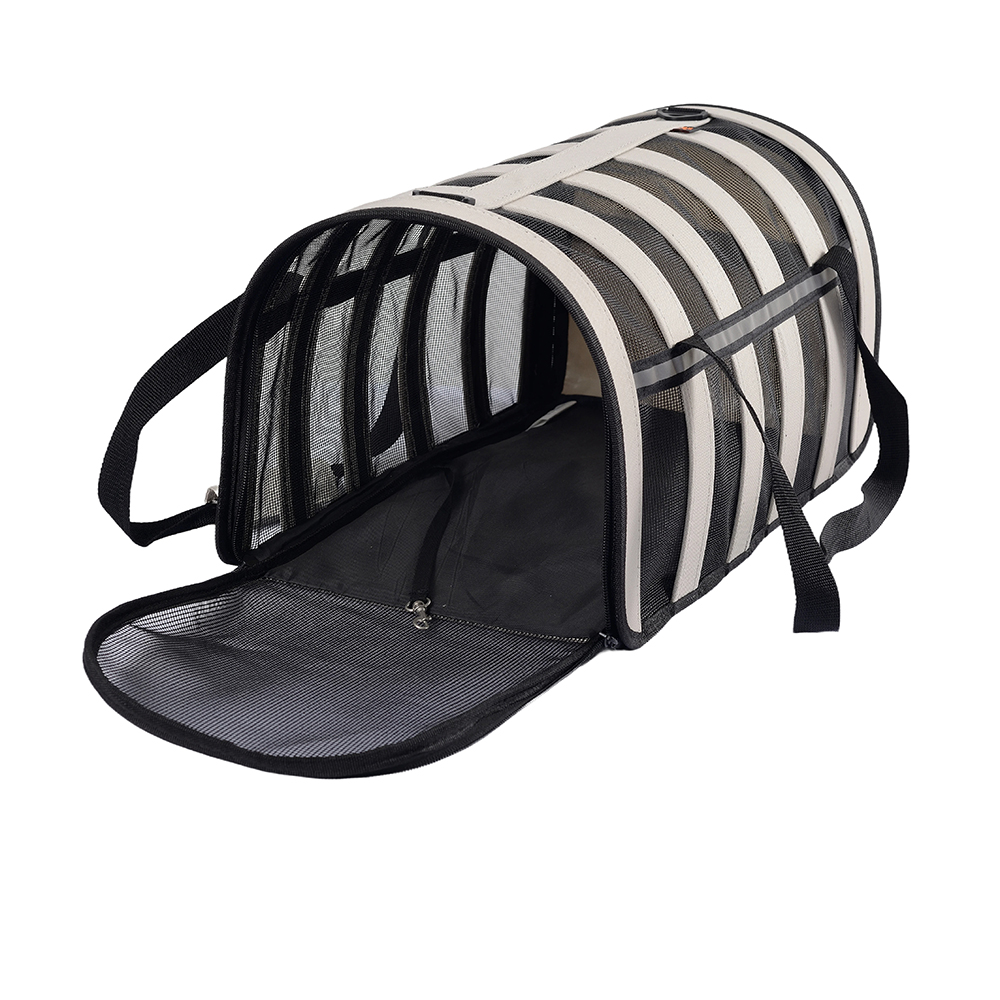
Adequate ventilation is non-negotiable. Your pet generates body heat inside an enclosed bag, and without sufficient airflow, temperatures can rise dangerously — particularly in warm weather or on public transport. Look for carriers with mesh panels on at least two sides, ideally three. The mesh should be fine enough to prevent small claws from catching, but open enough to allow genuine airflow rather than merely providing a visual window. Some premium models use a 3D breathable mesh that maintains its shape even under pressure, preventing accidental suffocation if the bag is set down with weight resting against a panel.
Structural Integrity and Base Support
The base of the carrier must be rigid enough to give your pet a stable, flat surface to stand or lie on. Floppy bags that sag under the pet's weight cause instability and stress, particularly for cats and anxious dogs who rely on feeling grounded. Look for carriers with a built-in rigid board or thick padded base insert. The side walls should also have enough structure to maintain the bag's shape when carried, preventing the interior from collapsing around the pet.
Interior Safety Tether
A built-in leash clip or D-ring tether attached to the interior is a critical safety feature. If the bag is opened accidentally or your pet pushes through a zipper, an attached harness tether prevents them from leaping out and escaping in a busy street or crowded space. The tether should attach to a harness — never directly to a collar — to avoid neck strain if the pet lunges suddenly.
Entry Points and Accessibility
Better-designed pet carrier handbags offer multiple entry options: a top opening for easy placement and removal, a front mesh panel that unzips for ventilation or viewing, and sometimes a side zipper for pets who resist being lifted from above. Multiple access points also make it easier to comfort your pet mid-journey without fully opening the bag in a risky environment.
Carrying Options and Weight Distribution
Even a small pet adds significant weight to a handbag. A 4kg cat in a 1.5kg carrier means you are carrying 5.5kg — heavier than most laptop bags. Look for carriers that offer at least two carrying options: top handles for short distances and an adjustable shoulder strap for longer outings. The best models include padded shoulder straps with anti-slip backing and even compatibility with luggage trolleys via a rear sleeve. Even weight distribution across your body reduces fatigue considerably during extended travel.
Choosing the Right Size for Your Pet
Sizing is arguably the most critical and most often overlooked aspect of choosing a pet carrier handbag. Too small and your pet cannot sit, stand, or turn around comfortably — all of which are requirements under most airline pet policies as well as basic animal welfare standards. Too large and the pet slides around inside, causing anxiety and potential injury during sudden movements.
Use the following measurements as a starting guide:
| Pet Weight | Recommended Carrier Size (L × W × H) | Typical Suitable Breeds |
| Under 2kg | 30 × 18 × 22 cm | Chihuahua, Yorkshire Terrier, small cats |
| 2–4kg | 38 × 22 × 28 cm | Pomeranian, Maltese, average domestic cats |
| 4–6kg | 44 × 26 × 32 cm | Shih Tzu, Cavalier King Charles, larger cats |
| Over 6kg | Not recommended for handbag-style carriers | Use a dedicated rolling or backpack carrier instead |
To measure your pet accurately, record their length from nose to tail base, their height from floor to top of shoulders while standing, and their width at the widest point of the chest. The carrier's interior dimensions should exceed each measurement by at least 5–8cm to allow natural movement and postural adjustment.
Materials and Build Quality: What to Look For
The materials used in a pet carrier handbag determine its durability, ease of cleaning, and how well it withstands the scratching, chewing, and moisture that come with regular pet use. Here is a breakdown of the most common materials and their tradeoffs:
- Oxford fabric (600D or 900D): The most widely used material in mid-range carriers. Durable, water-resistant, and available in many colors. Heavier weave ratings (900D) resist scratching and abrasion better. Easy to wipe clean but not fully waterproof.
- PU leather (faux leather): Common in fashion-forward designs that closely mimic luxury handbags. Looks premium, is easy to wipe down, and holds its shape well. However, it can crack over time with heavy use and is less breathable than fabric options.
- Canvas: A natural-fiber option that is durable and breathable. Often used in structured tote-style pet carriers. Canvas absorbs moisture more readily than synthetic materials, so look for canvas carriers with a waterproof internal lining.
- Genuine leather: Found in high-end designer pet carrier handbags. Extremely durable and ages well, but requires conditioning to prevent cracking and is much heavier than fabric alternatives — a consideration when your pet's weight is already near the carrier's limit.
- Zippers and hardware: YKK zippers or equivalent quality metal-tooth zippers are far more reliable than cheap plastic alternatives. Metal D-rings, buckles, and slider hardware withstand repeated use and resist corrosion. Check that zipper pulls are large enough to operate with one hand.
Airline Compliance and Travel Regulations
If you intend to use your pet carrier handbag for air travel, compliance with airline cabin pet policies is essential. Most airlines that permit in-cabin pets require the carrier to fit under the seat in front of you, which typically means maximum dimensions of approximately 45 × 25 × 28 cm, though this varies by airline and aircraft type. Always check the specific airline's current pet policy before purchasing, as dimensions, weight limits (pet plus carrier combined), and ventilation requirements differ between carriers.
Key airline compliance features to look for include:
- Dimensions that meet the under-seat size restrictions of your specific airline, with some flexibility since bags compress slightly
- Secure, lockable zippers or zipper clips that prevent accidental opening during handling
- A visible mesh panel that allows cabin crew to verify the pet is inside without opening the bag
- A waterproof or leak-proof base liner to contain any accidents during the flight
Helping Your Pet Adjust to the Carrier
Even the best-designed pet carrier handbag is only as effective as your pet's comfort level inside it. Many cats and dogs are initially resistant to enclosed spaces, and forcing them into an unfamiliar carrier causes stress that can persist across multiple journeys. A structured introduction period dramatically improves acceptance.
- Leave the carrier open at home for several days before the first use, allowing your pet to explore it freely and associate it with safety rather than confinement.
- Place familiar bedding or a worn item of your clothing inside to make the interior smell reassuring. Scent-based comfort is particularly effective for cats.
- Practice short carry sessions first — just a few minutes around the house — before progressing to outdoor trips. Reward calm behavior inside the carrier with treats immediately.
- Never use the carrier as a punishment space. Your pet must build an exclusively positive association with the bag if you want stress-free travel long term.
- Consider a calming spray such as a synthetic pheromone product (Feliway for cats, Adaptil for dogs) applied to the interior bedding 30 minutes before use to reduce anxiety during actual travel.
Cleaning and Long-Term Maintenance
Regular cleaning is essential for both hygiene and longevity. Pet carrier handbags accumulate fur, dander, saliva, and occasional accidents, all of which can degrade materials and create bacterial buildup over time. Most soft-sided carriers feature a removable interior liner or pad that can be machine washed on a gentle cycle — this should be laundered after every few uses or immediately after any accident.
The exterior shell should be wiped down with a damp cloth and mild pet-safe cleaner weekly if used frequently. Avoid harsh solvents or bleach-based cleaners on fabric or PU leather exteriors, as these degrade the coating and stitching. Check metal hardware for rust or corrosion quarterly, and treat genuine leather exteriors with a conditioner every one to two months to prevent cracking. Stored properly — in a cool, dry location away from direct sunlight — a well-made pet carrier handbag should deliver three to five years of reliable use with appropriate care.