

 Español
Content
- 1 Why Large Capacity Tote Bags Have Become a Daily Essential
- 2 Understanding Capacity: What "Large" Actually Means
- 3 Materials That Determine Durability and Daily Performance
- 4 Internal Organization: The Feature That Makes or Breaks a Tote
- 5 Strap Design and Carrying Comfort Under Load
- 6 Style Versatility: From Office to Weekend
- 7 Red Flags to Avoid When Shopping for a Large Tote Bag
- 8 Matching the Right Tote to Your Lifestyle
Why Large Capacity Tote Bags Have Become a Daily Essential
The large capacity women's tote bag has evolved far beyond a simple carry-all. For commuters, working professionals, students, travelers, and busy mothers alike, it has become the single most functional bag in a modern woman's wardrobe. A well-chosen tote can replace a gym bag, a laptop bag, a grocery carrier, and a handbag all at once — eliminating the need to juggle multiple bags throughout the day. The appeal is both practical and aesthetic: a structured, spacious tote carries everything you need while still looking polished and intentional.
However, not all large tote bags deliver on their promise. A bag that looks roomy in product photos can turn out to be poorly organized, too heavy when loaded, or made from materials that sag and distort with use. Understanding what separates a genuinely useful large capacity tote from a disappointing purchase requires looking carefully at construction, materials, internal layout, and carrying comfort — all of which this guide covers in practical detail.
Understanding Capacity: What "Large" Actually Means
Bag brands use the term "large capacity" loosely, so it pays to look beyond marketing language and check actual dimensions and volume. For a tote bag to genuinely qualify as large capacity for daily use, it should comfortably fit a 13–15 inch laptop, a standard A4 folder, a water bottle, a wallet, keys, a phone, and personal care items simultaneously — without the bag bulging or losing its shape.
As a practical reference, look for tote bags with a volume of at least 20–30 liters, or external dimensions of approximately 40 cm wide × 30 cm tall × 15 cm deep. Anything smaller than this tends to fill up quickly and fails to serve as a true all-day bag. Some workday totes designed for laptop use push up to 35 liters, which is ideal for women who carry a full change of clothes, gym gear, or professional documents alongside their everyday essentials.
Materials That Determine Durability and Daily Performance
The material of a large tote bag directly affects how well it holds its shape, how easy it is to clean, how long it lasts, and how heavy it feels before you even put anything in it. Here is a breakdown of the most common materials and their real-world trade-offs:
| Material | Durability | Weight | Best For |
| Full-grain leather | Excellent | Heavy | Professional, long-term use |
| PU / Vegan leather | Good (2–5 years) | Medium | Style-conscious, budget buyers |
| Nylon (600D or above) | Very Good | Light | Travel, commuting, gym |
| Canvas (waxed or heavy) | Good | Medium | Casual, eco-conscious use |
| Coated fabric / jacquard | Moderate | Light–Medium | Fashion-forward, occasional use |
For daily heavy use, high-denier nylon and full-grain leather consistently outperform other materials. Nylon in particular is an underrated choice for large tote bags — it is water-resistant, lightweight, easy to wipe clean, and resists tearing even when stuffed to capacity. Leather, while heavier, develops a patina over time and can last decades with proper care. Avoid thin PU leather on load-bearing straps, as it tends to crack and peel within a year of regular use under weight.
Internal Organization: The Feature That Makes or Breaks a Tote
A large unstructured tote bag with no internal organization quickly becomes a black hole where everything gets lost. The best large capacity women's tote bags balance open storage space with thoughtful pockets and compartments that keep items accessible and separated.
Must-Have Interior Features
- Dedicated laptop sleeve: A padded, zippered or slip-in sleeve that holds a 13–15 inch laptop securely against the back panel, preventing it from banging against other items.
- Zippered interior pocket: Essential for valuables like a passport, cards, or cash. It should be large enough for a full-size wallet and positioned to be easily accessible.
- Phone and key hook: A small slip pocket sized for a smartphone prevents the phone from disappearing into the main compartment. A key clip or D-ring keeps keys findable in seconds.
- Water bottle pocket: An exterior or interior side pocket that fits a standard 500 ml to 1 litre bottle is highly practical for daily commuters and gym-goers.
- Multiple slip pockets: Two to three flat interior pockets allow you to separate notebooks, tablets, cosmetics pouches, or documents without them overlapping.
Top Closure Options Compared
The closure mechanism affects both security and convenience. Magnetic snap closures are fast and elegant but offer minimal security. Zipper closures provide better protection against pickpocketing and rain but can be slow to open one-handed. Some totes offer a combination — a magnetic snap for quick access with a secondary zipper for when security matters. For city commuters or travelers, a zipper closure is strongly recommended.
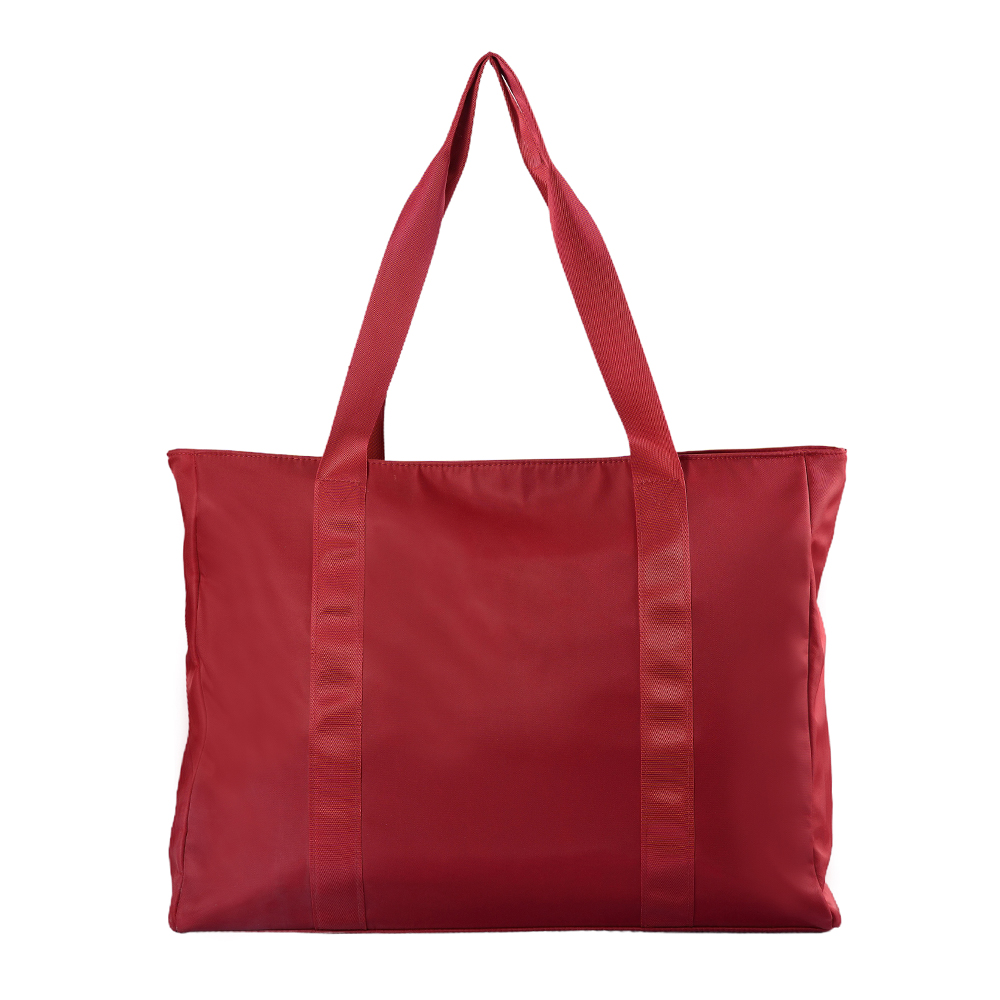
Strap Design and Carrying Comfort Under Load
A large capacity tote loaded with a laptop, water bottle, and daily essentials can easily weigh 5–8 kg. At this weight, strap design becomes a critical ergonomic factor. Thin, rigid handles that cut into your palm or shoulder become genuinely painful within 20–30 minutes of carrying. When evaluating a tote, look closely at the following strap characteristics:
- Strap width: Shoulder straps of at least 2.5–3 cm distribute weight more evenly and significantly reduce pressure on the shoulder and trapezius muscle.
- Padding: Neoprene or foam-padded straps on heavier totes make a noticeable difference in carrying comfort over long distances.
- Drop length: A shoulder drop of 22–28 cm typically allows the bag to sit comfortably under the arm when carried over the shoulder. Longer drops (30+ cm) allow crossbody-style carrying on some designs.
- Reinforced attachment points: Check where the straps are stitched or riveted to the bag body. Double-stitched, bar-tacked, or riveted attachment points are far more durable than single-stitched connections, which are the first point of failure on cheap totes.
- Dual carry options: Many well-designed large totes include both short top handles and longer shoulder straps, giving you flexibility for hand-carry, shoulder-carry, or even attachment to a luggage trolley.
Style Versatility: From Office to Weekend
One of the strongest arguments for investing in a quality large capacity tote is its style versatility. Unlike backpacks or duffel bags, a well-structured tote in a neutral color reads as sophisticated in a professional environment while remaining perfectly appropriate for weekend errands, travel, or casual outings. Colors like black, camel, navy, and taupe have the broadest versatility and pair with the widest range of outfits. Structured totes with clean lines and minimal hardware tend to age the most gracefully across changing fashion cycles.
That said, there is a growing market for bold, expressive large totes — woven textures, geometric patterns, and bright accent colors — that reflect personal style while maintaining functionality. If you prefer a statement bag, look for one where the design is built into the material or weave rather than relying on printed graphics, which tend to fade and crack with washing and regular use.
Red Flags to Avoid When Shopping for a Large Tote Bag
Whether shopping online or in a physical store, these warning signs indicate a tote bag that is unlikely to hold up to real daily use:
- Unlined interior: An unlined bag exposes the raw seams and structure, which wear down faster and catch on items inside.
- Very light base weight with no base support: A bag that has no stiffened base or feet will sag, lose shape, and tip over constantly. Metal feet on the base are a small but meaningful quality indicator.
- Plastic zippers on a large bag: Large totes put significant stress on zippers. Plastic zippers break far more quickly than metal or YKK-branded zippers under the weight and frequency of daily use.
- Overly thin handles on a heavy-capacity design: If the bag is marketed as holding a laptop but comes with cord-thin handles, the handles will likely fail within months.
- No measurable dimensions in the product listing: Brands that only show photos without listing actual dimensions are often hiding a bag that looks larger than it is. Always verify measurements before purchasing online.
Matching the Right Tote to Your Lifestyle
The ideal large capacity tote bag is not the same for every woman. A daily commuter who takes public transport needs a secure zipper closure and a dedicated laptop sleeve. A mother carrying snacks, a change of clothes, and a tablet needs maximum open storage and easy-access exterior pockets. A frequent traveler needs a lightweight material, a luggage strap on the back, and a packable design. A professional attending client meetings needs a structured silhouette and premium material that holds its shape on a conference table.
Before purchasing, spend a few minutes identifying your three most common daily loads and scenarios. Then use that list to cross-check the features of any tote you are considering. A bag that scores well on your actual use case — rather than looking impressive in a flat-lay photo — will serve you far better and ultimately represent a much smarter investment.