

 Español
Content
- 1 What Are Universal Luggage Wheels and How Do They Differ from OEM Parts
- 2 The Main Types of Universal Luggage Wheels Explained
- 3 Critical Measurements to Check Before Buying Replacement Wheels
- 4 Materials and Build Quality: What Separates Good Wheels from Poor Ones
- 5 How to Replace Universal Luggage Wheels Step by Step
- 6 When to Replace vs. When to Repair Luggage Wheels
- 7 Extending the Life of Your Replacement Wheels
Few travel frustrations compare to a broken or wobbly suitcase wheel mid-journey. Whether you're navigating a crowded airport terminal, rolling across cobblestone streets, or rushing to catch a connecting flight, the condition of your luggage wheels directly affects your travel experience. Universal luggage wheels have become an increasingly practical solution — offering travelers a way to restore or upgrade their suitcases without replacing the entire bag. But not all universal wheels are created equal, and understanding what to look for before purchasing can save you time, money, and the embarrassment of a wheel failure at the worst possible moment.
What Are Universal Luggage Wheels and How Do They Differ from OEM Parts
Universal luggage wheels are replacement wheel assemblies designed to fit a wide range of suitcase brands and models, rather than being produced exclusively for a single manufacturer's product line. OEM (Original Equipment Manufacturer) wheels are purpose-built for a specific bag model and often require ordering directly from the brand — a process that can be slow, expensive, or entirely impossible if the model is discontinued. Universal wheels, by contrast, are engineered with standardized mounting dimensions and flexible attachment systems that allow them to retrofit onto most hard-shell and soft-shell suitcases.
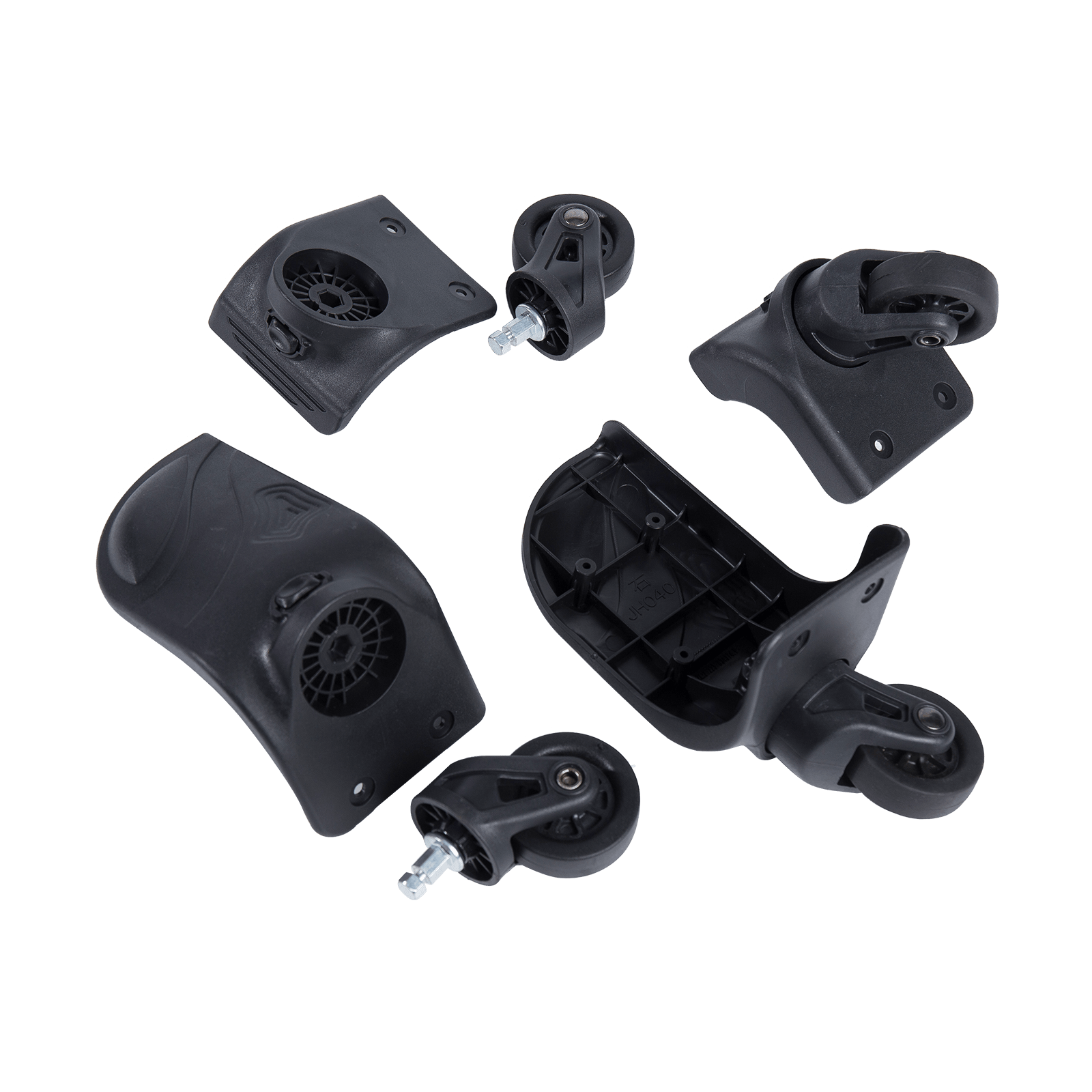
The key distinction lies in the axle and housing design. Universal wheels typically use a push-in pin axle, a screw-mount bracket, or a rivet-style attachment that can be adapted to various luggage frame configurations. High-quality universal wheels maintain the same rolling performance characteristics — smooth bearing rotation, low noise, and sufficient load capacity — as the original wheels they replace, making them a genuinely viable long-term fix rather than a temporary patch.
The Main Types of Universal Luggage Wheels Explained
Universal luggage wheels come in several distinct configurations, each suited to different suitcase styles and travel needs. Knowing the differences helps you match the right wheel type to your specific bag.
Inline Skate-Style Spinner Wheels
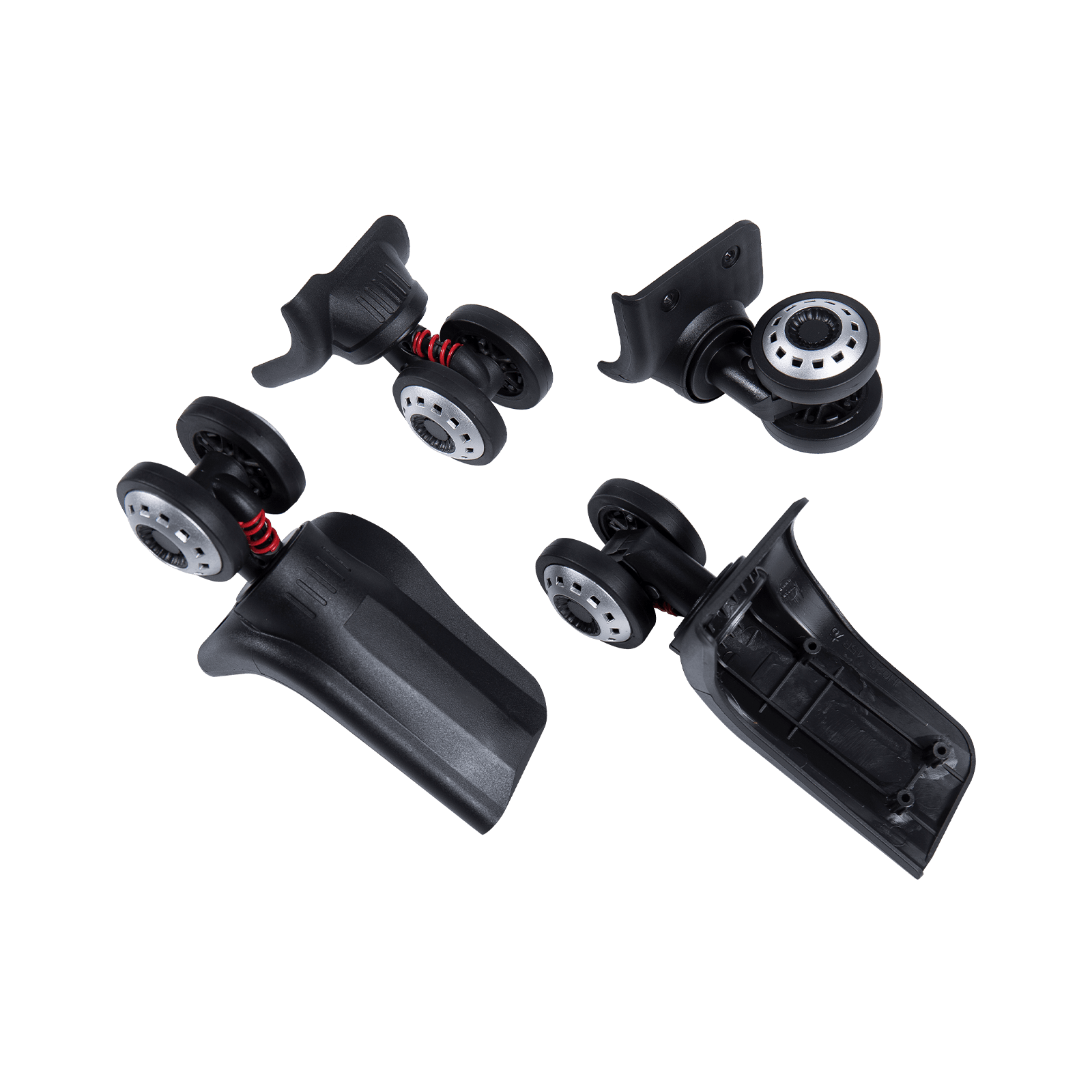
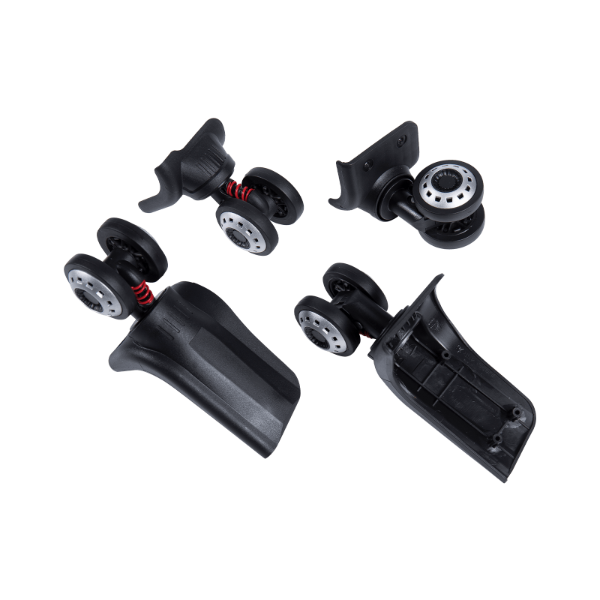
These are the most common type found on modern four-wheel (spinner) suitcases. Each wheel rotates 360 degrees independently on a vertical axis, allowing the suitcase to glide in any direction. They typically consist of two side-by-side wheels mounted on a shared housing that swivels freely. Replacement spinner wheel assemblies for universal fitment come with a standard housing base plate that can be screwed or riveted onto the luggage frame, making them compatible with the majority of hardside suitcases from brands like Samsonite, Delsey, American Tourister, and Rimowa-compatible aftermarket options.
In-Line Trolley Wheels (Two-Wheel Upright Style)
Older two-wheel suitcases and trolley bags use larger, fixed-axle wheels at the base. These wheels roll only in one direction but are generally more durable under heavy loads. Universal replacements for this style come with an axle pin that slides into pre-existing axle housing on the bag's frame. They tend to be larger in diameter (typically 50–75mm) and use thicker rubber treads to absorb shock on rough surfaces.
Double-Bearing Spinner Wheels
A premium subset of spinner wheels, double-bearing designs incorporate two ball bearing sets per wheel, significantly reducing rolling resistance and noise. These are ideal for frequent travelers who demand near-silent, effortless maneuverability. They are slightly heavier than single-bearing alternatives but offer a noticeably smoother experience on airport floors and hotel corridors.
Critical Measurements to Check Before Buying Replacement Wheels
The most common mistake buyers make is purchasing universal luggage wheels without first taking precise measurements of their existing wheel housing. Even products marketed as "universal" have specific dimensional ranges within which they will fit correctly. Before ordering, measure the following:
- Wheel diameter: Measure the full outer diameter of the existing wheel. Common sizes range from 40mm to 75mm. Using a significantly different diameter will affect the bag's ground clearance and balance.
- Axle pin diameter and length: For push-pin style axles, measure both the pin diameter (commonly 8mm or 10mm) and the total axle length required to span the wheel housing channel.
- Housing base plate dimensions: For screw-mount spinner assemblies, measure the length and width of the mounting footprint on the suitcase corner. The replacement housing plate must align with existing screw holes or provide enough material to drill new ones.
- Wheel width (track width): This is the total width of the wheel or dual-wheel assembly. Excessive width can cause the wheels to protrude beyond the suitcase frame, making them vulnerable to impact damage.
Taking a photo of the old wheel alongside a ruler and comparing it against the replacement product's technical drawings is highly recommended, especially when ordering online without the ability to physically test fitment.
Materials and Build Quality: What Separates Good Wheels from Poor Ones
The material composition of universal luggage wheels has a direct impact on durability, rolling noise, and resistance to common travel hazards. The table below compares the most widely used materials across the main wheel components:
| Component | Common Materials | What to Look For |
| Wheel Tread | TPR, PU, Hard Plastic (PP/ABS) | TPR or PU for quiet rolling and floor protection; avoid brittle hard plastic |
| Wheel Core | Nylon, ABS, Reinforced PP | Nylon or reinforced PP for impact resistance under load |
| Bearing Type | ABEC-5, ABEC-7 ball bearings | ABEC-7 bearings offer superior smoothness and longevity |
| Housing / Bracket | Zinc alloy, Steel, ABS plastic | Metal housing for structural integrity; plastic acceptable for lightweight bags |
| Axle Pin | Stainless steel, Carbon steel | Stainless steel resists corrosion from wet environments |
Thermoplastic rubber (TPR) treads are widely considered the best choice for most travelers. They provide enough grip to prevent the bag from sliding uncontrolled on smooth inclines, absorb vibration from textured surfaces, and produce significantly less noise than hard plastic wheels on tile or concrete floors — an important consideration in hotel hallways at late hours.
How to Replace Universal Luggage Wheels Step by Step
Replacing luggage wheels at home is a straightforward process that requires minimal tools and no specialized technical skills. The exact method depends on the attachment style of your existing wheels, but the general process follows these steps:
- Remove the old wheel: For push-pin axle wheels, insert a flathead screwdriver or pin tool into the axle hole and push out the retaining pin. For screw-mount assemblies, locate the screws on the interior or exterior of the wheel housing and remove them with a Phillips or Torx screwdriver. Some wheels use rivet attachments, which must be drilled out carefully.
- Clean the mounting area: Remove any debris, old adhesive, or broken plastic fragments from the wheel housing channel or mounting bracket area. A clean surface ensures the new wheel seats correctly and reduces play or wobble.
- Test fit the new wheel: Before final installation, place the new wheel assembly into position and verify alignment. The wheel should rotate freely without rubbing against the housing or the suitcase frame.
- Secure the replacement: Insert the new axle pin and crimp or secure the retaining clip, or drive in the mounting screws to the specified torque — typically finger-tight plus a quarter turn for plastic housings to avoid cracking. For rivet replacements, use pop rivets of matching diameter.
- Load test: Place the bag upright with a moderate load inside and roll it across different surfaces to confirm smooth operation, proper swivel action (for spinners), and no abnormal noise or vibration.
When to Replace vs. When to Repair Luggage Wheels
Not every wheel problem requires full replacement. Understanding the nature of the damage helps you decide the most cost-effective course of action. A wheel that rolls noisily but is structurally intact may simply need bearing lubrication — a drop of light machine oil applied to the axle point can restore smooth, quiet operation in minutes. Similarly, a spinner housing that sticks and won't rotate freely may just need debris cleared from the swivel joint.
Full replacement is warranted when the wheel tread is cracked, split, or worn flat; when the bearing is seized or grinding despite lubrication; when the axle pin is bent or corroded; or when the housing bracket is cracked and no longer holds the wheel at the correct angle. Attempting to travel on a structurally compromised wheel risks further damage to the suitcase frame itself — particularly on hardside cases where the wheel housing is molded into the polycarbonate or ABS shell.
Extending the Life of Your Replacement Wheels
Once you've installed quality universal luggage wheels, a few straightforward maintenance habits will significantly extend their service life. After trips involving outdoor terrain, beach environments, or heavy rain, rinse the wheel housings with clean water to flush out sand, salt, and grit that accelerate bearing wear. Periodically apply a small amount of silicone-based lubricant to the bearing axle points and the swivel joint of spinner assemblies — avoid oil-based lubricants that attract and retain dust.
When storing your suitcase for extended periods, keep it upright rather than resting on the wheels under the bag's full weight. Prolonged static compression accelerates deformation of TPR treads, particularly in warm storage environments. With proper care, a set of high-quality universal luggage wheels should comfortably withstand 50,000 to 100,000 meters of rolling distance — enough for years of frequent travel before the next replacement becomes necessary.