

 Español
Content
- 1 What Are the Standard Luggage Size Requirements for Most Airlines?
- 2 How Airlines Measure Luggage: Linear Inches Explained
- 3 Carry-On Luggage Size Chart by Airline
- 4 Checked Baggage Size Chart: What You Need to Know
- 5 Luggage Sizes by Type: A Practical Breakdown
- 6 Common Mistakes Travelers Make with Luggage Size
- 7 Tips for Staying Within Luggage Size Limits Every Time
- 8 Luggage Size for Special Situations
What Are the Standard Luggage Size Requirements for Most Airlines?
Before packing a single item, knowing the exact dimensions your airline allows can save you from costly gate fees and last-minute repacking at the check-in counter. Most major carriers follow guidelines loosely based on industry norms, but the specifics vary more than most travelers realize. This guide breaks down carry-on and checked baggage size rules, explains how airlines measure luggage, and gives you a practical luggage size chart to reference before every trip.
How Airlines Measure Luggage: Linear Inches Explained
Airlines typically measure luggage using a combined total of length + width + height, expressed in linear inches or centimeters. This single number makes it easier to set a universal size cap without specifying exact dimensions for each measurement. For example, a bag measuring 27" × 21" × 14" totals 62 linear inches, which falls within the checked baggage limit enforced by most U.S. carriers.
It's important to include wheels, handles, and any protruding pockets in your measurements. Airlines enforce these rules at check-in, and agents are trained to measure the bag as a whole unit — not just the main compartment. When in doubt, measure your bag fully packed, since soft-sided luggage can expand significantly.
Carry-On Luggage Size Chart by Airline
Carry-on size limits are where travelers most frequently run into trouble. The dimensions below reflect each airline's official policy and include wheels and handles. Always verify directly with your carrier before travel, as policies update periodically.
| Airline | Max Dimensions (L × W × H) | Linear Inches | Weight Limit |
| American Airlines | 22" × 14" × 9" | 45" | No limit |
| Delta Airlines | 22" × 14" × 9" | 45" | No limit |
| United Airlines | 22" × 14" × 9" | 45" | No limit |
| Southwest Airlines | 24" × 16" × 10" | 50" | No limit |
| Spirit Airlines | 22" × 18" × 10" | 50" | No limit |
| Ryanair | 21.6" × 15.7" × 7.8" | 45" | 22 lbs (10 kg) |
| Emirates | 21.6" × 15" × 9.4" | 46" | 15 lbs (7 kg) |
Budget carriers in Europe and Asia tend to be stricter on both dimensions and weight limits. If you're flying internationally, always factor in the specific requirements of the returning or connecting carrier, not just the departing airline.
Checked Baggage Size Chart: What You Need to Know
Checked baggage size limits are generally more standardized across major airlines, with most U.S. carriers capping checked bags at 62 linear inches total. However, weight limits and fees vary considerably.
| Airline | Max Linear Inches | Standard Weight Limit | Overweight Fee |
| American Airlines | 62" | 50 lbs (23 kg) | $100–$200 |
| Delta Airlines | 62" | 50 lbs (23 kg) | $100–$200 |
| United Airlines | 62" | 50 lbs (23 kg) | $100–$200 |
| Emirates (Economy) | 67" | 50 lbs (23 kg) | Varies by route |
| Lufthansa (Economy) | 62" | 50 lbs (23 kg) | €75–€150 |
Oversized baggage — bags that exceed 62 linear inches — typically incurs fees ranging from $150 to $200 per bag on U.S. carriers, in addition to standard checked bag fees. For bags over 100 linear inches or 115 linear inches, most airlines require the item to be shipped as cargo rather than checked luggage.
Luggage Sizes by Type: A Practical Breakdown
Luggage manufacturers use standardized sizing categories that correspond roughly to airline limits. Understanding these categories helps you choose the right bag before you travel.
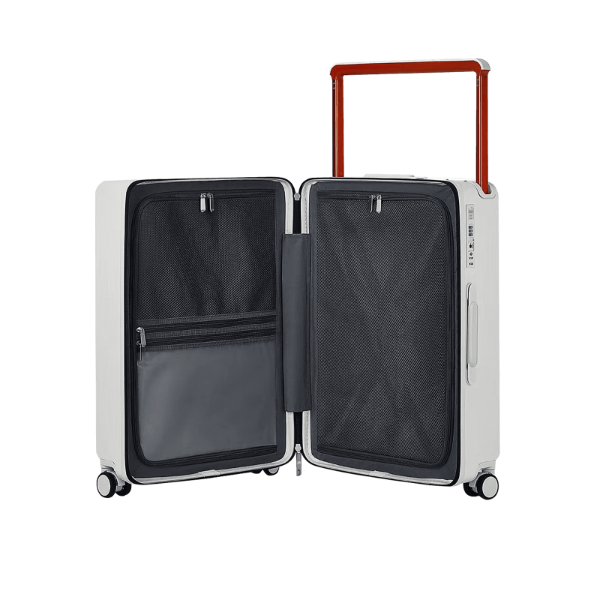
Personal Item
A personal item must fit under the seat in front of you. Most airlines allow this in addition to a carry-on, though budget carriers may charge extra. Typical dimensions are around 18" × 14" × 8" or smaller. This category includes backpacks, laptop bags, tote bags, and small duffel bags.
Cabin / Carry-On Bag (20"–22")
This is the most common carry-on size and fits within the overhead bin on most full-size aircraft. A 20-inch carry-on holds enough clothing for a 3–5 day trip. The 22-inch version is the maximum size accepted by most U.S. carriers and can hold up to a week's worth of clothing when packed efficiently.
Medium Checked Bag (24"–25")
A 24-inch suitcase is ideal for trips lasting one to two weeks. It falls comfortably under the 62 linear inch limit when standard proportions are maintained. Packed weight typically runs between 35–45 lbs, leaving some buffer before hitting the 50 lb limit.
Large Checked Bag (27"–32")
These bags are best for extended travel of two weeks or more, family trips where you're packing for children, or relocations. A 28-inch bag often sits right at 62 linear inches, while a 30-inch or 32-inch bag will exceed the standard limit and may incur oversized fees. Weigh these carefully before checking them in.
Common Mistakes Travelers Make with Luggage Size
Knowing the rules is one thing — applying them correctly is another. These are the mistakes that most often result in fees or gate-checked bags:
- Measuring an empty bag rather than a packed one. Soft-sided luggage in particular expands when full, and an overpacked bag can exceed limits even if it measured correctly when empty.
- Ignoring the weight limit on carry-ons when flying internationally. Many European and Asian carriers enforce weight caps on cabin bags, and 15 lbs (7 kg) is a common limit — far less than most travelers pack.
- Confusing the carry-on limit with the personal item limit and assuming any bag small enough to carry is automatically allowed in the cabin.
- Choosing a suitcase labeled "cabin approved" without checking which airline approved it, since one airline's approval does not transfer to another.
- Forgetting that regional or connecting flights on smaller aircraft often have stricter overhead bin limits, even when the main carrier's limits are more generous.
Tips for Staying Within Luggage Size Limits Every Time
Consistent compliance with airline size rules comes down to preparation, the right gear, and a few smart habits.
Invest in a luggage scale. A handheld digital luggage scale costs under $15 and eliminates the guesswork of whether your checked bag is under 50 lbs. Weigh your bag at home, then redistribute items or transfer things to your carry-on if needed. This is far less stressful than scrambling at the check-in counter.
Choose luggage designed for frequent flyers. Some brands, including Away, Monos, and Samsonite, engineer their carry-on bags specifically to meet 22" × 14" × 9" airline standards. Look for hard-sided cases, which are less likely to be overstuffed and are easier to measure accurately.
Use packing cubes to compress clothing and keep bags under their size limits. Compression packing cubes can reduce soft items by 30–40%, which translates directly into more packing room within the same bag dimensions.
Check your airline's specific policy 48 hours before departure, not months in advance. Airlines revise their baggage policies, and the policy in place at the time of your flight is the one that applies — not the one you read when you booked your ticket.
Luggage Size for Special Situations
Some travel scenarios require extra attention when it comes to bag sizing. Business class and first class passengers on most international airlines receive a higher weight allowance — often 70 lbs (32 kg) per bag — but size limits remain the same. Elite status with an airline program frequently grants additional free checked bags but does not alter the size caps.
If you're traveling with sports equipment such as golf clubs, skis, or surfboards, these items fall under their own category. Most airlines charge a flat sports equipment fee of $75–$150 each way, and the size restriction is replaced by a description of what qualifies as acceptable sports gear. Bikes, for instance, must be boxed and are treated as oversized cargo on most carriers.
Military personnel, government contractors, and families traveling with children often receive baggage allowance exemptions. If you fall into one of these categories, contact the airline directly before your flight to confirm what exemptions apply to your ticket class and route.