

 Español
Content
- 1 What Makes a Luggage Wheel "Universal"
- 2 Spinner Wheels vs. Inline Wheels: Understanding the Difference
- 3 Key Measurements to Take Before Buying Replacement Wheels
- 4 Wheel Materials and Their Impact on Performance and Durability
- 5 How to Install Universal Luggage Wheels Step by Step
- 6 When Universal Wheels Work Well — and When They Don't
- 7 Upgrading Rather Than Just Replacing: Getting Better Wheels Than the Originals
- 8 Maintenance Habits That Extend Luggage Wheel Life
Luggage wheels are the most mechanically stressed component on any suitcase, and they are almost always the first part to fail. A cracked wheel housing, a seized axle, or a worn-out spinner that no longer rotates freely can make an otherwise perfectly functional suitcase nearly unusable — and replacing the entire bag because of a failed wheel is both expensive and wasteful. Universal luggage wheels exist precisely to solve this problem, offering a replacement and upgrade path for damaged or underperforming wheels across a broad range of suitcase brands and models. Whether you're repairing a beloved travel companion or proactively upgrading to a better wheel system before your next trip, understanding how universal luggage wheels work, what differentiates quality from mediocrity, and how to install them correctly will save you money and frustration in equal measure.
What Makes a Luggage Wheel "Universal"
The term "universal" in luggage wheel replacement products refers to a wheel assembly designed to fit a wide range of suitcase models without requiring brand-specific parts. True universality is achieved through a combination of standardized mounting hardware, adjustable bracket geometries, and wheel axle diameters that align with the most common specifications used by major luggage manufacturers including Samsonite, Delsey, Rimowa, American Tourister, and many others.
In practice, no single wheel assembly fits every suitcase ever made — the term "universal" describes compatibility with the majority of common models rather than guaranteed compatibility with all. The key dimensions that determine fitment are the wheel housing outer diameter, the axle hole diameter and spacing, the mounting bracket width, and the depth of the wheel well recessed into the suitcase corner. When these measurements on the replacement wheel match or fall within the adjustment range of the suitcase's existing mounting points, the installation will be successful. When they don't, no amount of hardware ingenuity will produce a reliable fit. This is why measuring before purchasing is the most important step in the universal wheel replacement process.
Spinner Wheels vs. Inline Wheels: Understanding the Difference
Before selecting a replacement or upgrade wheel, it's essential to understand the two fundamentally different wheel systems used in modern luggage, as they are not interchangeable and have very different performance characteristics, failure modes, and replacement approaches.
Spinner Wheels (360-Degree Rotation)
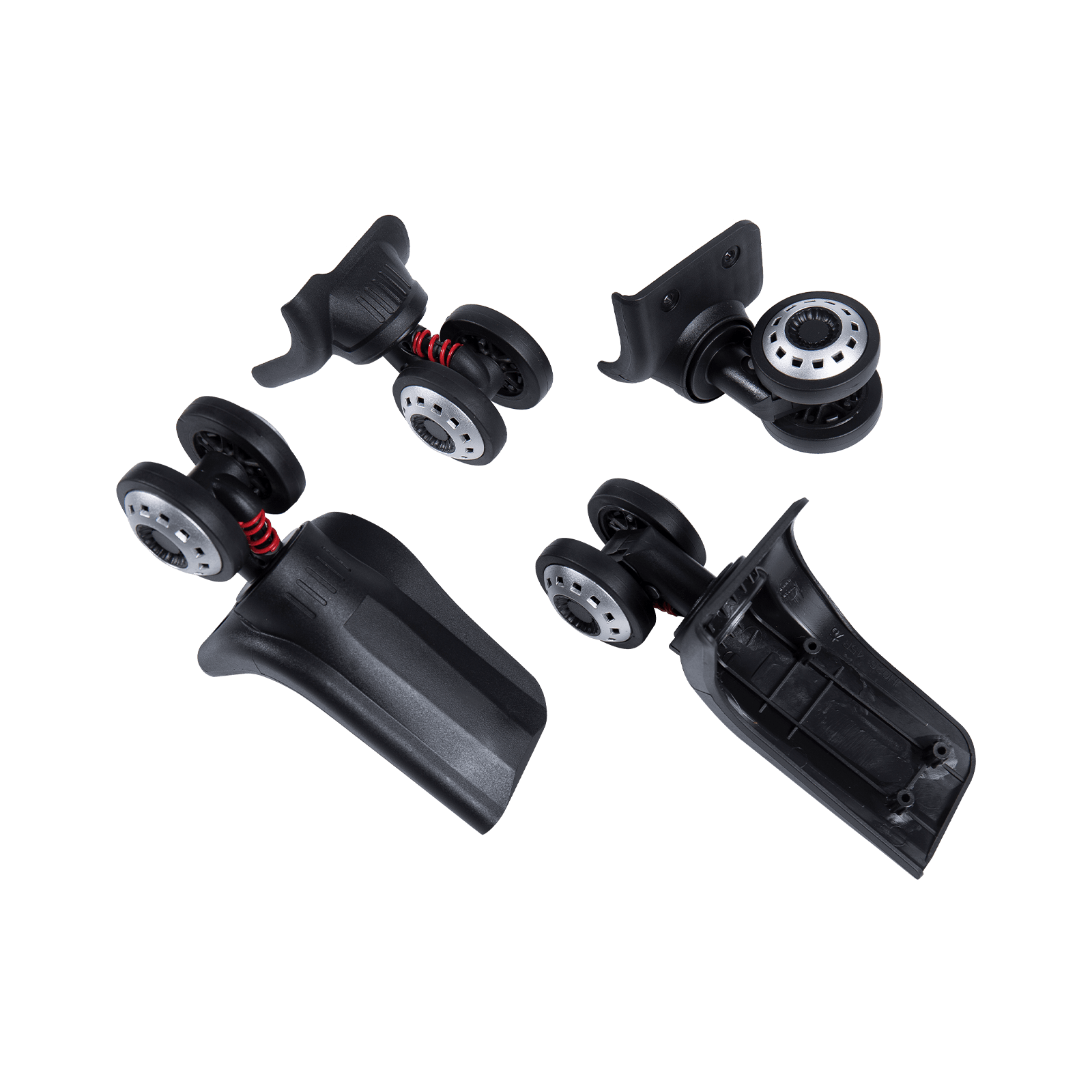
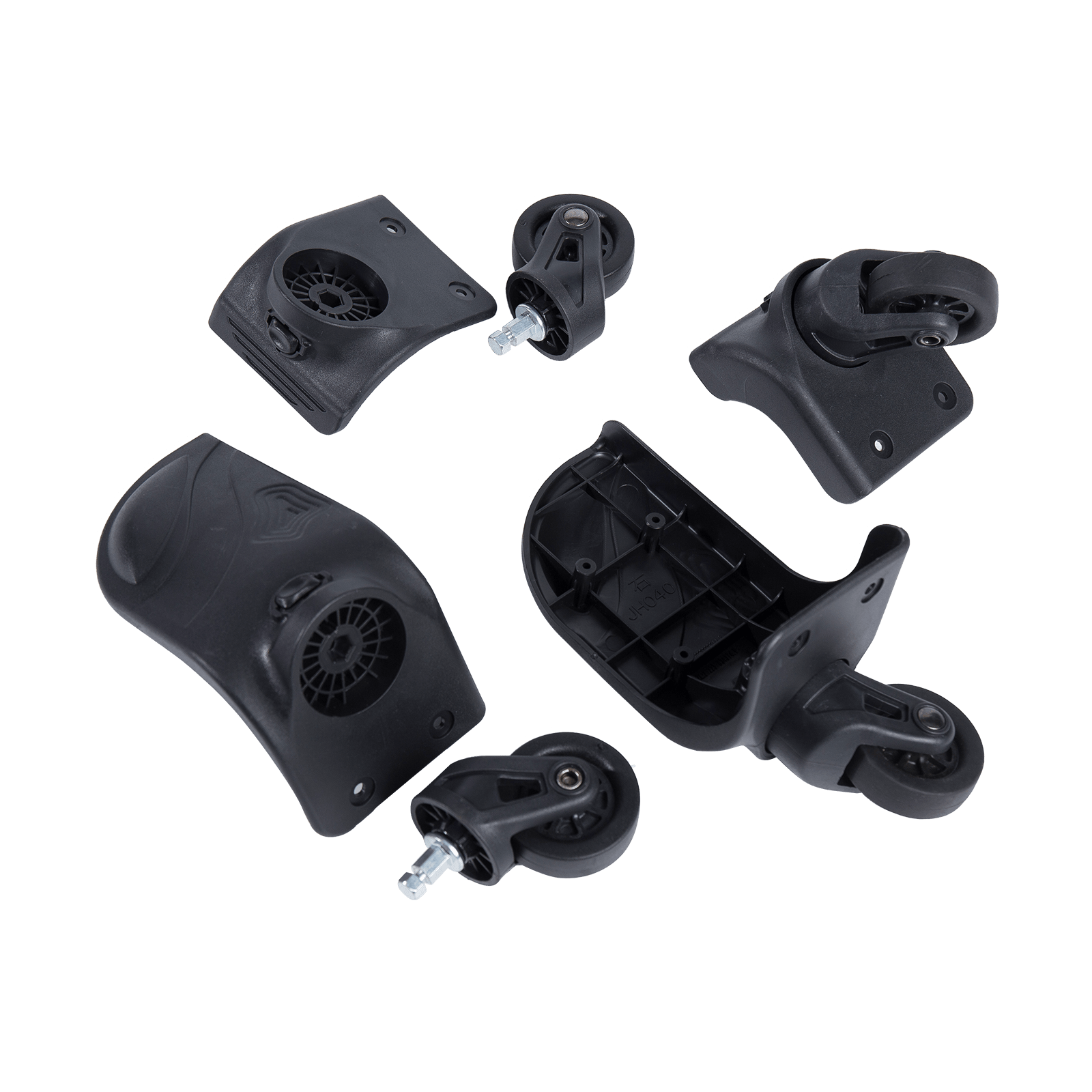
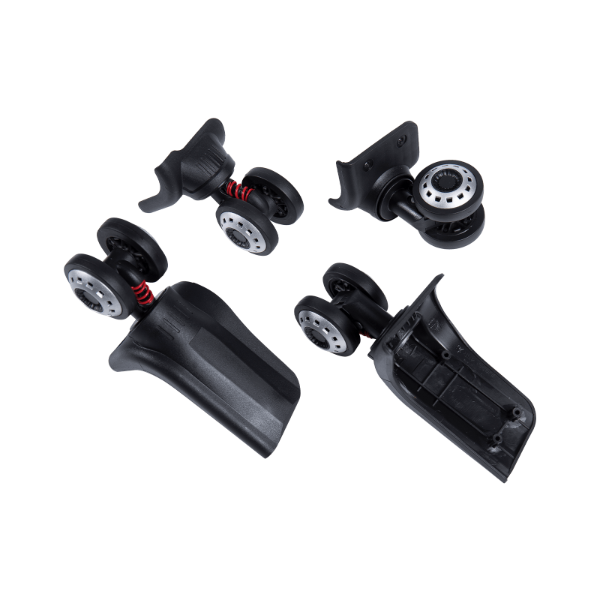
Spinner wheels rotate on a vertical pivot as well as rolling on their axle, allowing the suitcase to move in any direction without tilting. They are the standard on four-wheeled upright suitcases and are the more mechanically complex of the two systems. The spinner assembly consists of the wheel itself, a bearing-loaded axle, and a pivot housing that connects to the suitcase body. This pivot mechanism is the most common failure point — dirt, grit, and impact damage can seize the pivot, causing the wheel to drag rather than swivel. Universal spinner wheel replacements are the most in-demand segment of the replacement market and are typically sold as complete pre-assembled units including the pivot housing, so no separate pivot mechanism needs to be sourced.
Inline Wheels (Two-Wheeled Rolling)
Inline wheels are fixed-axis wheels used on two-wheeled trolley suitcases that roll on two rear wheels while being tilted at an angle. These are mechanically simpler — just a wheel on a fixed axle housed in a bracket at the base of the suitcase — and consequently more durable and easier to replace. Inline wheel replacement kits typically include the wheel, axle pin, and retaining clips. Because the geometry is simpler, inline wheel replacements tend to have broader compatibility across different suitcase brands, making the "universal" designation more accurately descriptive for inline than for spinner applications.
Key Measurements to Take Before Buying Replacement Wheels
The single most common mistake people make when ordering universal luggage wheels is purchasing without measuring first and relying on vague product descriptions to infer compatibility. Taking five specific measurements from your damaged wheel or its housing before purchasing will eliminate the guesswork and dramatically improve the likelihood of a successful first-attempt installation.
| Measurement | Where to Measure | Why It Matters |
| Wheel outer diameter | Across the widest point of the wheel | Must fit within the wheel well recess |
| Wheel width | Side-to-side depth of the wheel | Determines clearance inside the housing |
| Axle hole diameter | Center bore of the wheel hub | Must match the replacement axle pin |
| Mounting hole spacing | Between screw holes on the bracket | Must align with suitcase mounting points |
| Housing depth (spinner) | Depth of the wheel well in the suitcase corner | Replacement unit must not protrude excessively |
If the original wheel is still partially intact, measure it directly. If the wheel is completely missing or too damaged to measure, measure the wheel well recess in the suitcase corner — particularly the inner diameter of the housing opening and the depth of the cavity — to establish the maximum outer dimensions any replacement can have. Most universal spinner wheel replacements fall in the 45 mm to 55 mm outer diameter range, which covers the majority of mid-size and large suitcases from mainstream brands. Compact carry-on suitcases often use smaller 38 mm to 42 mm wheels, and premium hardshell luggage from brands like Rimowa may use proprietary sizes that fall outside the universal range entirely.
Wheel Materials and Their Impact on Performance and Durability
The material composition of a universal luggage wheel determines how it performs across different surfaces, how long it lasts under the mechanical stress of travel, and how much noise it generates. Budget replacement wheels and premium replacements can look nearly identical in product photographs but perform very differently in practice, and the difference is almost entirely in the materials used for the wheel tread, core, and bearing assembly.
Wheel Tread Materials
The outer tread — the part that contacts the ground — is the most wear-critical element of any luggage wheel. Low-cost replacement wheels use basic ABS plastic or hard polypropylene treads that are quiet on smooth floors but wear quickly on rough surfaces like cobblestones, outdoor pavement, and airport curb cuts. They also tend to crack rather than deform under point-load impacts from stone edges or expansion joints, leading to the same chunking and fracturing failure mode as the original wheel. Mid-grade and premium universal wheels use a polyurethane (PU) or thermoplastic rubber (TPR) outer tread bonded or overmolded onto a harder structural core. These materials provide better abrasion resistance, more floor grip on smooth surfaces, and sufficient elasticity to absorb minor impacts without cracking — all of which translate directly to longer wheel life and a quieter rolling experience.
Bearings and Axle Quality
The bearing inside the wheel hub governs rolling smoothness, friction, and resistance to contamination from dirt and moisture. Basic replacement wheels use simple plastic bushings — a plastic sleeve between the wheel bore and the axle — which have higher rolling friction than ball bearings and wear progressively as grit embeds in the bushing material. Quality universal replacement wheels use steel or stainless steel ABEC-grade ball bearings that reduce rolling resistance significantly, maintain their performance as dirt accumulates around the outer seal, and provide a noticeably smoother, quieter roll. For travelers who prioritize smooth rolling over price, bearing quality is worth paying attention to in product specifications.
How to Install Universal Luggage Wheels Step by Step
Replacing universal luggage wheels is a manageable DIY task for most suitcase types and does not require specialized tools. The process varies slightly between screw-mounted spinner assemblies, snap-in spinner housings, and inline wheel axle pin systems, but the general approach follows a consistent sequence that can be completed in 15 to 30 minutes per wheel with basic hand tools.
- Remove the damaged wheel assembly: For screw-mounted assemblies, open the suitcase and look for screws on the inside lining near the wheel corner — most are Phillips or Torx head. Remove them and the entire outer wheel housing should detach. For snap-in spinner housings, a flat pry tool inserted between the housing edge and the suitcase shell releases retaining clips. For inline wheels, use needle-nose pliers to remove the axle retaining clip (often a C-clip or E-clip), then push the axle pin out from one side.
- Clean the mounting area: Remove any debris, broken plastic fragments, or corrosion from the wheel well and mounting bracket area. If the inner mounting plate is damaged or corroded, assess whether the new replacement assembly includes its own bracket — many do — or whether the existing hardware can be reused. A clean, flat mounting surface is critical for the replacement to sit flush and secure.
- Test-fit before final assembly: Place the replacement wheel assembly into the wheel well without fastening it and check that it sits flush, that the mounting holes align, and that the wheel rotates and (for spinners) pivots freely without contacting the suitcase shell. If the replacement is too large, a different size is needed — do not force or modify the suitcase shell to accommodate an oversized wheel.
- Fasten securely and verify: Insert and tighten all screws to firm resistance — do not overtighten into plastic mounting points, which can crack or strip the thread. For axle pin systems, ensure the retaining clip is fully seated in its groove before applying any load. Stand the suitcase upright and apply body weight through the handle to verify the wheel handles load without deflecting or separating from the housing.
When Universal Wheels Work Well — and When They Don't
Universal luggage wheels are a practical and cost-effective solution in the right circumstances, but they are not universally appropriate for every suitcase or every failure scenario. Understanding the limits of universal fitment saves wasted purchasing and unrealistic expectations.
- Universal wheels work well for: Mid-range suitcases from mainstream brands (Samsonite, Delsey, American Tourister, Travelpro, etc.) whose wheel specifications align with common universal sizes; suitcases with visible external screw mounting that allows clean removal and replacement; cases where the wheel housing and well are undamaged and only the wheel itself or the spinner pivot has failed.
- Universal wheels are a poor fit for: Premium hardshell suitcases from brands like Rimowa, Tumi, or Briggs and Riley that use proprietary wheel systems with non-standard mounting geometries — these manufacturers intentionally design wheels that require brand-specific replacements, and some offer their own warranty replacement programs. Suitcases where the wheel housing itself (the structural corner of the shell) is cracked or broken — replacing the wheel without fixing the housing simply results in the new wheel failing under the same structural weakness.
- Check warranty first: Many mid-range and premium luggage brands offer lifetime or multi-year warranties that cover wheel defects. Before purchasing universal replacement wheels, verify whether your suitcase is still within its warranty period — manufacturers will often replace defective wheels at no cost, and some offer repair services at nominal cost even out of warranty.
Upgrading Rather Than Just Replacing: Getting Better Wheels Than the Originals
One underappreciated use case for universal luggage wheels is proactive upgrading — replacing the original wheels on a suitcase whose shell, frame, and zipper are in good condition with higher-quality universal wheels that outperform the originals. Many budget to mid-range suitcases ship from the factory with wheels that use plastic bushings, hard ABS treads, and lightweight spinner pivots that are adequate for light use but degrade noticeably within two to three years of regular travel. Replacing these with quality universal spinner wheels using sealed ball bearings and polyurethane treads can meaningfully extend the useful service life of the suitcase and improve the rolling experience on airport floors and pavement surfaces.
When upgrading, prioritize wheel sets — kits that include all four replacement spinners for a four-wheel suitcase — over individual wheels, both for price efficiency and to ensure all four wheels have matched rolling characteristics. Mismatched wheels with different diameters or tread hardnesses cause uneven rolling behavior that places asymmetric load on the suitcase frame and can accelerate wear on the new wheels by forcing them to compensate for the drag of the unmatched units.
Maintenance Habits That Extend Luggage Wheel Life
Whether working with original factory wheels or newly installed universal replacements, basic maintenance habits significantly extend wheel service life and prevent the most common failure modes from developing prematurely.
- Remove hair and fiber regularly: Hair, carpet fibers, and thread wrap tightly around wheel axles and spinner pivots over time, increasing rolling friction and eventually binding the wheel entirely. After every few trips, use scissors or a seam ripper to cut and remove accumulated strands from around the axle and pivot point.
- Apply a drop of lubricant to spinner pivots: A single drop of silicone-based lubricant or light machine oil applied to the spinner pivot point annually keeps the pivot rotating freely and prevents the corrosion and grit-induced seizure that is the most common cause of spinner failure. Avoid petroleum-based lubricants like WD-40 on plastic components, as they can cause plastic to swell or crack over time.
- Avoid dragging over curbs and steps: The single largest source of wheel damage is dragging a loaded suitcase over curb edges, step edges, and door thresholds. The sharp edge contacts a small point of the wheel tread and the entire weight of the suitcase plus contents acts on that point, often causing immediate cracking or chunking of the tread. Lifting the suitcase over threshold obstacles rather than dragging it over them is the most effective single habit for preserving wheel integrity.
- Store suitcases upright, not on their wheels: Storing a heavy suitcase resting on its wheels for extended periods — particularly in warm environments — can cause flat spots to develop on plastic or polyurethane treads where the wheel contacts the floor under sustained load. Store empty suitcases upright on their base or standing on their side to relieve the wheels of any sustained compressive load during storage.
Universal luggage wheels offer a practical, cost-effective path to repairing and improving suitcases that would otherwise be discarded for a problem that costs a fraction of replacement to fix. The difference between a successful repair and a wasted purchase comes down to accurate measurement before buying, honest assessment of whether the suitcase's structure justifies the repair, and selection of wheel materials that genuinely match the demands of frequent travel rather than simply matching the price of the original failed component.