

 Español
Content
- 1 What Is a Luggage Trolley and Why Does It Matter?
- 2 Main Types of Luggage Trolleys and Their Intended Uses
- 3 Key Features to Evaluate When Selecting a Luggage Trolley
- 4 Wheel and Caster Selection: A Critical Decision
- 5 Luggage Trolleys in Hospitality: Standards and Expectations
- 6 Maintenance Practices to Extend Luggage Trolley Service Life
- 7 Purchasing Considerations: New vs Refurbished and Supplier Selection
What Is a Luggage Trolley and Why Does It Matter?
A luggage trolley is a wheeled cart or frame designed to transport multiple bags, suitcases, or heavy items with minimal physical effort. Whether you are navigating a busy international airport, managing guest luggage at a hotel, organizing a warehouse, or simply moving boxes during a house relocation, a well-chosen luggage trolley can reduce physical strain, save time, and prevent damage to both the cargo and the handler. The market offers a wide spectrum of trolley designs, each optimized for specific environments, load capacities, and user requirements. Understanding these differences is the first step toward making a practical purchasing or usage decision.
Luggage trolleys are not a single product category but rather a family of load-carrying solutions that share the core principle of rolling transport. From lightweight aluminum folding trolleys that fit in a car trunk to heavy-duty steel hotel bellhop carts capable of carrying 300 kilograms, the engineering and material choices behind each design reflect the real-world demands of the environment in which they operate. Choosing incorrectly — for example, using a light personal trolley in a high-volume hotel environment — leads to rapid wear, structural failure, and dissatisfied users.
Main Types of Luggage Trolleys and Their Intended Uses
The most important distinction when evaluating luggage trolleys is the type of environment they are designed for. Each category has specific structural, dimensional, and ergonomic characteristics that make it effective in its intended context but potentially unsuitable elsewhere.
Airport and Transit Luggage Trolleys
Airport luggage trolleys — often called baggage carts — are the flat-platform, push-handle carts found in terminal arrivals halls and car parks worldwide. They are typically constructed from chrome-plated steel or powder-coated aluminum tubing with a flat load deck and a lower rack for stacking bags. The wheels are usually four-wheel swivel casters, allowing easy maneuvering in all directions across smooth terminal flooring. Most airport trolleys incorporate a coin-deposit or token-return locking system at dedicated bays to manage fleet distribution and reduce theft. Load capacities typically range from 80 to 150 kilograms, sufficient for two to four average suitcases.
Hotel Bellhop and Concierge Trolleys
Hotel bellhop trolleys are built for higher frequency use and greater load capacity than personal or airport trolleys. They feature a tall, open frame — typically with a hanging rail for garment bags — multiple shelves or platforms for stacked luggage, and large-diameter rubber or polyurethane wheels that can handle carpet, tile, and thresholds between floor surfaces. The frames are most commonly constructed from 25 mm or 32 mm tubular steel with welded joints rated for repeated heavy loading. Premium hotel trolleys include bumper rails at deck height to protect corridor walls and elevator interiors from impact damage. Capacities from 150 to 300 kilograms are standard in this segment.
Folding and Portable Personal Trolleys
Personal folding luggage trolleys — sometimes called sack trucks or hand trucks — are compact, lightweight devices designed for individual travelers, delivery personnel, or anyone who needs to move a bag or box without assistance. They fold flat for storage and typically extend to a working height of 90 to 110 cm. The load platform is a small folding ledge at the base, and the trolley is tipped backward to roll the load on two wheels. Aluminum and high-strength polymer are the most common frame materials, keeping total weight below 3 kilograms. Load ratings of 30 to 70 kilograms are typical, making these suitable for one large suitcase or a stack of parcels.
Industrial and Warehouse Luggage Trolleys
In warehouses, distribution centers, and back-of-house hotel or hospitality operations, heavy-duty platform trolleys serve as luggage transport workhorses. These are flat or shelf-mounted steel platforms on four swivel casters with load ratings from 200 to 500 kilograms or more. They are not aesthetically refined but are built to survive years of daily use in demanding environments. The casters on industrial trolleys are significantly larger — typically 125 mm to 200 mm diameter — and made from solid rubber or cast iron to handle uneven flooring, door thresholds, and loading dock transitions.
Key Features to Evaluate When Selecting a Luggage Trolley
Beyond the basic type classification, several specific features determine whether a luggage trolley will perform reliably in your specific situation. Evaluating these features systematically before purchase prevents costly mistakes and ensures the trolley remains functional throughout its expected service life.
| Feature | What to Look For | Why It Matters |
| Frame Material | Steel for durability, aluminum for light weight | Determines load capacity and corrosion resistance |
| Wheel Type | Swivel vs fixed, rubber vs polyurethane | Affects maneuverability and floor surface compatibility |
| Load Capacity | Always select rated capacity above typical load | Prevents structural failure and extends service life |
| Handle Design | Ergonomic grip, adjustable height preferred | Reduces operator fatigue during extended use |
| Folding Mechanism | Single-action fold, secure locking latch | Ease of storage and transport when not in use |
| Surface Finish | Chrome, powder coat, or anodized | Corrosion resistance and visual presentation |
Wheel and Caster Selection: A Critical Decision
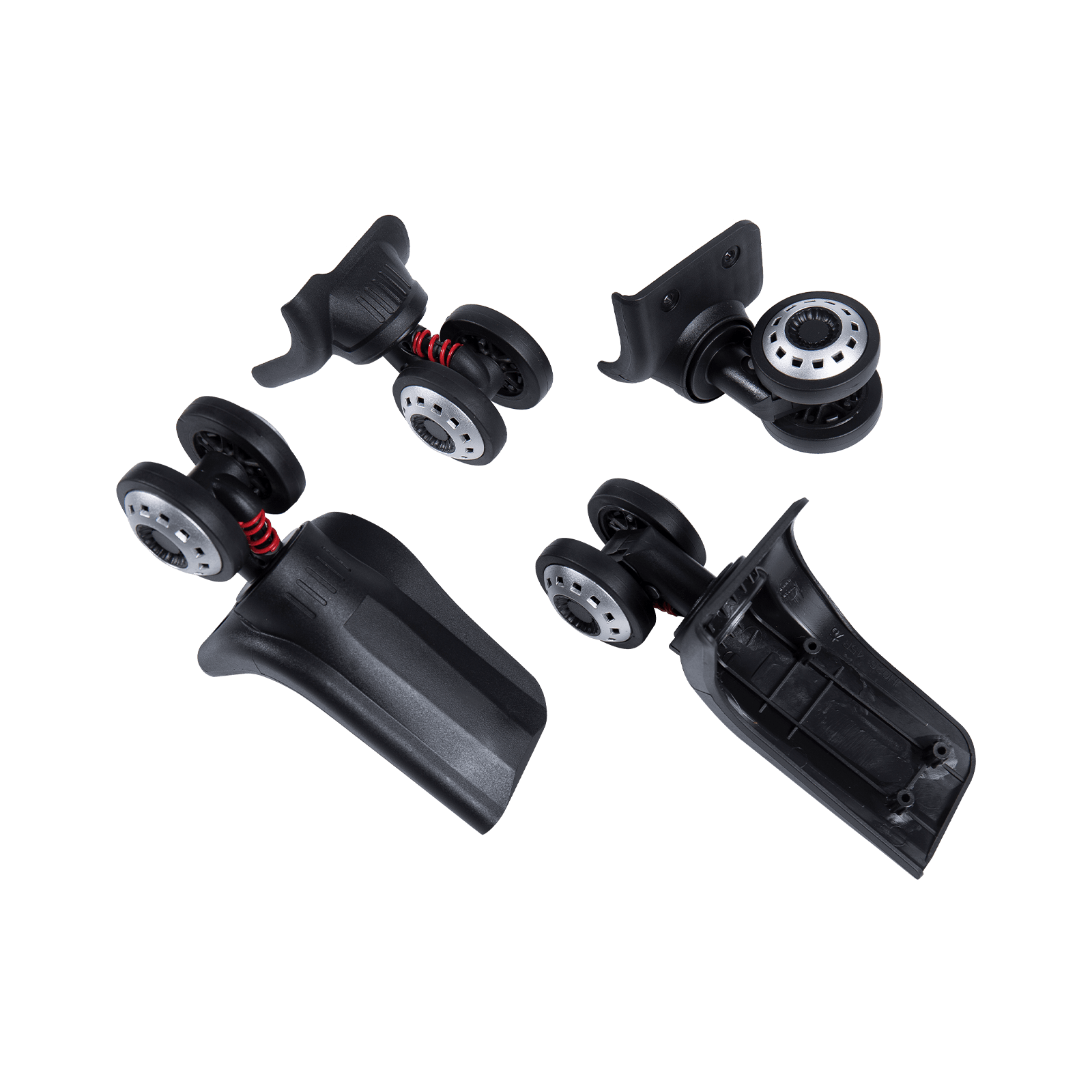
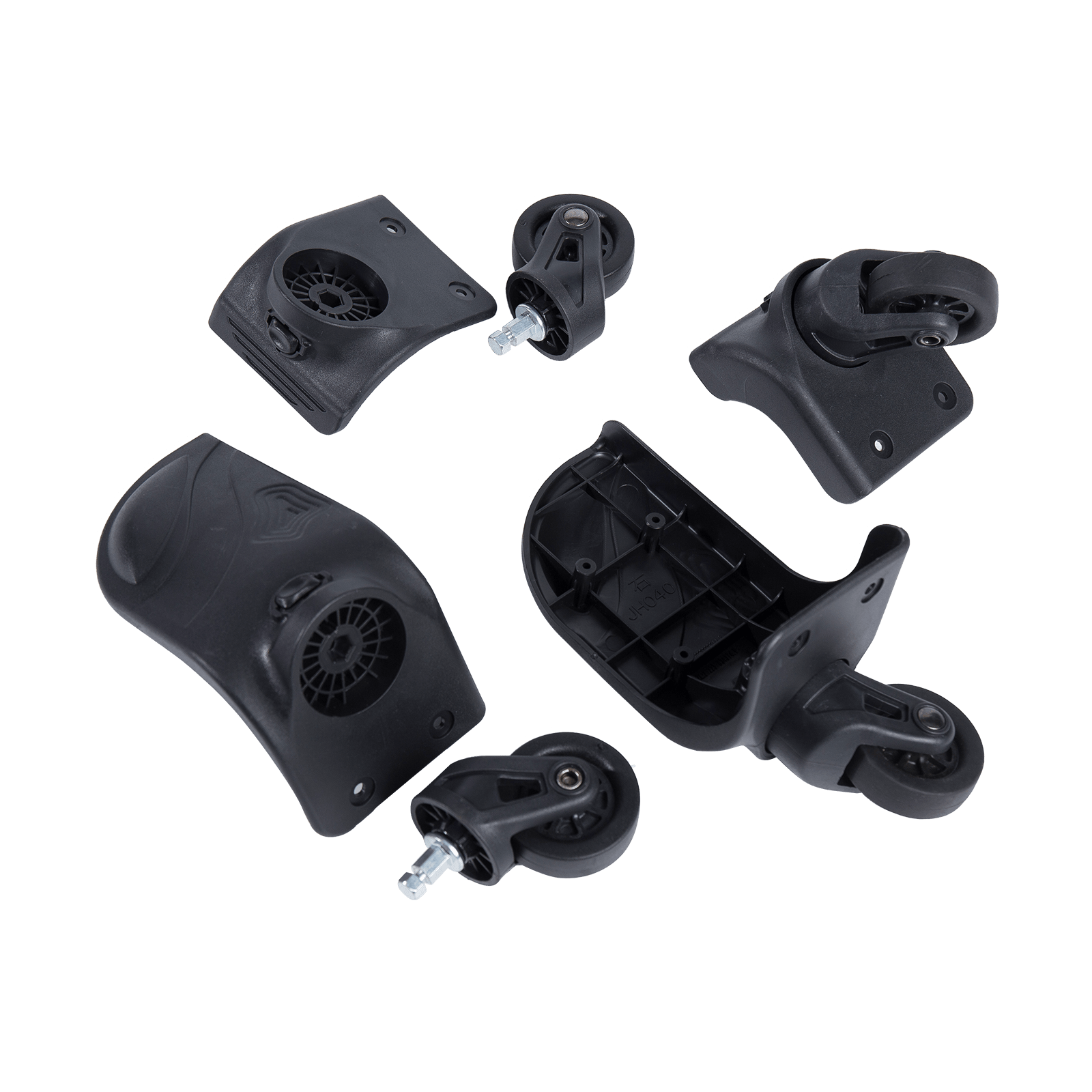
The wheel and caster assembly is arguably the most performance-critical component of any luggage trolley. No matter how robust the frame, a trolley with inappropriate casters for its operating surface will be difficult to maneuver, will damage flooring, and will wear out prematurely. The three most important caster parameters are wheel diameter, wheel material, and swivel configuration.
- Wheel diameter: Larger diameter wheels roll more easily over surface imperfections and transitions between floor materials. A 75 mm wheel suitable for smooth tile will struggle significantly on carpet or uneven pavement, while a 150 mm wheel handles both surfaces effectively.
- Rubber wheels: Provide grip and floor protection but degrade faster under heavy loads and in high-temperature environments. Best suited for hospitality and retail applications.
- Polyurethane wheels: Harder than rubber, with higher load ratings and better chemical resistance. They roll more smoothly on hard floors but can mark softer surfaces. Preferred for industrial and warehouse use.
- Swivel casters: Allow the trolley to change direction without lifting, making them ideal for crowded environments like hotel corridors and airport terminals where tight turns are frequent.
- Fixed casters: Provide straight-line stability and higher load capacity but require the trolley to be lifted or pivoted to change direction. More appropriate on straight warehouse aisles.
- Brake mechanisms: At least two wheels should be fitted with foot-operated brakes on any trolley used on slopes or in loading areas, preventing unintended movement when stationary.
Luggage Trolleys in Hospitality: Standards and Expectations
In the hotel and hospitality industry, luggage trolleys are customer-facing equipment, meaning their appearance and condition directly reflect the property's service standards. A scratched, squeaking, or structurally compromised trolley sends a negative message to arriving guests before the check-in interaction has even begun. For this reason, hospitality procurement managers typically look beyond load capacity to consider aesthetics, quietness of operation, and durability of finish.
Chrome-plated steel trolleys remain the standard in upscale hotels because chrome conveys a sense of quality and is easy to clean and polish. However, chrome plating in humid environments — poolside facilities, spa areas, or coastal properties — is prone to pitting corrosion if the base steel is exposed through surface damage. In these contexts, stainless steel frames or powder-coated aluminum trolleys offer better long-term appearance retention despite a higher initial cost. The internal service trolleys used in back-of-house operations, such as linen transport or luggage storage room organization, do not face the same aesthetic requirements and can be specified from lower-cost painted steel.
Noise is another important consideration in hospitality environments. Wheel bearing quality, floor surface, and caster design all contribute to the noise a trolley makes in motion. Properties with marble or hard tile lobbies should specifically seek trolleys with precision ball-bearing swivel casters and polyurethane wheels rather than hard plastic, which can produce significant noise on reflective surfaces. Some premium hospitality trolley manufacturers offer sound-dampening wheel assemblies specifically engineered to reduce rolling noise in acoustically sensitive environments.
Maintenance Practices to Extend Luggage Trolley Service Life
Luggage trolleys in commercial use require a structured maintenance program to remain safe and functional. Neglected trolleys accumulate damage that increases operator injury risk, reduces load capacity, and creates a poor user experience. A basic maintenance routine that takes only a few minutes per week can extend a trolley's service life by years and reduce total cost of ownership significantly.
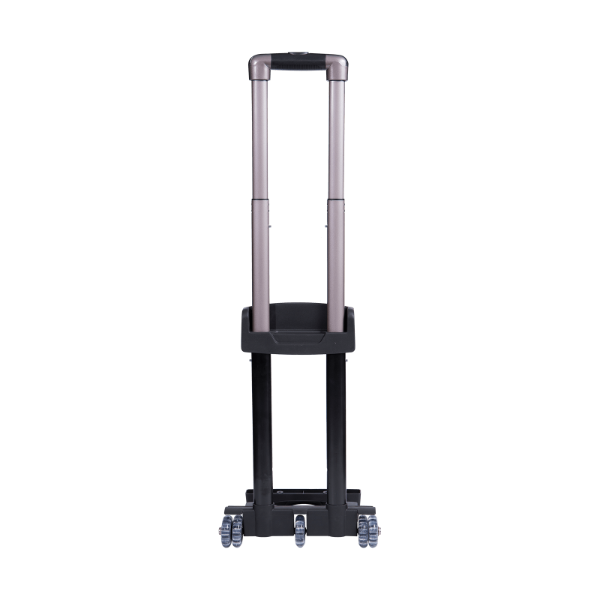
- Weekly wheel inspection: Check all casters for debris wrapped around axles, which is the most common cause of difficult rolling. Remove thread, hair, and tape accumulation with a utility knife or wire hook tool.
- Monthly lubrication: Apply a light machine oil or silicone-based spray lubricant to swivel caster bearings and any folding mechanism pivot points. Avoid petroleum-based lubricants on rubber wheels as these accelerate rubber degradation.
- Frame inspection: Check weld joints and folding latch mechanisms for cracks, deformation, or looseness. Any structural defect should remove the trolley from service immediately until repaired or replaced.
- Surface treatment: Touch up chrome or powder-coat damage with appropriate touch-up paint or lacquer to prevent corrosion from establishing in exposed metal areas.
- Load rating enforcement: Train all staff on the rated load capacity of each trolley type in use and enforce limits. Overloading is the single most common cause of premature structural failure in commercial trolleys.
Purchasing Considerations: New vs Refurbished and Supplier Selection
For businesses acquiring multiple luggage trolleys — hotels, airports, logistics companies — the decision between purchasing new and sourcing refurbished units deserves careful consideration. New trolleys offer the advantage of full manufacturer warranty, known service history, and current design standards. However, quality refurbished trolleys from reputable suppliers can offer 60 to 70 percent of the performance of new units at 40 to 50 percent of the cost, making them attractive for operations with tight capital budgets or for supplementary fleet expansion.
When evaluating suppliers, prioritize those who can provide certification of load testing to recognized standards, clear documentation of frame material specifications, and accessible spare parts for wear components such as casters, handle grips, and locking mechanisms. A trolley that cannot be repaired economically when a caster fails will end up being discarded long before its frame reaches the end of its structural life, which is wasteful and costly. The availability of replacement casters in the same diameter and bolt pattern as the original installation is a detail that is easily overlooked at the time of purchase but becomes critical during the operational life of the trolley fleet.