

 Español
Content
The luggage pull rod — also called a telescoping handle or trolley handle — is one of those components that travelers take entirely for granted until it breaks. A stuck rod that won't extend, a handle that collapses under the weight of a fully packed suitcase, or a button mechanism that seizes up mid-trip can turn an otherwise smooth journey into a frustrating ordeal. Yet despite being one of the most mechanically stressed parts of any piece of rolling luggage, the pull rod receives almost no attention during the purchasing process. Most buyers focus on shell material, wheel quality, and zipper durability — all valid concerns — but the handle system is what you interact with every single time you move your bag. Understanding what separates a well-engineered telescoping handle from a flimsy one, how to identify quality at the point of purchase, and what to do when things go wrong will make you a significantly more informed luggage buyer and traveler.
How a Luggage Pull Rod System Is Constructed
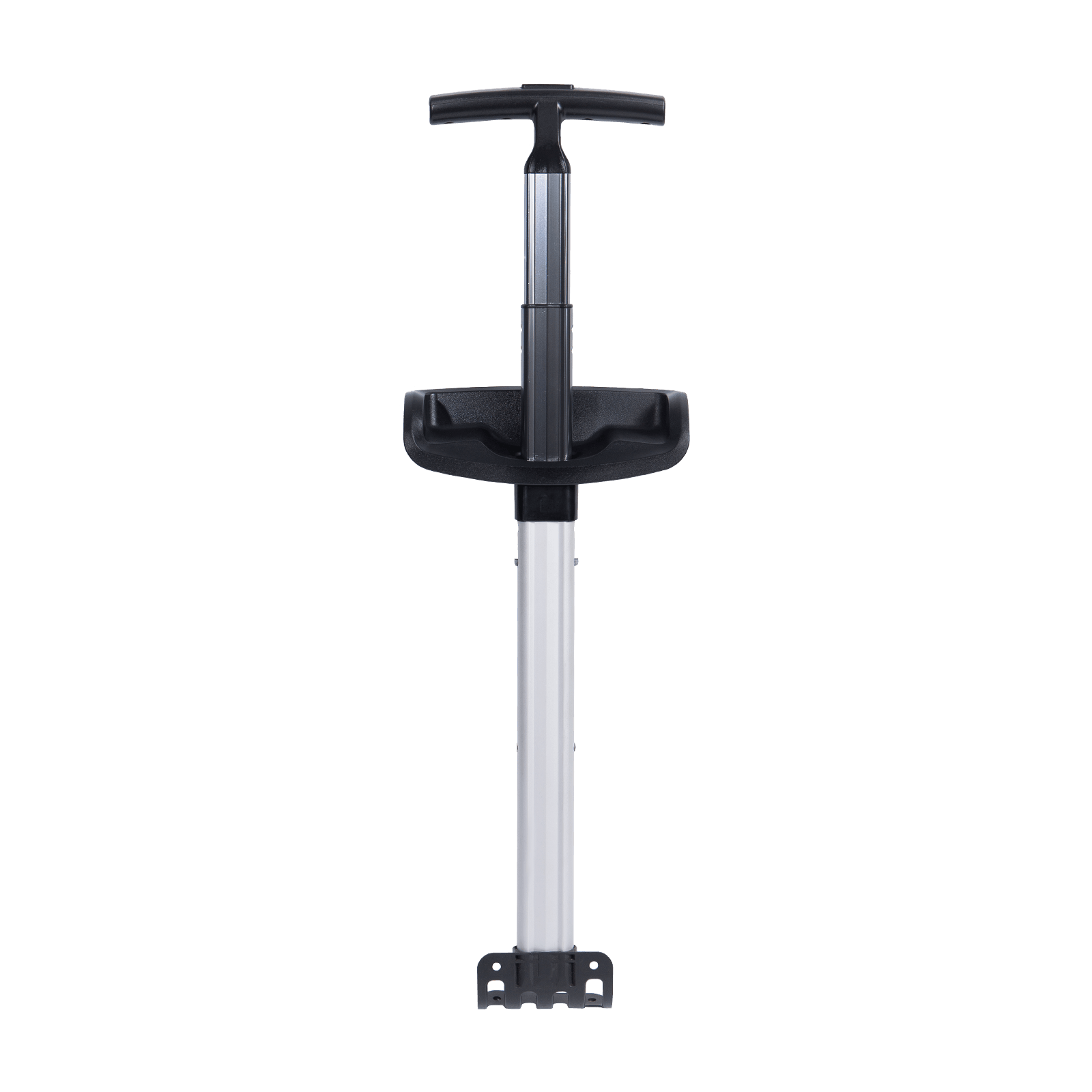
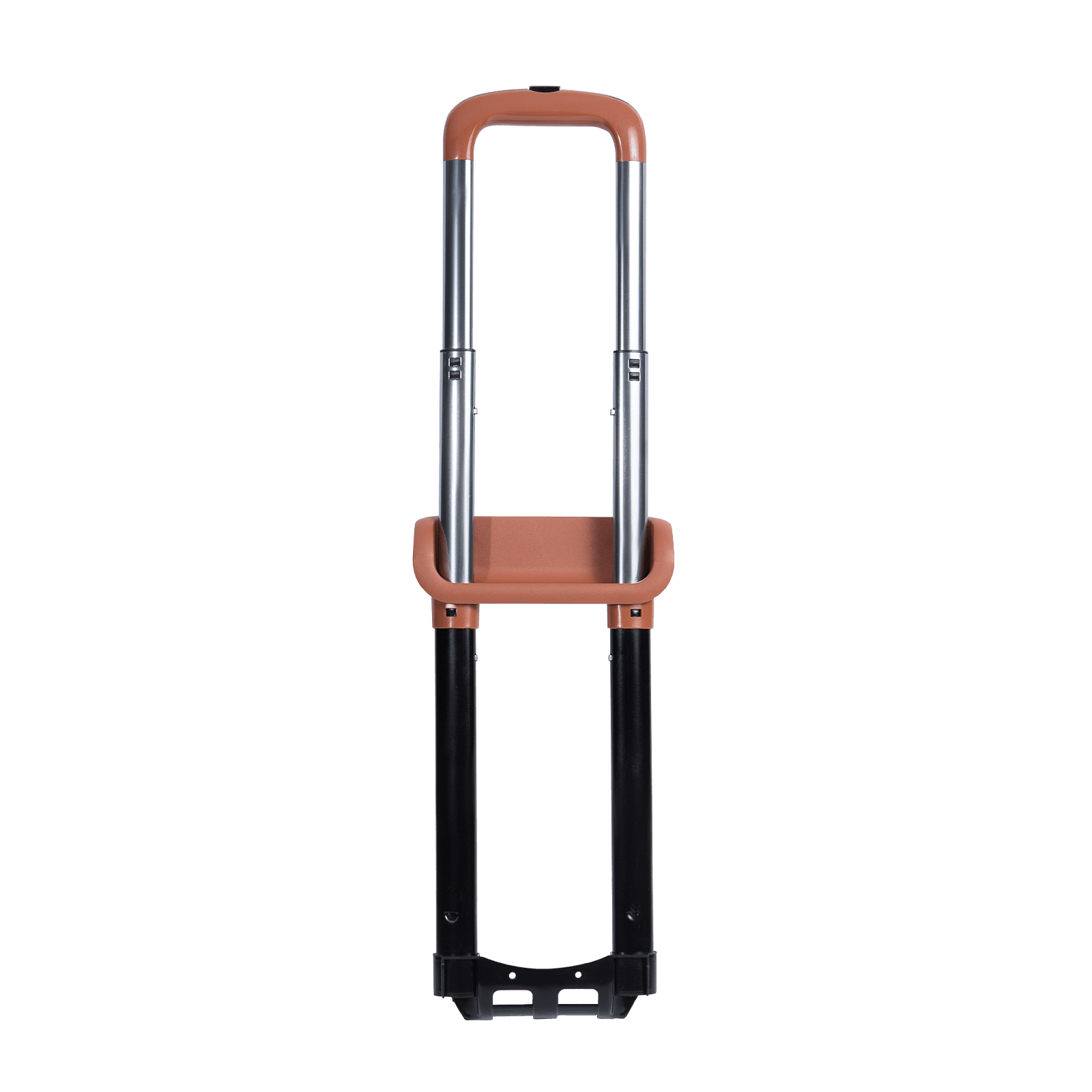
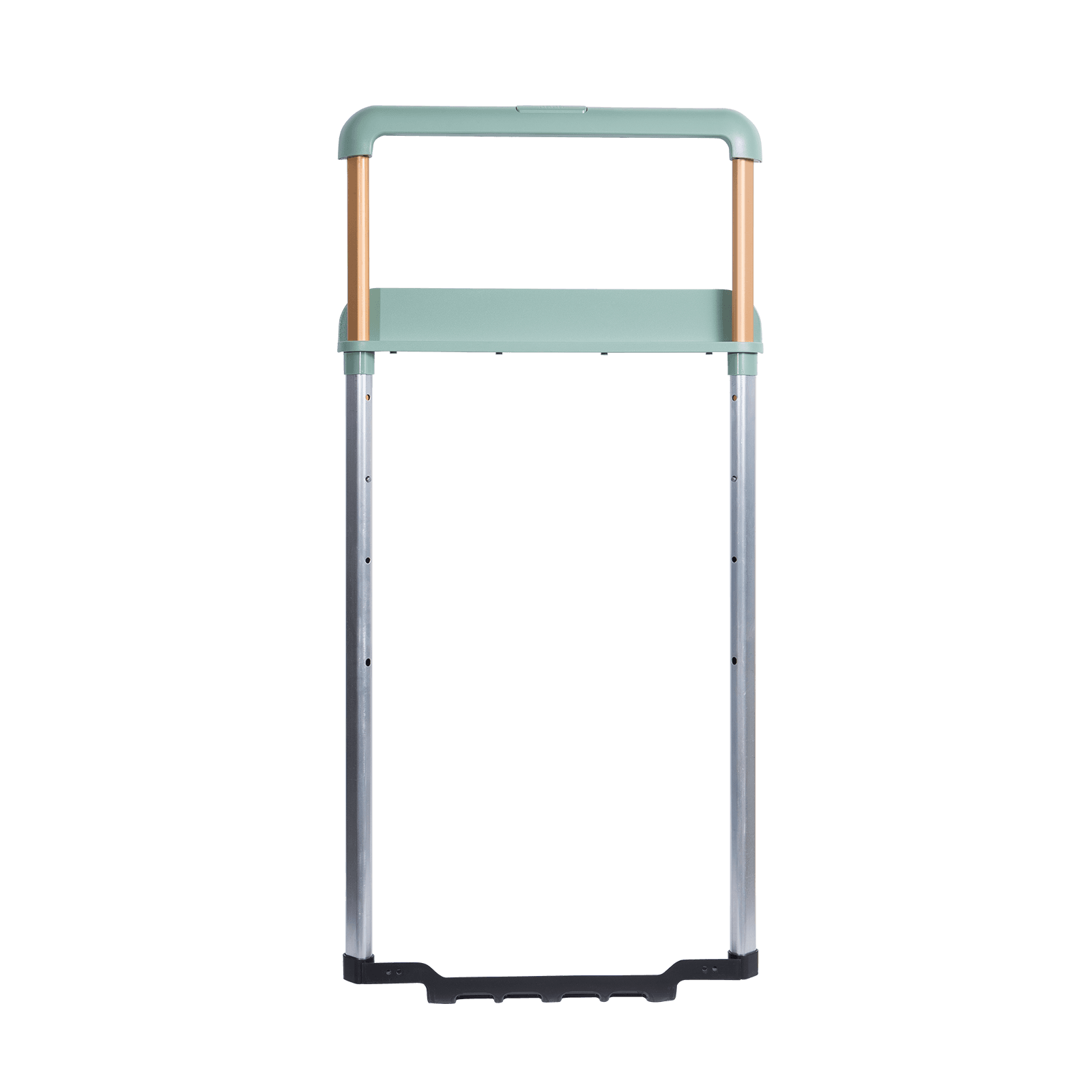
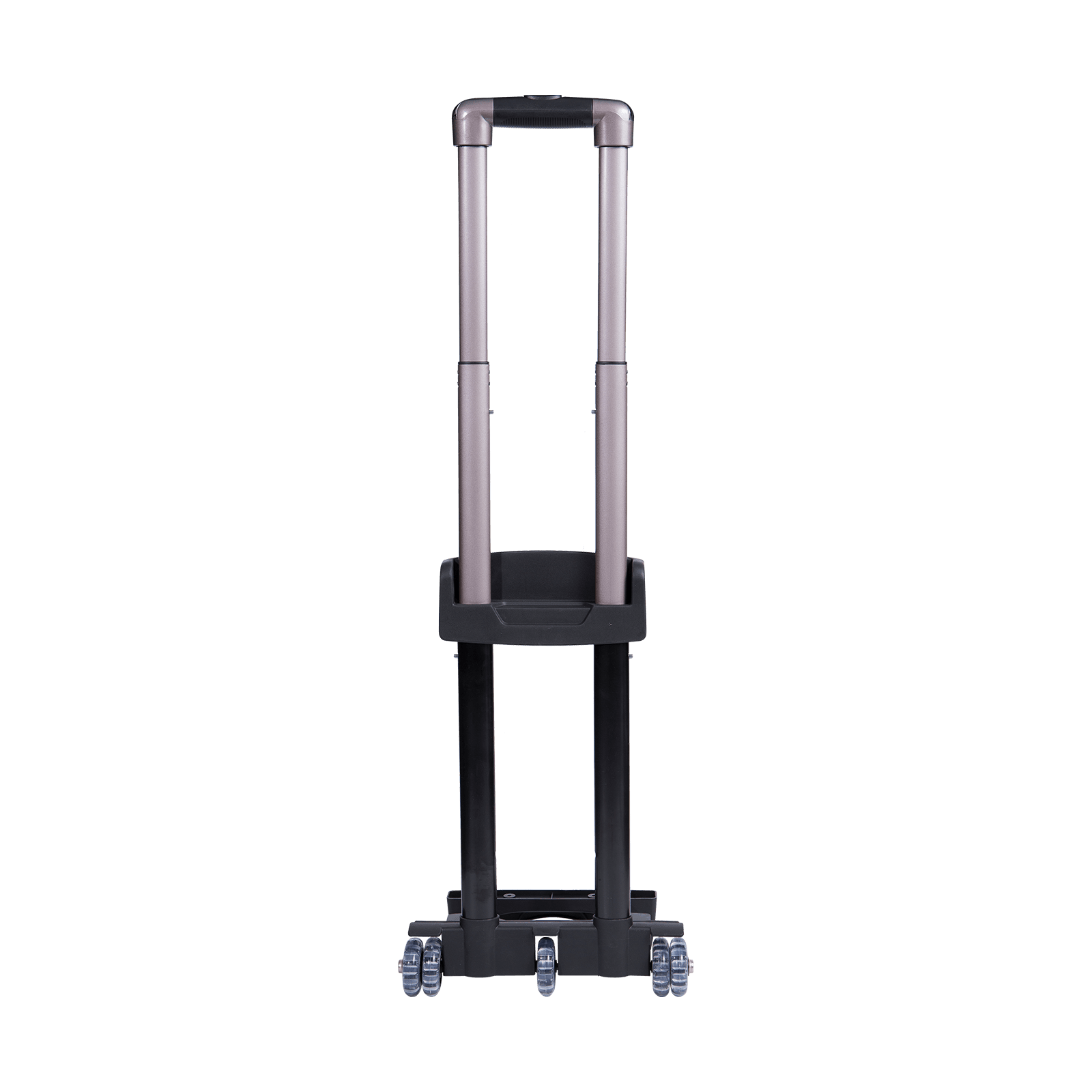
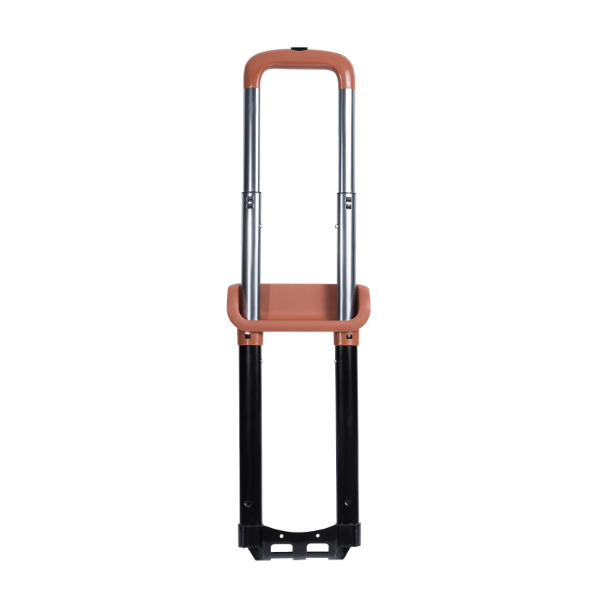
A luggage pull rod is a multi-stage telescoping tube assembly integrated into the back panel of a suitcase. In its most common form, it consists of two or three nested aluminum or steel tubes that slide within each other, guided by internal plastic or rubber bushings that reduce friction and prevent lateral wobble. The tubes are connected at the top to a rigid handle grip — typically made from ABS plastic, rubber, or a rubberized overmold — and anchored at the base inside the luggage frame through a housing unit that distributes pulling loads across the suitcase structure.
The locking mechanism is the most mechanically complex element of the system. When you press the release button on the handle grip, it actuates a spring-loaded pin or tab inside the tube assembly that disengages from a series of pre-drilled locking holes along the inner tube's length. Releasing the button allows the spring to re-engage the pin into the next available hole, locking the handle at that extension height. This button-and-pin system must withstand thousands of actuation cycles over the suitcase's lifetime — cheap spring steel or undersized pins are the most common source of premature handle failure.
Two-stage systems (one inner tube telescoping within one outer tube) are found on most budget and mid-range luggage. Three-stage systems add a third nested tube, which allows the handle to retract to a shorter stowed height while still extending to the same operational length — a design advantage on compact cabin bags where internal packing depth is constrained. Three-stage handles place greater mechanical demands on the locking mechanism and bushings, which is why they are typically only executed well by premium luggage manufacturers.
Materials Used and How They Affect Durability
The material composition of a pull rod assembly has a direct and measurable impact on both its weight and its resistance to the bending, compression, and torsional forces that accumulate during real-world travel. The three most common tube materials are aluminum alloy, steel, and polycarbonate-reinforced plastic, each with distinct performance profiles.
Aluminum Alloy Tubes
Aluminum alloy — most commonly 6061-T6 or 7075-T6 grade in premium applications — offers the best combination of strength-to-weight ratio and corrosion resistance. A well-specified aluminum pull rod on a quality suitcase adds only 180 to 280 grams to the total luggage weight while providing exceptional rigidity and resistance to bending under lateral loads. Aluminum does not rust, which matters particularly for travelers who frequently check bags that are exposed to rain on the tarmac. The primary weakness of aluminum is susceptibility to denting from sharp impacts — a heavily loaded bag dropped sideways onto a tube can cause permanent deformation that interferes with the telescoping action.
Steel Tubes
Steel handles are heavier than aluminum — typically 350 to 500 grams for the complete assembly — but offer superior impact resistance and are less prone to denting. Stainless steel variants resist corrosion well, though carbon steel tubes with inadequate surface treatment will eventually show rust at scratched or abraded areas. Steel pull rods are found most frequently in mid-range hardshell luggage where the manufacturer has prioritized durability over weight. For travelers who regularly check bags and are unconcerned with saving every possible gram, a quality steel handle system is a practical and long-lasting choice.
Plastic and Composite Tubes
Glass-fiber reinforced polycarbonate tubes appear in some lightweight luggage lines where minimum weight is the overriding design priority. While modern engineering plastics have improved significantly, composite pull rods remain more susceptible to fatigue cracking under repeated stress cycles than metal alternatives and are generally not recommended for frequent travelers or those who regularly check heavy bags. Their main advantage — weight reduction of 40 to 60% compared to aluminum — is most relevant in ultralight carry-on bags where every gram counts for airline weight compliance.
What to Check When Buying Luggage With a Pull Rod
Most travelers test a suitcase's wheels and zipper in the store but give the pull rod only a cursory extension and retraction. A more thorough evaluation takes less than two minutes and can reveal quality issues that will become significant problems within a year of regular use. Apply the following checks before purchasing:
- Lateral wobble test: Extend the handle to its full height and apply gentle sideways pressure. A quality handle should feel solid with minimal lateral flex. Pronounced wobble at full extension indicates loose bushings or insufficient tube overlap length — a predictor of handle instability under real travel loads.
- Button mechanism feel: Press the release button repeatedly. It should actuate smoothly and spring back crisply without sticking. A button that feels mushy, requires excessive force, or returns sluggishly has an undersized or weak spring that will likely fail within 12 to 18 months of regular use.
- Extension smoothness: Telescoping action should be fluid without requiring significant force. Resistance or grinding during extension indicates inadequate bushing quality or poorly finished tube surfaces — both of which worsen over time as wear particles accumulate inside the assembly.
- Handle grip ergonomics: The grip width should allow a comfortable four-finger hold without the hand bridging uncomfortably wide. Check that the grip surface material (rubber overmold is superior to bare hard plastic) provides adequate friction when hands are slightly damp or sweaty.
- Height adjustment positions: Count how many locking positions the handle offers. Budget suitcases often provide only one or two extension heights; quality handles offer three or more, allowing precise height adjustment to match the user's arm length and reduce wrist strain during extended pulling.
Standard Pull Rod Heights and Ergonomic Considerations
Pulling luggage at the wrong handle height is a surprisingly common source of wrist, shoulder, and lower back strain during travel. The ergonomically correct pull rod height positions your arm at a natural downward angle of approximately 15 to 20 degrees from horizontal when walking — this minimizes the upward lift component that stresses the shoulder and eliminates the awkward wrist flexion that occurs when pulling a handle set too low.
| User Height | Recommended Handle Height | Notes |
| Under 160 cm (5'3") | 85 – 90 cm from floor | Many standard handles extend too high; compact cabin bags work better |
| 160 – 175 cm (5'3" – 5'9") | 90 – 100 cm from floor | Standard extended handle height on most medium and large suitcases |
| 175 – 185 cm (5'9" – 6'1") | 100 – 110 cm from floor | Look for handles with multiple locking positions to fine-tune height |
| Over 185 cm (6'1") | 110 – 120 cm from floor | Taller travelers should specifically check max extension height before buying |
Note that the height figures above are measured from the floor to the top of the grip and include the suitcase body height. A large checked bag (typically 75 to 80 cm tall) with a 30 cm pull rod extension reaches approximately 105 to 110 cm — suitable for users around 175 to 185 cm. Taller travelers should specifically verify maximum handle extension before purchasing large suitcases, as some manufacturers cap extension at heights that are ergonomically inadequate for users over 185 cm.
Common Pull Rod Failures and How to Diagnose Them
Luggage pull rod failures follow predictable patterns. Knowing what symptom maps to which underlying cause allows you to assess whether a repair is practical before committing to the time and cost involved.
- Handle won't extend or retracts unexpectedly under load: Almost always caused by a worn or broken locking pin spring. The spring no longer generates enough force to hold the pin firmly in the locking hole under the weight of a loaded bag. Repair involves disassembling the handle grip to access and replace the spring — a feasible DIY task on handles with accessible screws, but impractical on ultrasonically welded grip housings.
- Handle extends but feels wobbly and loose: Caused by worn or collapsed internal bushings. The bushings are plastic or rubber sleeves that center the inner tube within the outer tube — as they wear, the tube-to-tube clearance increases and lateral play develops. Replacement bushings are inexpensive but require partial disassembly of the handle system.
- Handle won't retract fully into the suitcase: Usually caused by a bent tube — most commonly from lateral impact when a loaded bag falls sideways. If the bend is minor, gentle manual straightening of the tube (with the assembly removed from the bag) may restore function. Significant bends require tube replacement.
- Button sticks in depressed position: Indicates a contaminated or corroded spring mechanism. Spray a small amount of silicone lubricant into the button cavity and actuate repeatedly. If the button remains stuck, the spring has likely fractured and needs replacement.
- Grinding or scraping sound during extension: Fine debris — grit, sand, or metal wear particles — has accumulated inside the tube assembly. Extend the handle fully, spray compressed air or silicone lubricant into the tube gap, and work the handle back and forth to flush debris out. Avoid WD-40 as it attracts further particulate contamination over time.
Repairing vs. Replacing a Luggage Pull Rod
Whether to repair or replace a failed pull rod depends on the suitcase's overall value, the availability of compatible replacement parts, and the nature of the failure. For premium luggage brands — Rimowa, Tumi, Samsonite's higher tiers, Briggs and Riley — manufacturer repair services or authorized repair centers can source OEM replacement handle assemblies and install them for a fraction of the cost of a new bag. These brands design their handle systems as modular replaceable components precisely because their customers expect multi-decade product lifespans.
For mid-range and budget luggage, the repair economics are less straightforward. Universal replacement telescoping handle assemblies are available from luggage parts suppliers in standard widths (typically 17 mm, 19 mm, 22 mm, and 25 mm tube outer diameters) and are sold online for $15 to $45 USD depending on tube material and handle quality. If the suitcase shell, wheels, and zippers are in good condition and the replacement handle is compatible, this is almost always a worthwhile repair. The installation process — removing the old handle housing from the back panel, threading the new tubes through the luggage frame, and securing the base housing — takes 30 to 60 minutes with basic tools and is well within the capability of a mechanically inclined traveler working from a video tutorial.
A pull rod is the silent workhorse of your luggage system. Treating it with the same evaluative rigor you apply to wheels and shells — and knowing how to maintain and repair it when necessary — keeps your bag rolling reliably for years longer than the average replacement cycle and saves money that is better spent on the journey itself.