

 Español
Content
- 1 Why the Luggage Grip Handle Is More Important Than Most Travelers Realize
- 2 Types of Luggage Grip Handles and Their Typical Applications
- 3 Materials Used in Luggage Grip Handle Construction
- 4 Attachment Methods and Structural Integrity
- 5 Ergonomic Design Features That Reduce Hand Fatigue
- 6 How to Assess Grip Handle Quality Before Purchasing Luggage
- 7 Replacing and Upgrading a Damaged Luggage Grip Handle
Why the Luggage Grip Handle Is More Important Than Most Travelers Realize
The grip handle on a piece of luggage is one of the most frequently used and mechanically stressed components of any travel bag. Every time you lift your suitcase onto an overhead bin, heave it into a car trunk, carry it up a flight of stairs, or pull it off a baggage carousel, the grip handle absorbs the full weight of your packed bag. Despite this, grip handles are often treated as an afterthought in luggage design — a problem that becomes painfully obvious when one snaps, tears loose from its mounting, or digs uncomfortably into your palm after just a few minutes of use.
A well-designed luggage grip handle does far more than provide something to hold. It distributes load ergonomically across your hand and fingers, resists repeated stress at the attachment points without loosening or cracking, maintains its shape and surface integrity across a wide range of temperatures, and contributes to the overall aesthetic of the bag. For frequent travelers, business professionals who carry heavy laptop bags, or families managing multiple heavy suitcases through busy airports, the quality of the grip handle directly affects both physical comfort and luggage longevity.
Types of Luggage Grip Handles and Their Typical Applications
Luggage grip handles come in several distinct configurations, each suited to different bag types, carrying styles, and load capacities. Understanding the differences helps both consumers making purchase decisions and manufacturers specifying components for new product development.
Top Carry Handles
The top carry handle is the most universal grip handle type, found on virtually every wheeled suitcase, duffel bag, and briefcase. It is mounted at the top center of the bag and is used for short lifts and repositioning — grabbing the bag off a belt, placing it in an overhead locker, or carrying it up a short staircase. Top handles on quality luggage are typically reinforced with internal metal bars or rigid inserts that prevent the handle from collapsing under load, spreading the stress across a wider area of the bag's frame or shell rather than concentrating it at the stitching or rivet points.
Side Carry Handles
Side handles are mounted on the left or right face of a suitcase and allow the bag to be carried horizontally — useful when navigating narrow aisles, sliding luggage under seats, or accessing the bag while it lies flat. On hardshell suitcases, side handles are often integrated into the shell structure for flush aesthetics, while on softshell bags they are typically sewn or riveted webbing loops. Side handles experience lower load forces than top handles in normal use but must withstand the full bag weight in horizontal orientation when used for placement and retrieval.
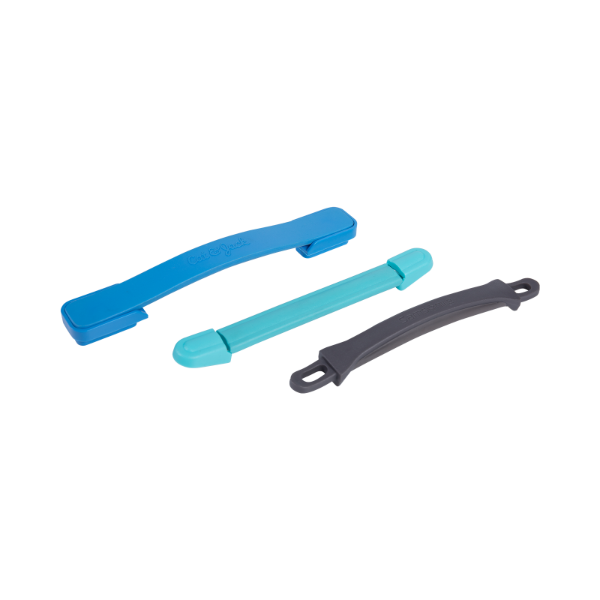
Recessed and Flush Handles
Recessed grip handles sit within a molded cavity in the luggage shell rather than protruding above the surface. This design eliminates snagging on conveyor belts, carousel edges, and storage racks — a significant practical advantage for checked luggage that passes through automated baggage handling systems. The recessed design does slightly reduce grip space and can make the handle harder to grab quickly, but the structural protection offered by the surrounding shell material often results in greater long-term durability than exposed handles on high-volume travel bags.
Padded and Ergonomic Handles
For bags designed to be hand-carried for extended periods — travel duffels, heavy camera bags, oversized carry-ons — padded grip handles significantly reduce hand fatigue and pressure point discomfort. Padding materials include neoprene foam, memory foam wrapped in leather or faux leather, and gel-filled inserts. Ergonomically shaped handles curve to follow the natural contour of a closed hand, reducing the grip force needed to maintain hold and distributing load more evenly across the palm and fingers rather than concentrating pressure on the central ridge of the handle.
Materials Used in Luggage Grip Handle Construction
The material composition of a grip handle determines its durability, feel, weight, temperature resistance, and aesthetic appeal. Different materials suit different price points, use environments, and design languages.
| Material | Key Advantages | Limitations | Typical Use |
| Genuine Leather | Premium feel, ages well, durable | Higher cost, requires conditioning | Luxury luggage, briefcases |
| PU / Faux Leather | Cost-effective, wide color range | Can crack or peel over time | Mid-range suitcases, duffels |
| Rubber / TPR | Non-slip grip, flexible, weatherproof | Less premium appearance | Sports bags, rugged travel gear |
| Nylon Webbing | Very strong, lightweight, low cost | Minimal padding, less comfortable | Budget luggage, backpacks |
| Aluminum / Metal | Extremely rigid, premium look | Heavy, cold in low temperatures | Hardshell luxury cases |
| ABS / Polycarbonate | Lightweight, impact resistant | Can become brittle in cold | Hardshell suitcase handles |
For most travelers, PU leather over a rigid inner core strikes the best balance between comfort, durability, and cost. Premium luggage lines increasingly use full-grain leather wrapping over aluminum or stainless steel cores, combining the structural integrity of metal with the tactile warmth and prestige of natural leather. Rubber and TPR (thermoplastic rubber) grips are the practical choice for outdoor and adventure travel bags where wet conditions, rough handling, and temperature extremes are routine.
Attachment Methods and Structural Integrity
The grip handle itself is only as strong as its attachment to the luggage body. The most common point of failure in luggage handles is not the handle material itself but the interface between the handle and the bag — where repeated load cycles, vibration, and stress concentration eventually fatigue stitching, crack rivets, or pull mounting screws from their anchors.
Riveted Attachment
Metal rivets provide strong, permanent handle attachment on both hardshell and softshell luggage. On hardshell cases, rivets pass through the shell material and secure a backing plate on the interior face, distributing load across a larger area than the rivet head alone. Quality luggage uses solid aluminum or stainless steel rivets rather than hollow pop rivets, which offer significantly lower shear strength. The limitation of riveted attachment is that replacement of a damaged handle requires drilling out the old rivets and fitting new ones — a more involved repair than screw-mounted alternatives.
Screw and Plate Mounting
Many hardshell suitcases use screw-mounted handles with metal backing plates inside the shell. This approach allows handles to be replaced without specialized tools — an important serviceability advantage given that handles are among the most commonly damaged luggage components. The handle bracket is secured by machine screws that thread into captured nuts or metal inserts molded into the shell, providing consistent clamping force and resistance to vibration-induced loosening. Some premium brands use tamper-resistant fasteners to maintain a cleaner aesthetic while retaining field replaceability.
Sewn Webbing Loops
On fabric luggage, handles are typically constructed from heavy nylon or polyester webbing sewn directly into the bag's structural seams. High-quality softshell luggage uses bar-tack stitching — a dense, reinforced stitch pattern — at every stress point, often with multiple rows of stitching and additional reinforcement tape beneath the webbing. The strength of sewn attachment depends on both the stitch density and the quality of the underlying fabric. Handles sewn into thin fabric without backing panels are a known weak point, particularly when the bag is loaded to capacity.
Ergonomic Design Features That Reduce Hand Fatigue
Ergonomics in luggage grip handle design has received increasing attention as manufacturers recognize that hand discomfort is a significant driver of negative user experience, particularly for heavy bags carried over longer distances. Several design principles directly reduce fatigue and pressure point discomfort during use.
- Grip diameter: The ideal grip diameter for most adult hands falls between 30mm and 40mm. Handles that are too thin concentrate pressure on a narrow band of the palm, while excessively thick handles require greater grip force to maintain a secure hold, both causing fatigue more quickly than properly sized grips.
- Contoured cross-section: A handle with an oval or D-shaped cross-section fits the natural closed shape of the hand more comfortably than a perfectly cylindrical handle, reducing the grip force needed and distributing load across more of the palm surface.
- Handle length: A grip zone of at least 120mm accommodates most adult hand widths comfortably. Shorter handles force the fingers to overlap awkwardly, reducing grip security and increasing fatigue, particularly for users with larger hands.
- Standoff height: The gap between the underside of the handle and the bag surface must be sufficient for fingers to pass through easily even when wearing gloves — typically a minimum of 35–40mm. Insufficient clearance causes knuckle abrasion against the bag surface during carrying.
- Surface texture: Light surface texture or soft-touch coating on the grip zone improves slip resistance, particularly when hands are wet or warm. Completely smooth surfaces — especially on rigid plastic or metal handles — become slippery under load and require excess grip force to compensate.
How to Assess Grip Handle Quality Before Purchasing Luggage
When evaluating luggage in person or reviewing product specifications online, several quick checks reveal the true quality of the grip handle before committing to a purchase. These assessments take only a few minutes but can save significant frustration later.
- Flex the handle: A quality handle should feel solid and return firmly to shape when flexed. Excessive flexibility or a hollow feeling indicates thin wall construction or inadequate internal reinforcement.
- Check the attachment points: Examine where the handle meets the bag. Loose stitching, visible gaps between mounting hardware and the shell, or handles that wobble laterally are signs of inadequate attachment that will worsen under load.
- Simulate carrying weight: If possible, pick up the bag with the handle using the weight of the bag plus any contents available. Any discomfort, edge pressure, or instability experienced immediately will only intensify with heavier loads and longer carrying durations.
- Inspect the covering material: Run a fingernail lightly across the grip surface. PU leather that flakes or separates from its substrate with minimal force will deteriorate quickly in use. Genuine leather should feel consistent and show no surface cracking or delamination.
Replacing and Upgrading a Damaged Luggage Grip Handle
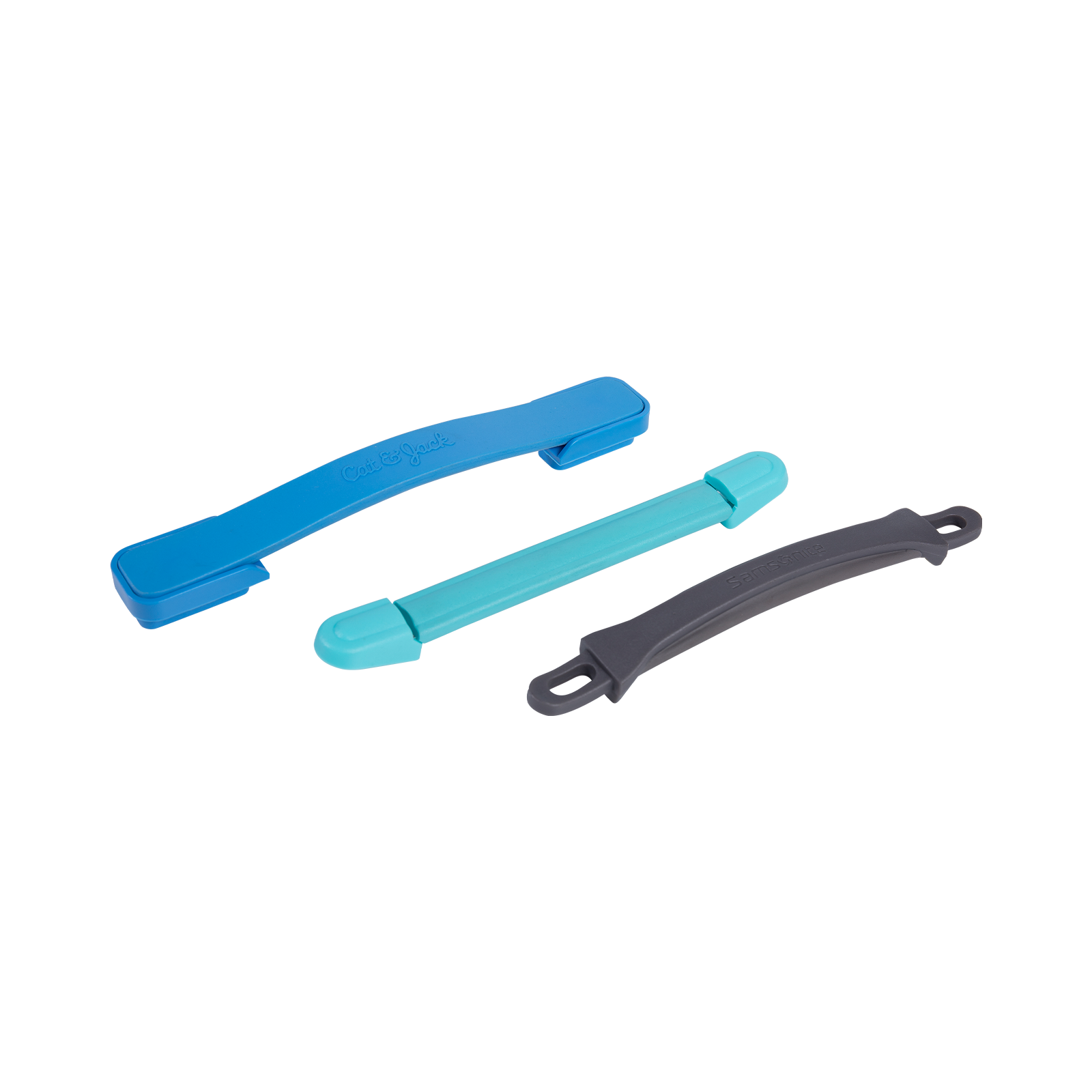
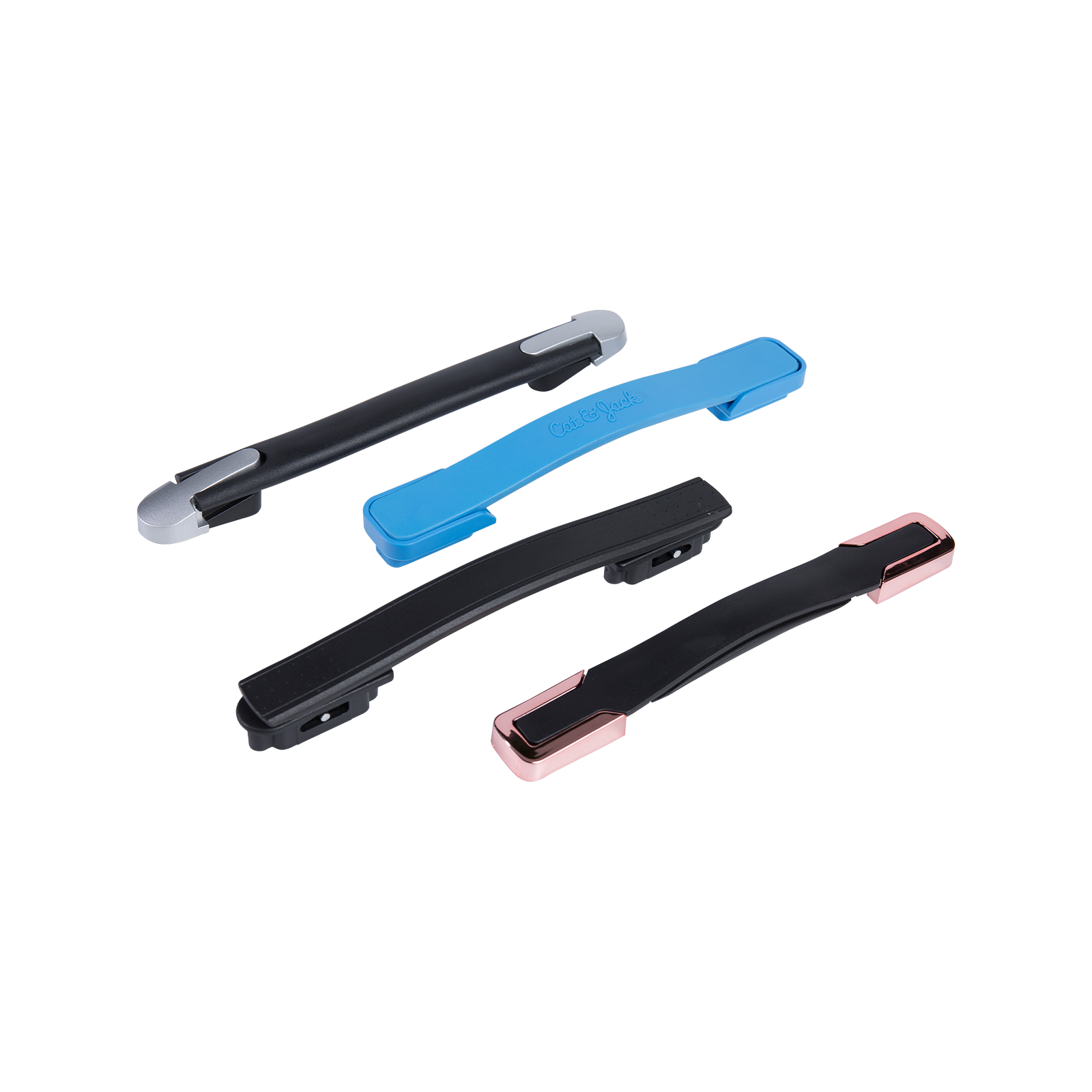
A damaged grip handle does not necessarily mean the end of an otherwise functional piece of luggage. Replacement handles are widely available as spare parts for many major luggage brands, and universal replacement handles designed to fit a range of bag types are sold through luggage repair suppliers and online retailers. Before replacing a handle, identify whether the damage is to the handle itself, the attachment hardware, or the luggage shell around the mounting point — each requires a different repair approach.
For screw-mounted hardshell handles, replacement is straightforward: remove the fasteners, slide out the old handle, insert the new one, and re-secure the screws, checking that the backing plate inside the shell is properly aligned. For riveted handles, a handheld rivet tool and appropriate rivet size make field replacement practical. Sewn fabric handles on softshell bags can be replaced by a luggage repair professional or a skilled home sewer using heavy-duty thread rated for the expected load — typically V-92 or V-138 bonded polyester thread with multiple rows of bar-tack stitching. Investing in a quality replacement handle rather than a budget substitute is always worthwhile; the handle is the single most mechanically stressed component on any piece of carry luggage and is not a place to economize.