

 Español
Content
- 1 Hard-side vs soft-side: the first structural decision
- 2 Carry-on vs checked: match the suitcase to the journey
- 3 Suitcase size sets and flexible sourcing options
- 4 Wheel types: spinners vs two-wheel rollers
- 5 The trolley bar: why the handle deserves attention
- 6 Specialty suitcases for specific travel needs
- 7 A short checklist before you buy any suitcase
Ask ten frequent travelers to name the best type of suitcase and you will get ten different answers. The truth is that there is no universal best type, only a better match for the kind of trips you take. A weekend business flight, a two-week family holiday, and a bulk order of 500 pieces for a retail channel each demand a different format. The practical conclusion comes first: choose the shell structure, then the size, then the wheels, then the smaller details such as handles and locks. This guide explains the main types of suitcases found in luggage catalogs and on factory floors, what each format does well, and what to check before you pay.
Hard-side vs soft-side: the first structural decision
Hard-side suitcases
Hard-side suitcases take the structural decision for you: protection first. A rigid ABS, polycarbonate, polypropylene, or aluminum-magnesium shell resists impact, keeps rain out, and gives fragile objects like perfume bottles, laptops, or camera gear a much better chance of arriving intact, even when baggage handlers are not gentle. The materials behave differently, which explains the wide price spread; a closer look at the material choices for luggage breaks down these differences in detail. ABS is affordable and light but scratches more easily. PC shells bend and spring back under impact, which is why polycarbonate is popular in mid-range and premium lines. PP is springy and resilient, making it a practical choice for high-volume production, and aluminum-magnesium alloy is the rigid, premium option often seen in 18 to 20 inch business cases. The trade-offs are equally clear: hard shells rarely offer external pockets, and most do not expand, so you must fit everything inside a fixed volume.
Soft-side suitcases
Soft-side suitcases put flexibility first. A polyester or Oxford fabric shell can squeeze into a crowded overhead bin, and external pockets offer fast access to passports, boarding passes, or a phone without opening the whole case. Fabric models can also be built with expansion zippers, giving you a few extra centimeters of packing depth when you come home with more than you left with. The compromises are real. Fabric can snag, stain, and wear at the corners, and the frame does most of the protective work. For many people, especially those who tend to overpack, soft-side luggage is the more forgiving daily choice. If that sounds like you, durable Oxford fabric soft-shell trolley suitcases are a solid match: they keep the practical advantages of fabric while rolling on spinner wheels and a reinforced telescopic frame.
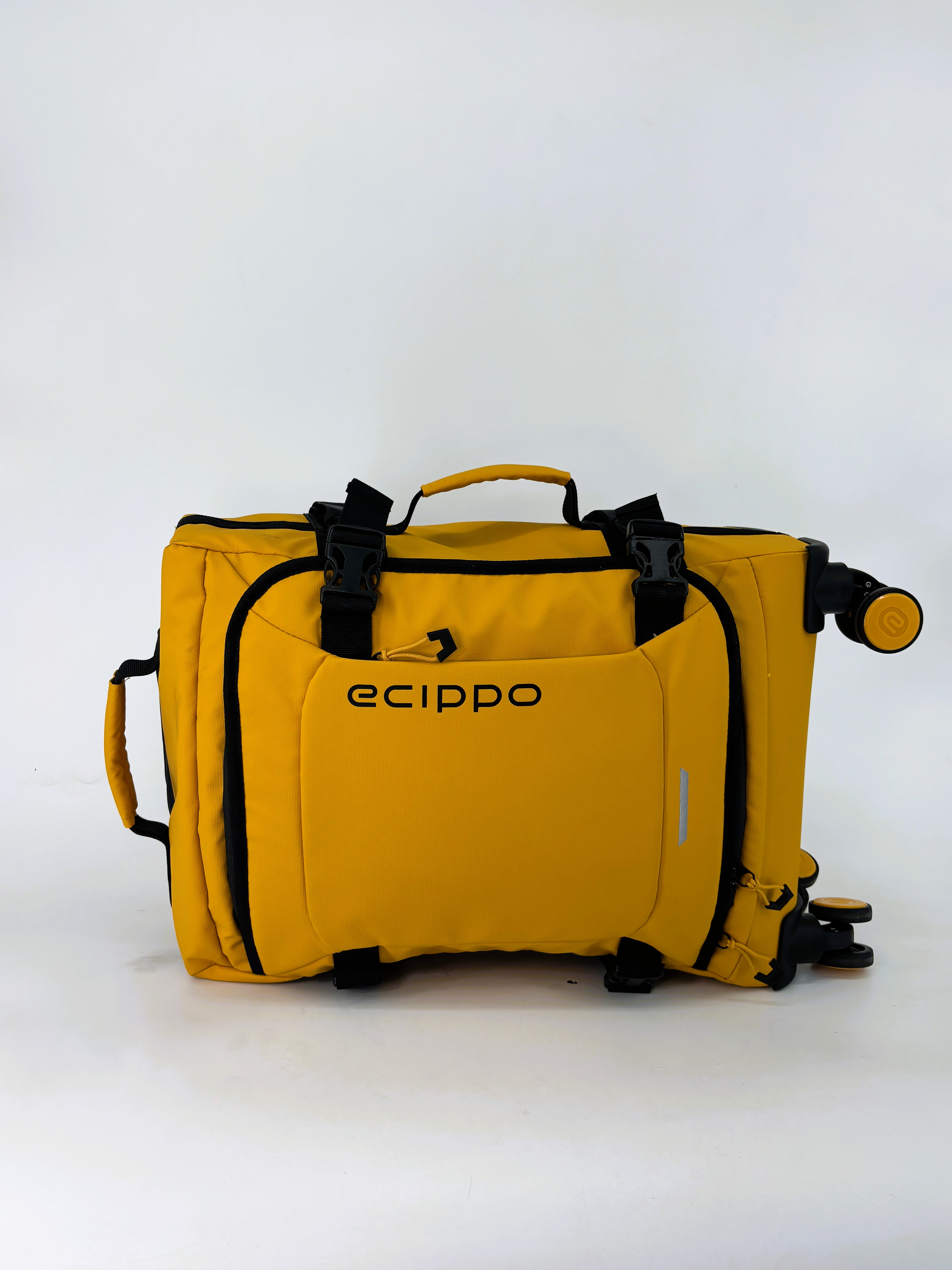 Wholesale Traveller travelling oxford trolley luggage suitcase soft shell boardiJiaxing Sport Hardware & Machinery Co., Ltd is China wholesale Traveller travelling oxford trolley luggage suitcase soft shell boarding c...View Product →
| Criterion | Hard-side | Soft-side |
|---|---|---|
| Impact protection | High | Moderate |
| Empty weight | Low to moderate with ABS, PP, or PC | Light if fabric only; heavier with a strong frame |
| External pockets | Minimal or none | Several useful quick-access pockets |
| Expansion capacity | Rare | Common |
| Weather resistance | Good | Depends on fabric finish |
| Best suited for | Electronics, fragile items, business trips | Family travel, road trips, overpacking |
Carry-on vs checked: match the suitcase to the journey
After the shell decision comes the size question. Carry-on suitcases, normally 18 to 20 inches, are designed to ride in the cabin. They keep you out of the baggage claim line, cut the risk of lost luggage, and most airlines work with broadly similar cabin allowances, even though exact limits vary by carrier. A commonly cited reference is about 55 x 40 x 20 cm (21.5 x 15.5 x 7.8 inches), and a properly proportioned 18 to 20 inch case stays inside that envelope. Checked suitcases, normally 24 to 28 inches, hold far more but cost you time at the airport, weight allowance, and a small risk of damage in the hold.
This is where the no-universal-best rule matters most. Frequent business travelers should generally sink their budget into a premium carry-on; for example, 18 to 20 inch magnesium-aluminum carry-on cases offer a stiff shell, smooth wheels, and a cleaner presentation in meetings. Travelers who check bags on long trips should instead put the money into a tough large shell with reliable locks and wheels, since the checked case sees more abuse.
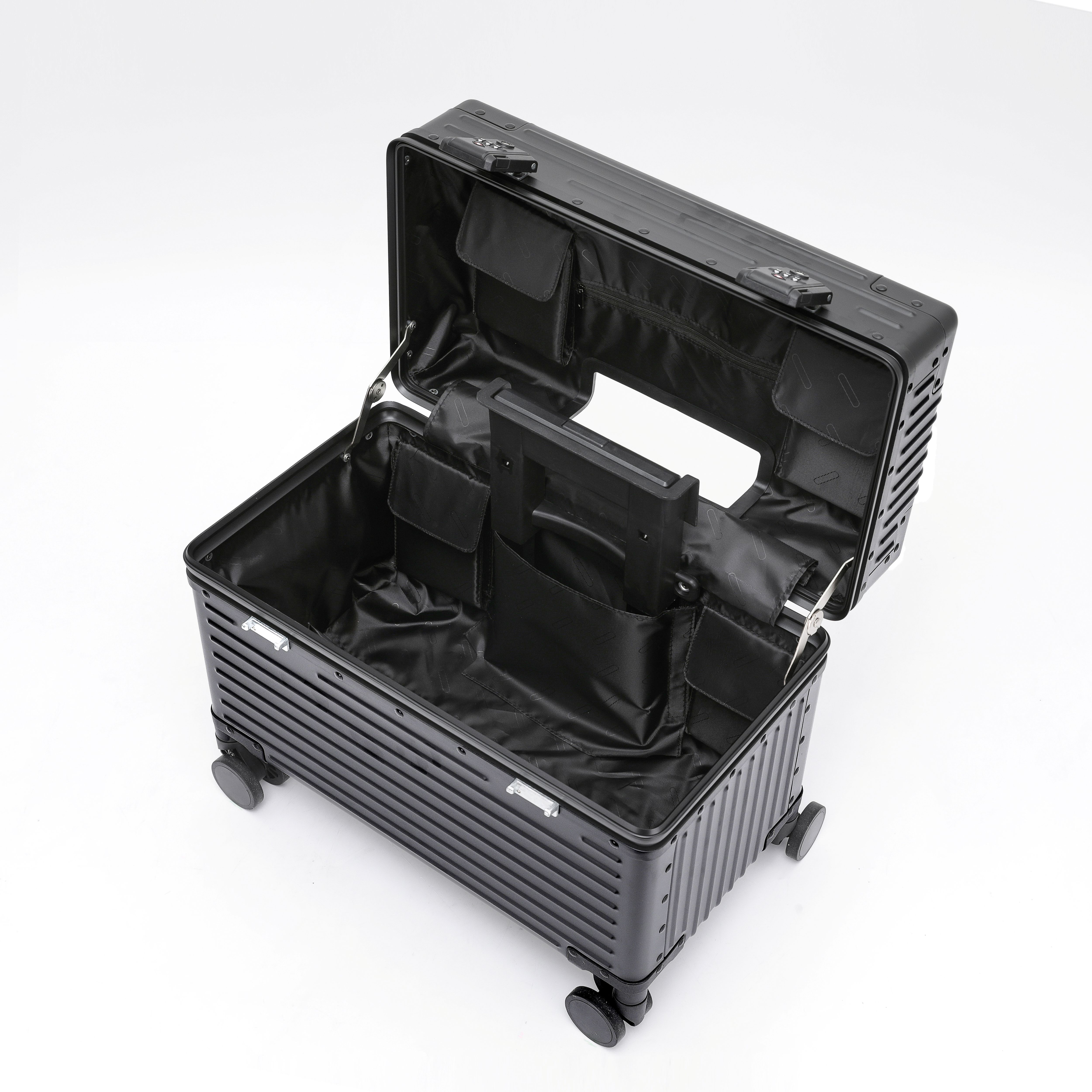 Wholesale 18" 20" Trolley magnesium aluminum luggage suitcase multi functional iJiaxing Sport Hardware & Machinery Co., Ltd is China wholesale 18View Product →
Suitcase size sets and flexible sourcing options
Suitcase sets exist because most buyers do not want to calculate the perfect combination themselves. The most common configurations are 3-piece sets in 20 + 24 + 28 inches, 4-piece sets that add a small cosmetic or cross-body case, and 5-piece or larger sets that include a weekender or backpack. A set also gives the most consistent cost per piece, which is why wholesalers and retailers order them by the container.
| Size | Typical use | Practical notes |
|---|---|---|
| 18 inch | Cabin carry-on | Best for 1 to 3 night business trips |
| 20 inch | Standard carry-on | Fits most overhead bins with room to spare |
| 24 inch | Short to medium check-in | A practical compromise between volume and portability |
| 26 inch | Medium to long check-in | Good for family or two-week trips |
| 28 inch | Maximum checked size | Check airline weight limits before filling it |
From a sourcing perspective, sets also open up flexible delivery options. A manufacturer can ship finished cases ready for retail, or ship semi-finished shells and SKD/CKD components that the buyer assembles locally, adding their own lining, color, logo, or packaging. For importers who want finished quality with local assembly control, PP 3-piece suitcase shells with SKD support are a typical starting point.
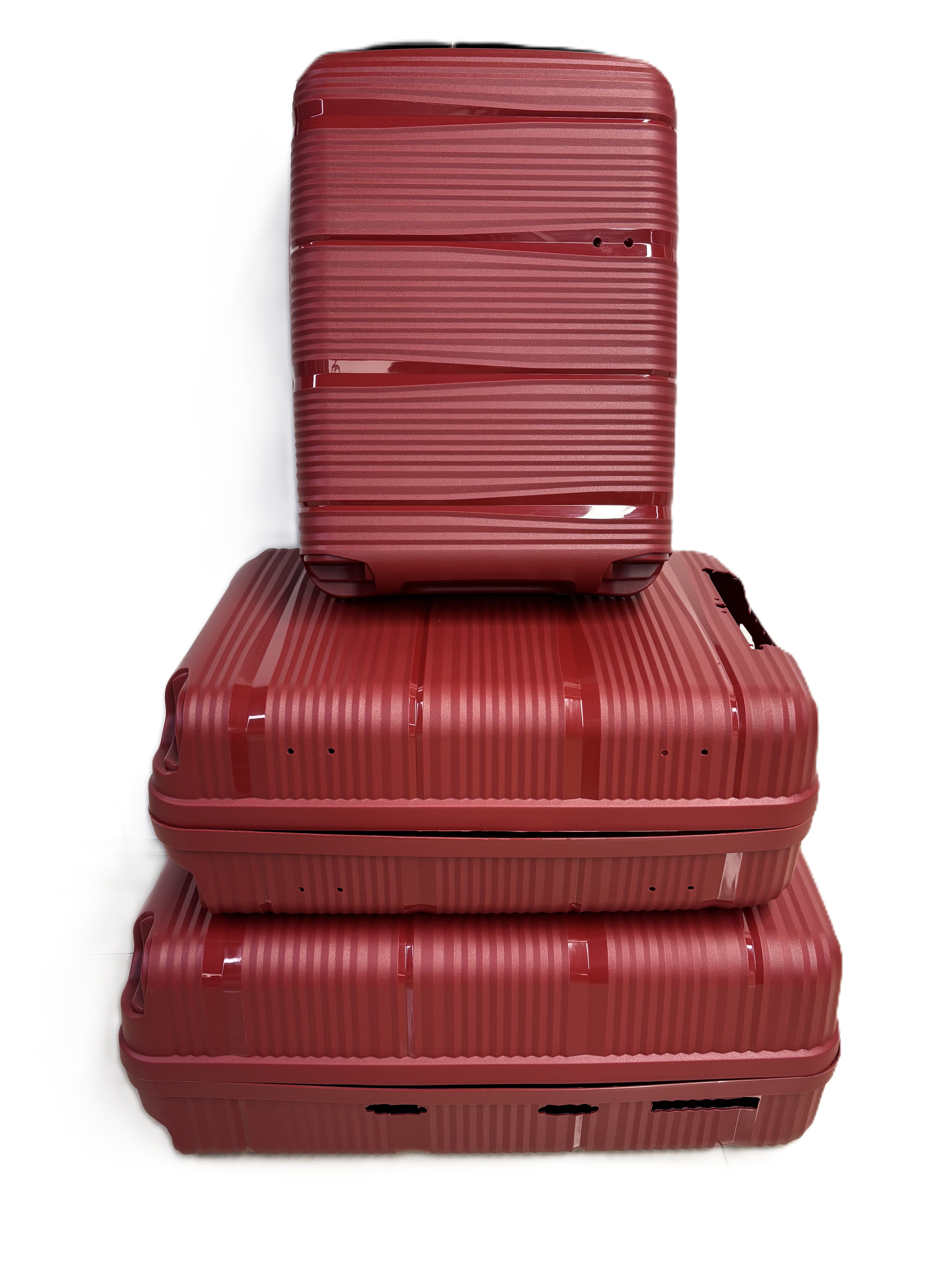 Wholesale 3 size PP luggage case shell SKD & finished supported factory wholesalJiaxing Sport Hardware & Machinery Co., Ltd is China wholesale 3 size PP luggage case shell SKD & finished supported factory wholesaler i...View Product →
Wheel types: spinners vs two-wheel rollers
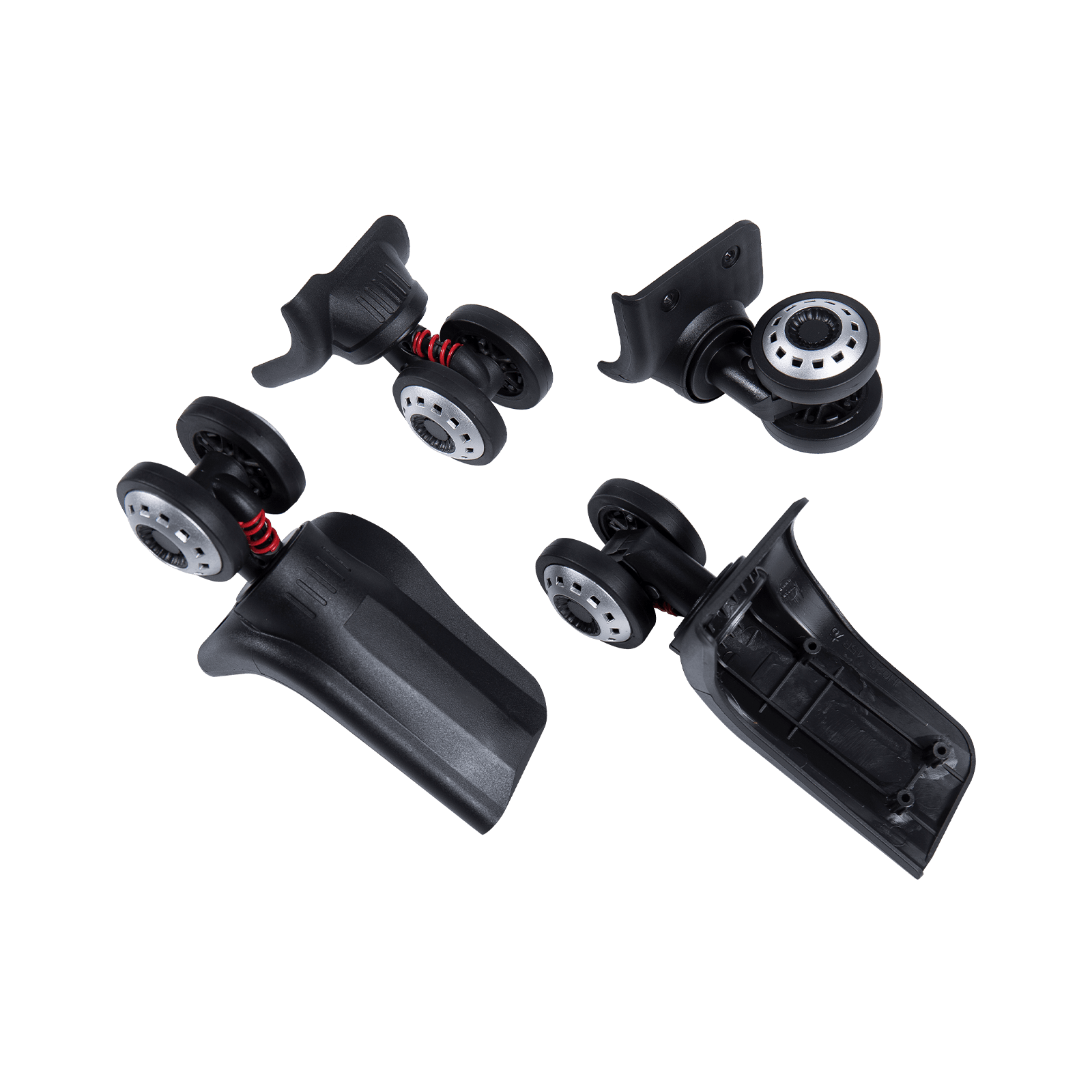
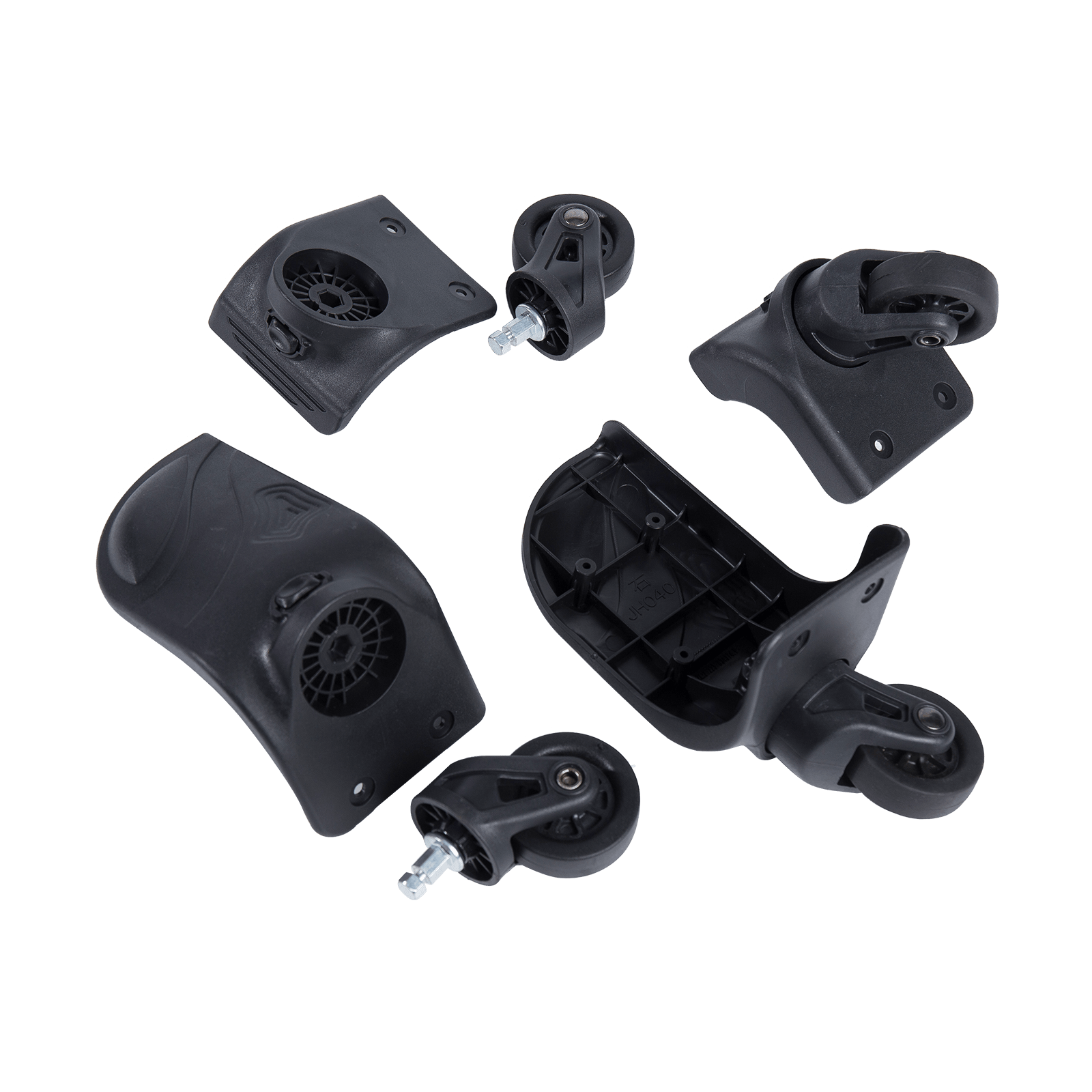
Wheel type changes how a suitcase feels from the first step in the terminal. Spinner suitcases roll on four 360-degree wheels and stand upright while you walk, so your wrist and shoulder do less work on smooth floors. Two-wheel rollers behave like a pull-trolley, feel more stable on cobblestones and gravel, and often recover a little interior depth because the wheel housings take up less space. Most modern travelers choose spinners, but durability is where cheap luggage fails. Wheels crack, rattle, jam, or stop completely after a few rough trips. Look for wheels with a solid, well-fitted shell in PP or PU depending on how much rolling noise you accept, and confirm that replacement wheels are available. Our guide to choosing the right luggage wheels for your travel needs covers the practical differences in more depth.
The trolley bar: why the handle deserves attention
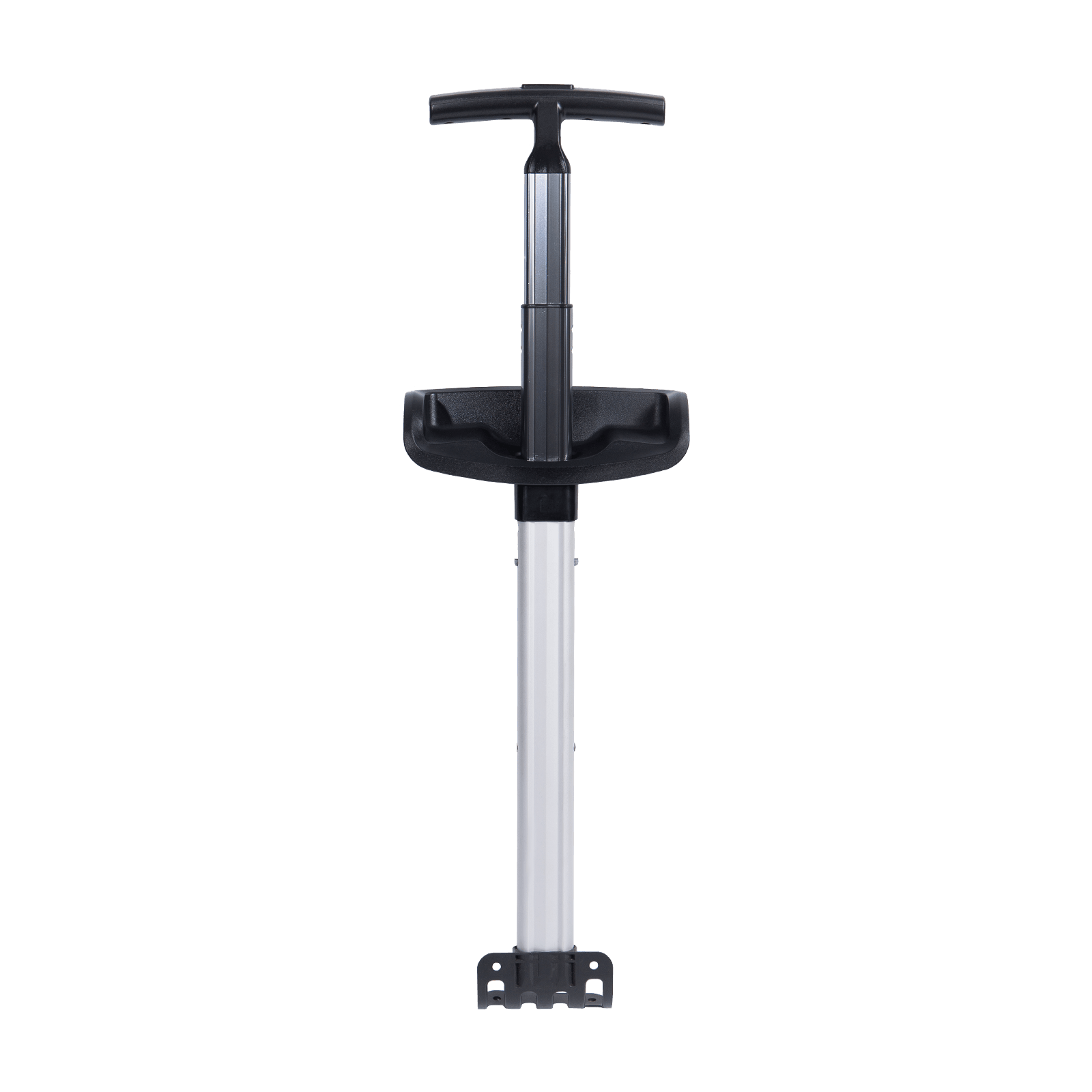
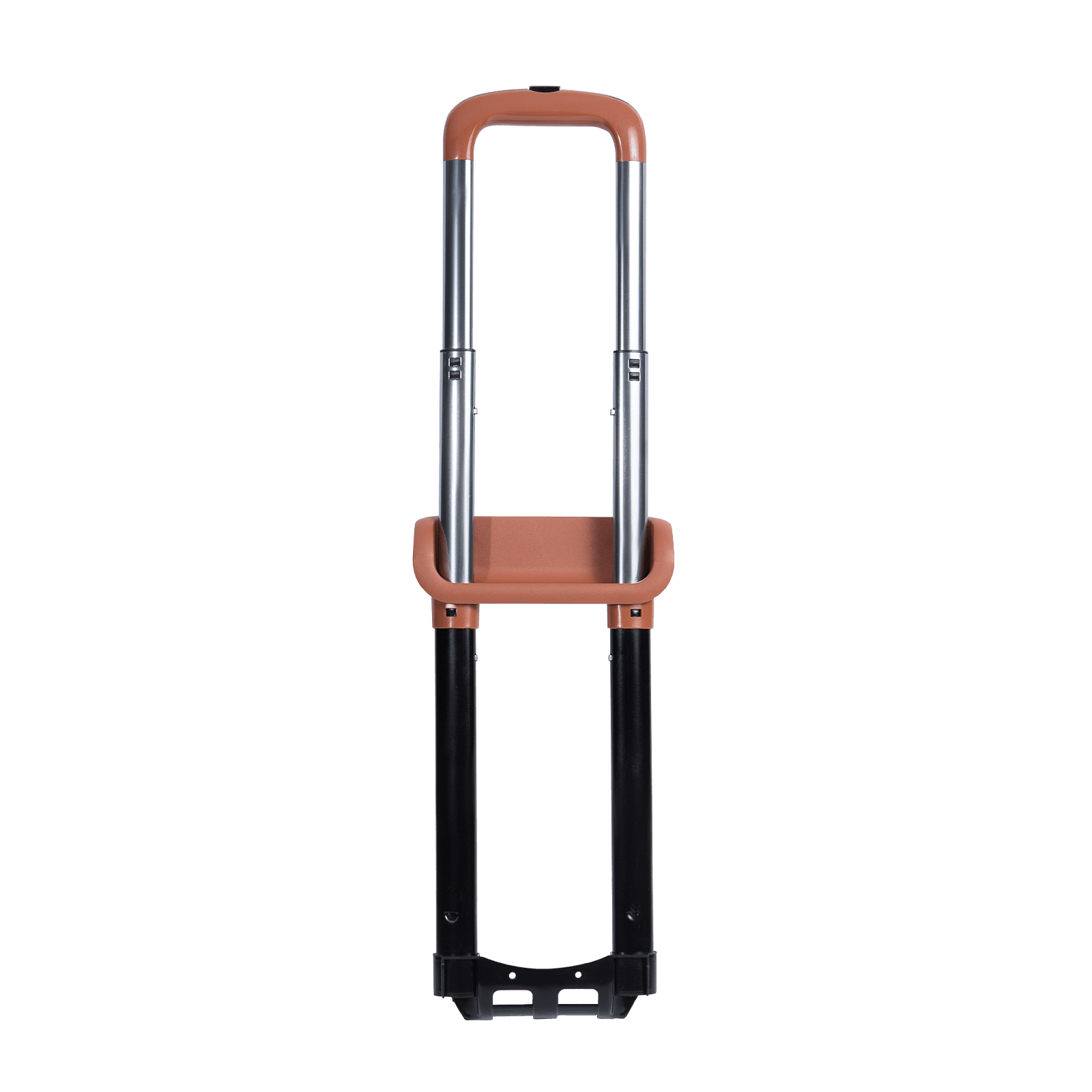
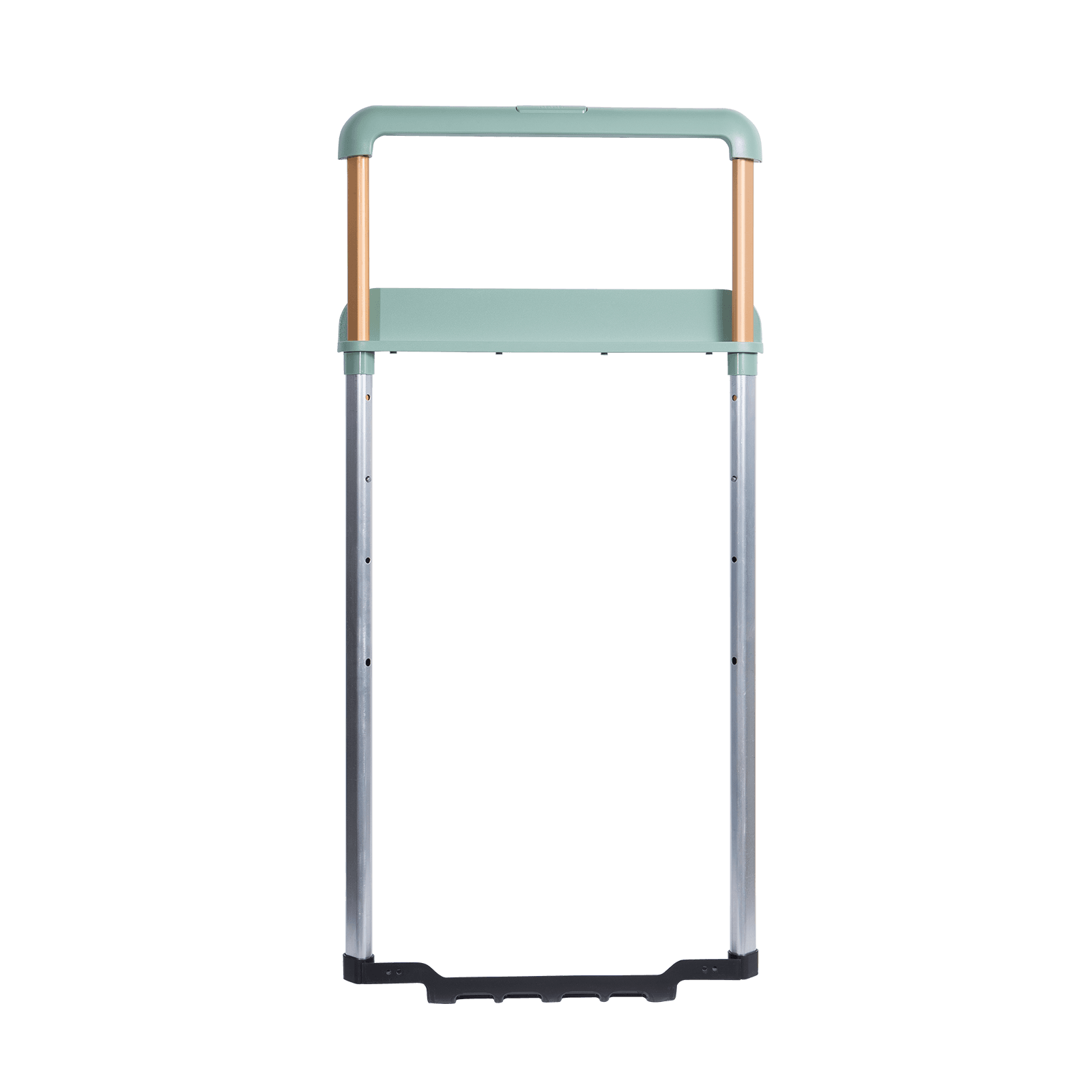
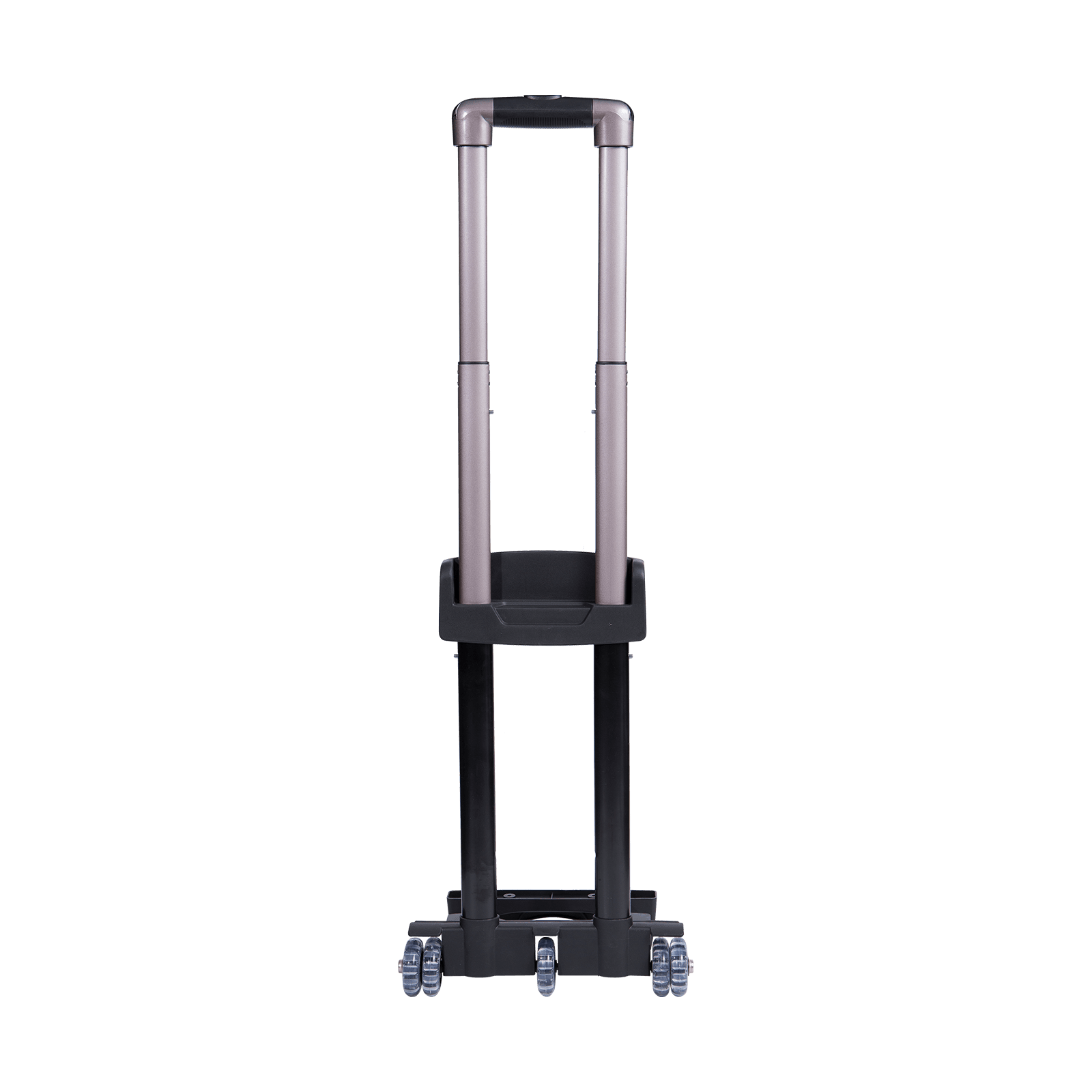
The trolley bar is the part you touch most often and notice the least, until it fails. A good telescopic handle extends smoothly, locks firmly at the height you select, and does not wobble sideways when you push a loaded case. This matters more than it sounds, because the handle transfers your pulling force to the wheels and the frame. Double-tube designs are generally stiffer, and they let you hang a shoulder bag on top without bending the tubes. This is why the luggage pull rod is described as the heart of a suitcase, and it should be tested, not assumed: extend and retract it several times in the store, wiggle it side to side, and check the locking buttons.
Specialty suitcases for specific travel needs
Beyond the main categories, several specialty formats solve narrower problems. Cosmetic and beauty cases, commonly 7 or 14 inches, are built for makeup, personal care, and gift packaging. Pet carrier luggage, including airline-approved soft bags and transparent PC pet trolley cases, lets small dogs and cats travel in the cabin or tag along with a suitcase using an integrated luggage strap. Wheeled duffle bags and weekenders sit between a suitcase and a travel bag: they hold a lot, compress when half-empty, and fit more easily into a car trunk. If your travel involves specific gear or companions, one of these niche types will often outperform a general-purpose suitcase.
A short checklist before you buy any suitcase
Whether you are buying one suitcase for yourself or containers of cases for retail, the same short checklist applies. Work through it in order, and you will avoid most of the mistakes that lead to returns and complaints.
- Empty weight. A large case that is already heavy leaves little room inside airline limits; weigh it before you fall in love with it.
- Shell behavior. Hard shells should flex and spring back without cracking; soft shells should have neatly sewn seams and reinforced corners.
- Wheel smoothness. Roll the case on hard floors and, if possible, rougher pavement; listen for rattles and check for lateral play.
- Handle function. Extend and retract it several times, verify that it locks at each height, and test for wobble.
- Locks and zippers. Combination locks and TSA-compatible options are common; zippers should run smoothly without catching.
- Order terms. For bulk purchases, agree on finished, semi-finished, or SKD/CKD delivery, plus sample testing, color, logo, lining, and packaging before production starts.
None of this means you need to become a luggage engineer. It simply means that the right suitcase is the one that matches your structure preference, trip length, and airline reality. Choose the shell style first, match the size to the journey, then verify wheels, handle, locks, and empty weight. When you buy at scale, add one more step: confirm the customization and delivery options with the factory before you commit.