

 Español
Content
You have just cleared customs after a fourteen-hour flight, and at the baggage carousel you watch a suitcase arrive with one wheel snapped off and its trolley handle stuck halfway up. That suitcase was probably fine for a short domestic hop. International travel is a different test: stricter size rules, tighter weight limits, and baggage systems that punish weak components. The conclusion up front is simple. The best luggage for international travel is not the most expensive or the most fashionable case. It is the case that clears the strictest airline rules on your itinerary, weighs as little as possible when empty, and carries wheels, a trolley bar, handles, and a lock that can survive years of rough handling.
What International Travel Changes About Luggage
International flights are governed by more variable size and weight limits than most domestic routes. The common global benchmark for checked baggage is 158 linear centimeters (62 inches), the sum of height, width, and depth. Many carriers in Europe and Asia then add a weight cap, typically 23 kg per bag, sometimes less on economy fares. Carry-on rules are even more fragmented. A bag that passes an American carrier's 22 x 14 x 9 inch gate check can be rejected by a European or Asian low-cost airline enforcing a 55 x 40 x 20 cm box and a 7 kg weight limit.
The practical implication is straightforward: buy luggage for the strictest route you plan to fly, not the most forgiving one. For frequent multi-country trips, that usually means a compact carry-on around 18 to 20 inches and a checked bag no larger than 26 to 28 inches. Our guide to common airline restrictions on luggage size and weight covers the figures route by route, and they are worth reviewing before you commit to a purchase.
Material Choices: Hard Shell versus Soft Shell
The shell material determines how much punishment a suitcase can absorb. For international travel, the realistic options come down to six categories:
| Material | Empty weight | Impact resistance | Main weakness | Best suited for |
|---|---|---|---|---|
| Polypropylene (PP) | Low to medium | Good flex and spring-back | Scratches under rough handling | Budget-conscious long-haul travel |
| ABS | Low | Moderate | Cracks more easily on sharp impacts | Short trips and light packing |
| ABS/PC blend | Low to medium | Good | No significant weakness | Most international travelers |
| Polycarbonate (PC) | Low | High | Higher price | Frequent flyers |
| Aluminum-magnesium alloy | Medium to high | Very high | Dents and adds empty weight | Business travel and premium carry-ons |
| Oxford fabric / soft shell | Low | Flexible, but can rip | Less rigid protection for fragile items | Over-packers and expandable needs |
Weight matters in two ways. A heavier empty shell leaves less room under a 23 kg checked limit or a 7 kg carry-on limit, and it adds fatigue when you are running through a terminal. But lighter is not automatically better. Extremely thin shells can crack under the impact of automated baggage systems, so look for impact-tested materials rather than the lightest sheet available. For a closer comparison, our summary of material choices for luggage explains how shell thickness, frame design, and structural reinforcements work together in real conditions.
The Components That Decide Real-World Durability
Ask a luggage repair technician what fails first, and the answer is almost always the same: wheels, then trolley bars, then handles. These are the parts that separate a durable suitcase from a disposable one. They are also the parts where a manufacturer can cut costs without being noticed in a showroom.
Wheels: The Part That Takes Every Curb and Crack
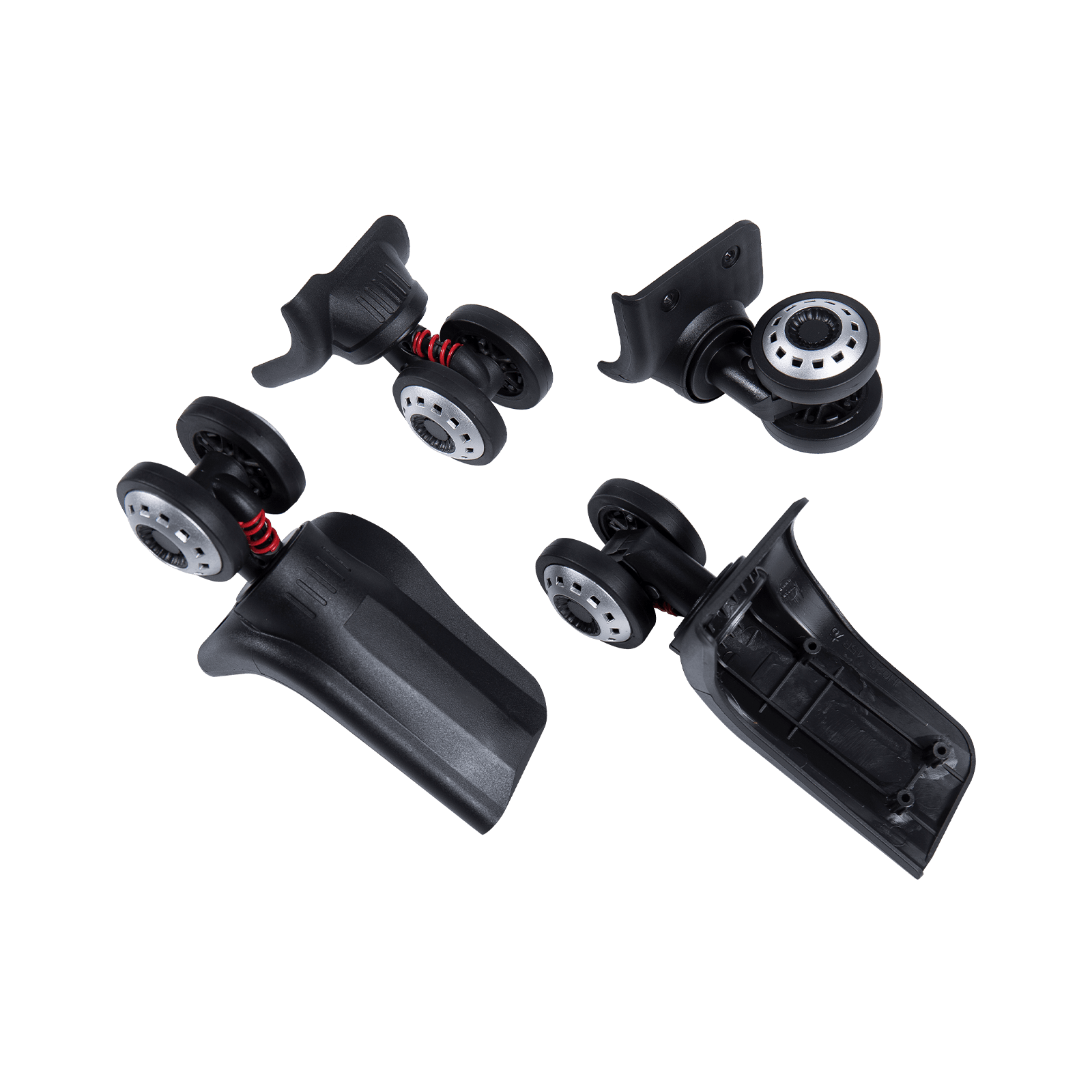
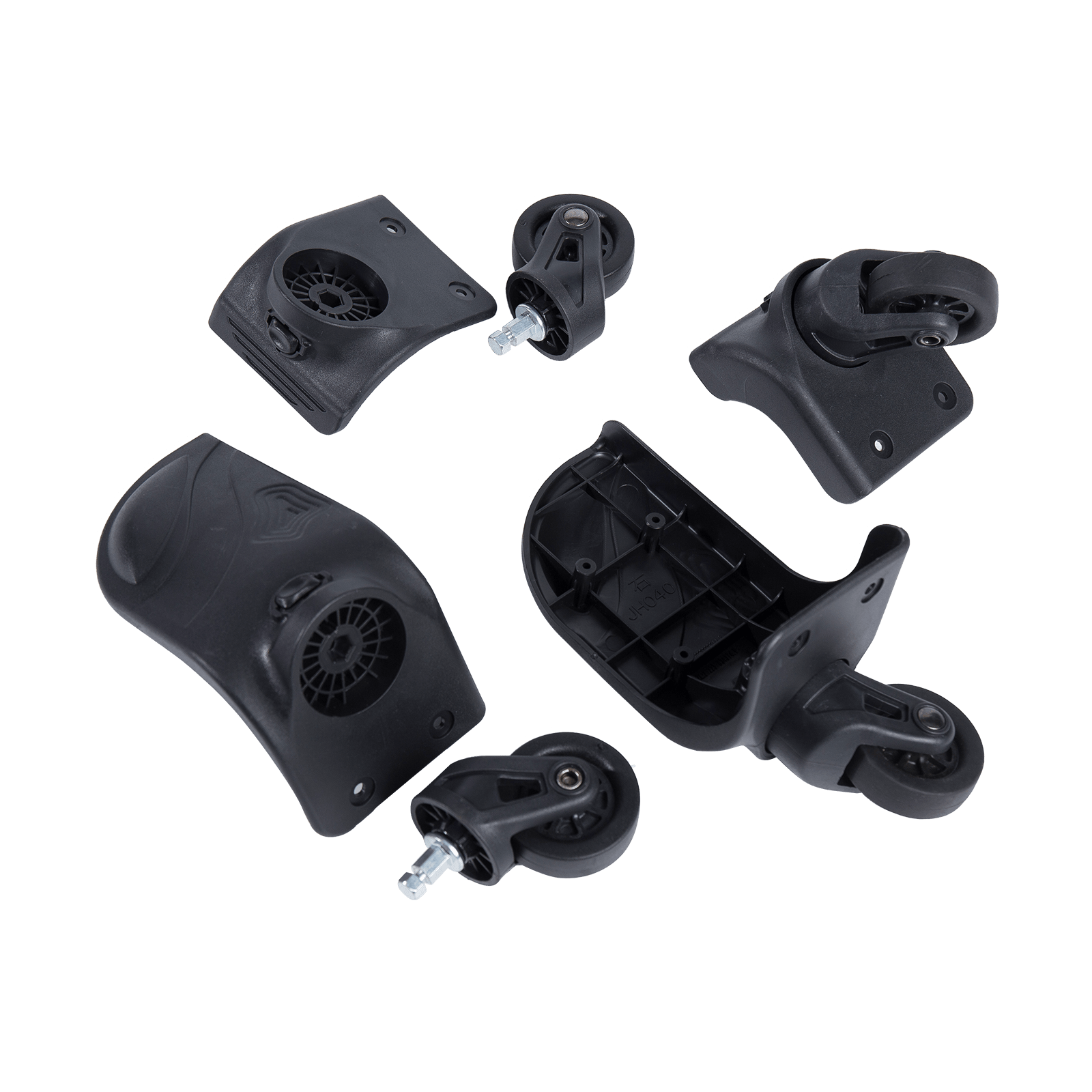
For international travel, four 360-degree spinner wheels, sometimes called universal wheels, are the practical standard because they let you roll a bag beside you rather than drag it behind. Two things matter more than wheel count: the wheel material and the housing. A sturdy PP plastic wheel shell resists the impact of curbs, escalators, and paving stones better than thin rubber-coated wheels, while the rolling surface itself should stay quiet on hard terminal floors. If a wheel fails on a trip, replacement matters. Detachable caster wheels can be swapped without opening the case, which is a real advantage when you are far from home.
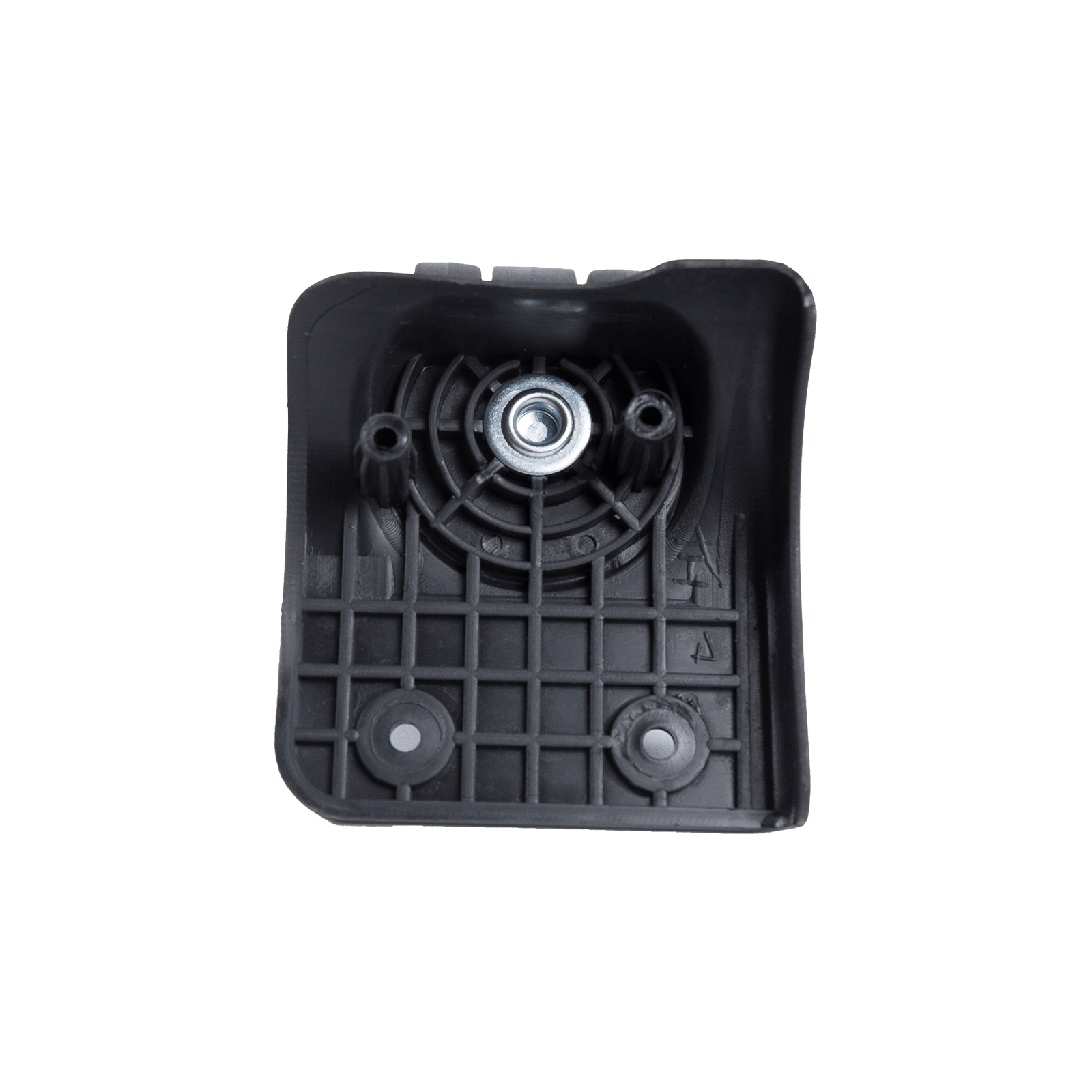 Wholesale PP plastic wheel shell luggage wheel Suppliers, CompanyJiaxing Sport Hardware & Machinery Co., Ltd is China wholesale PP plastic wheel shell luggage wheel suppliers and company, exporter, 1. P...View Product →
Trolley Bars and Handles: The Everyday Stress Points
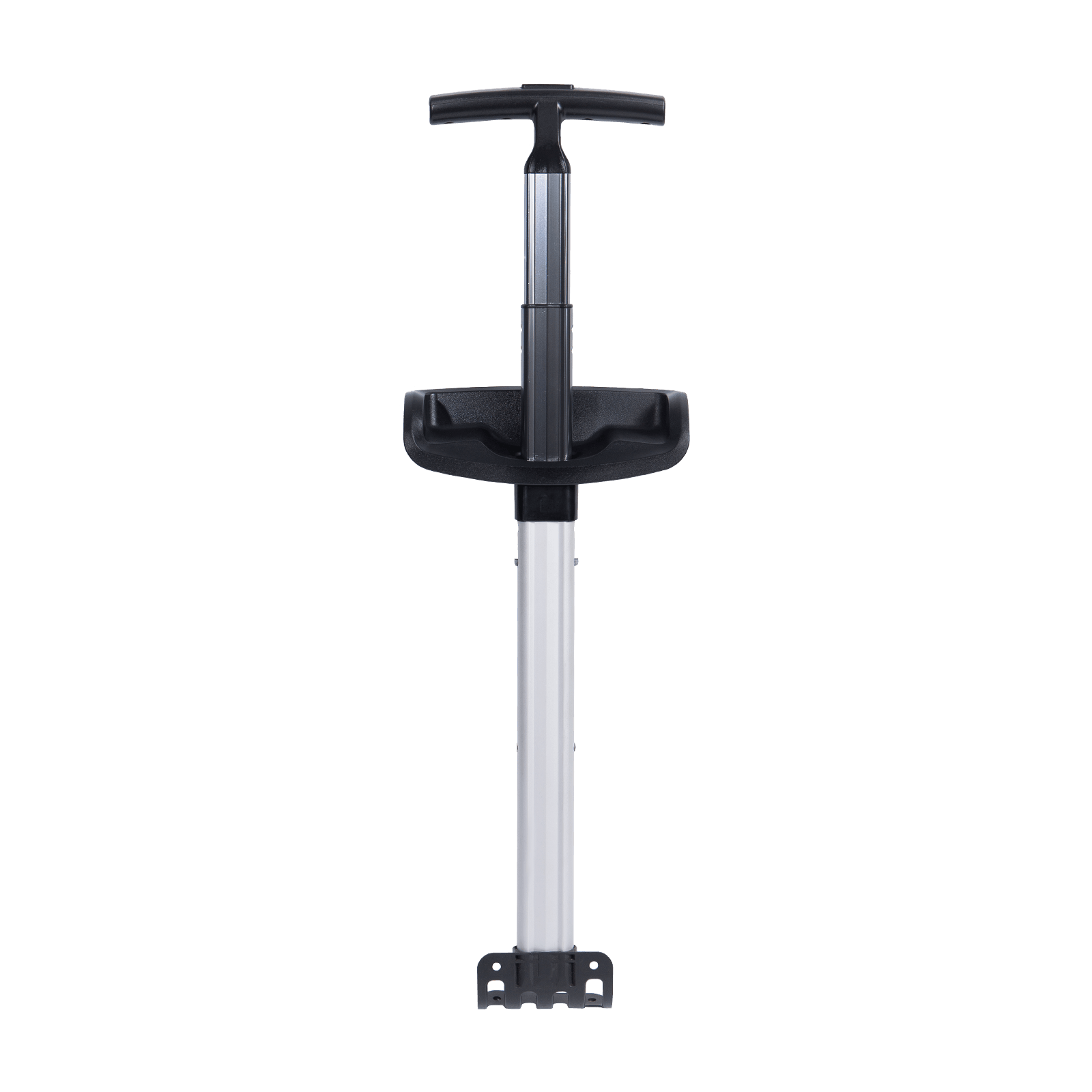
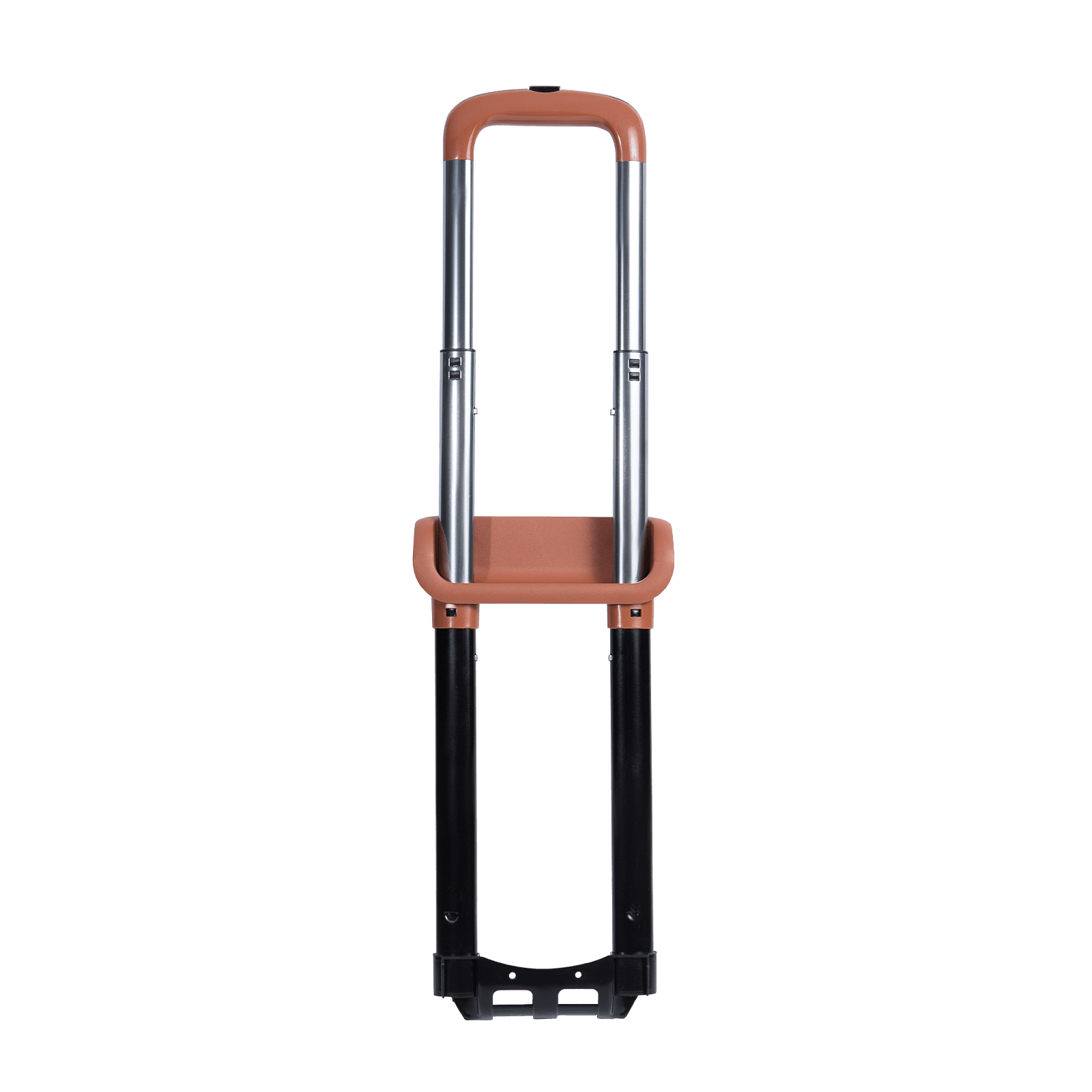
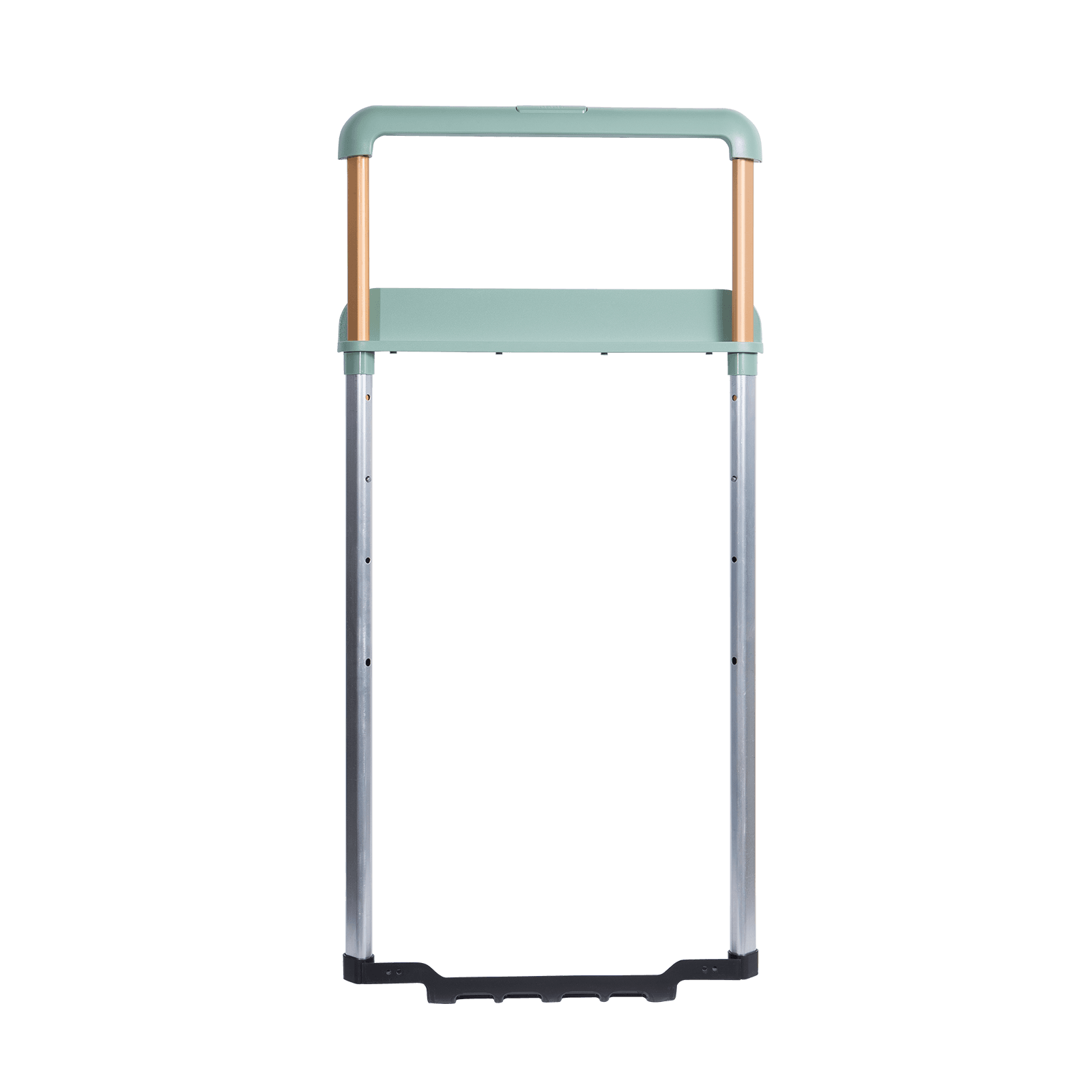
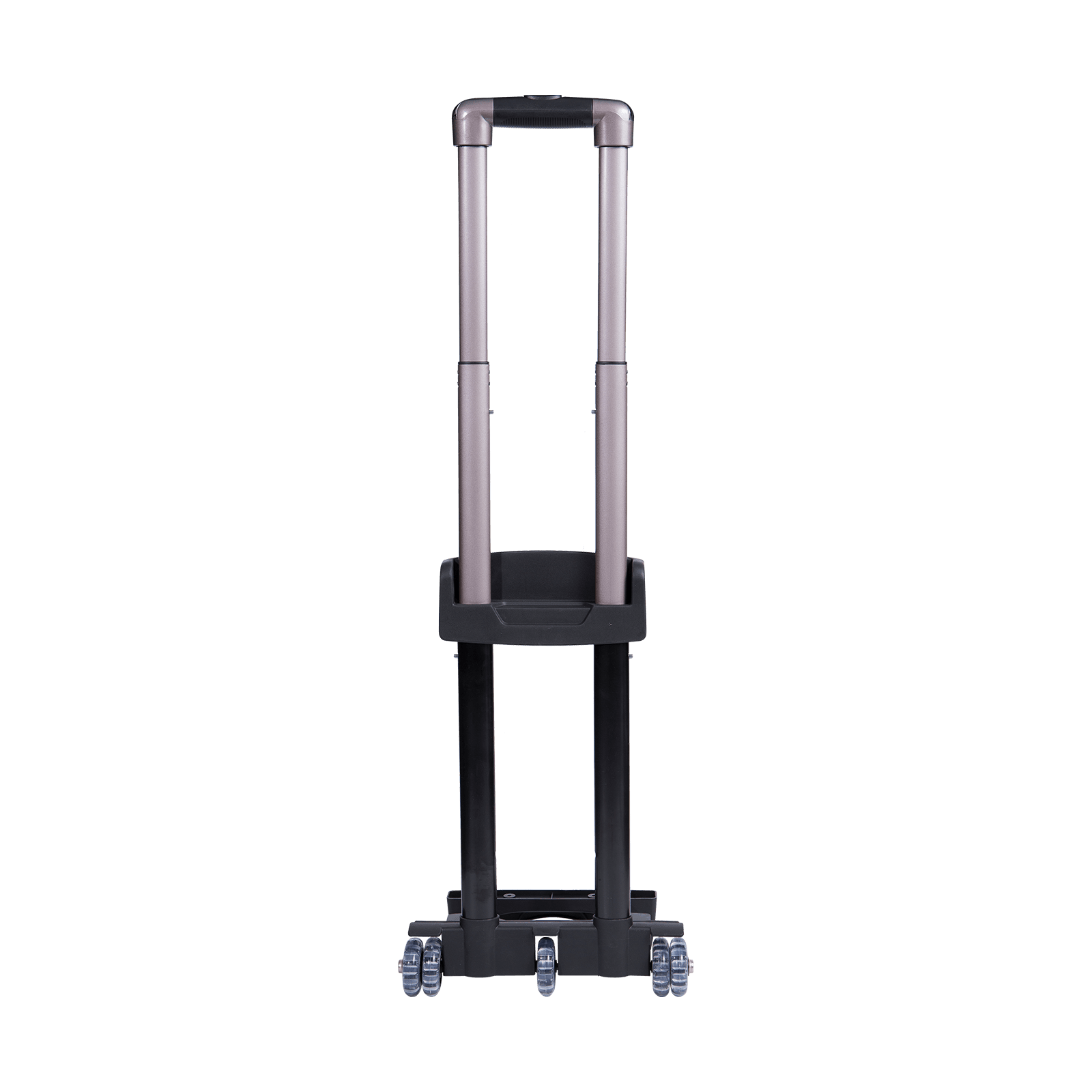
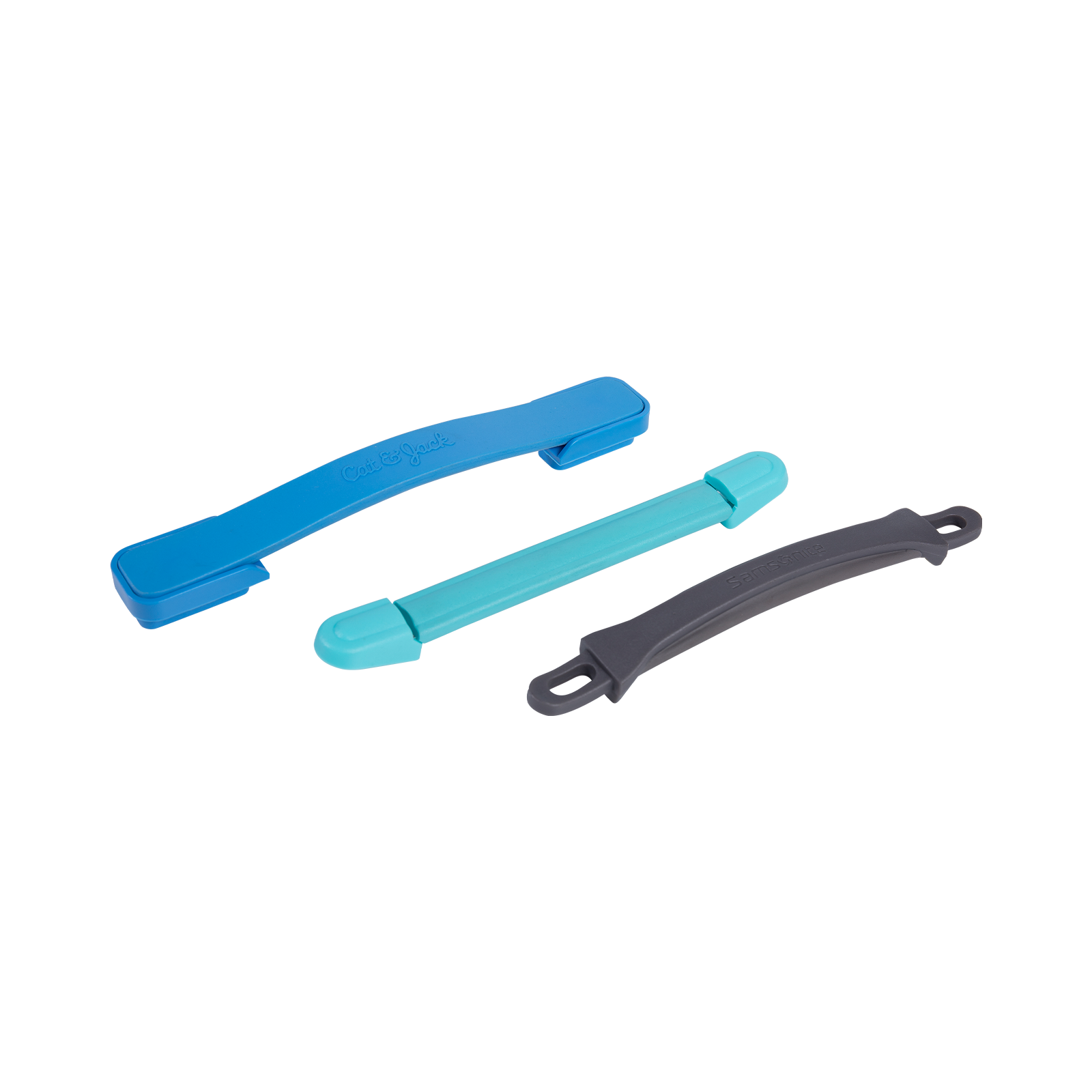
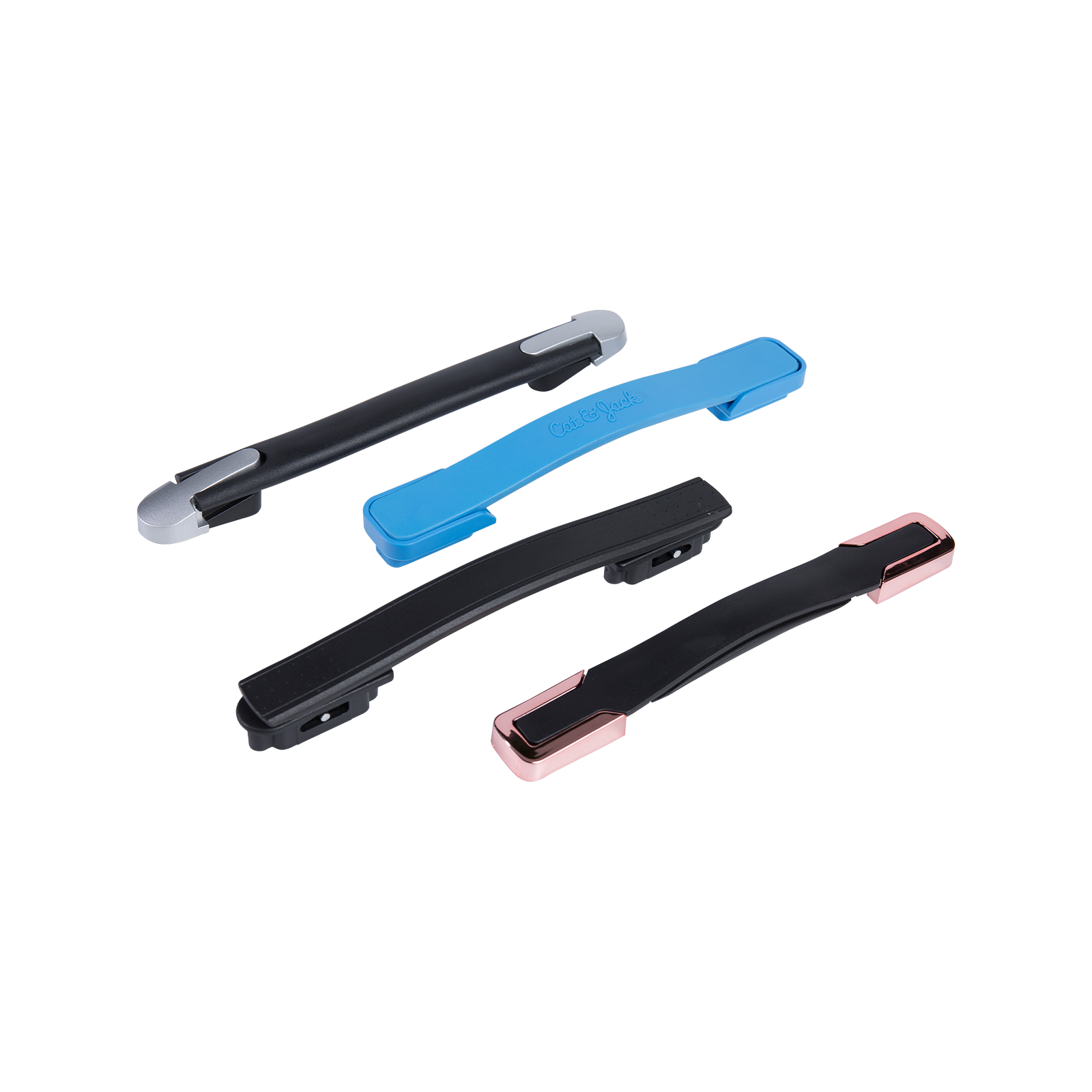
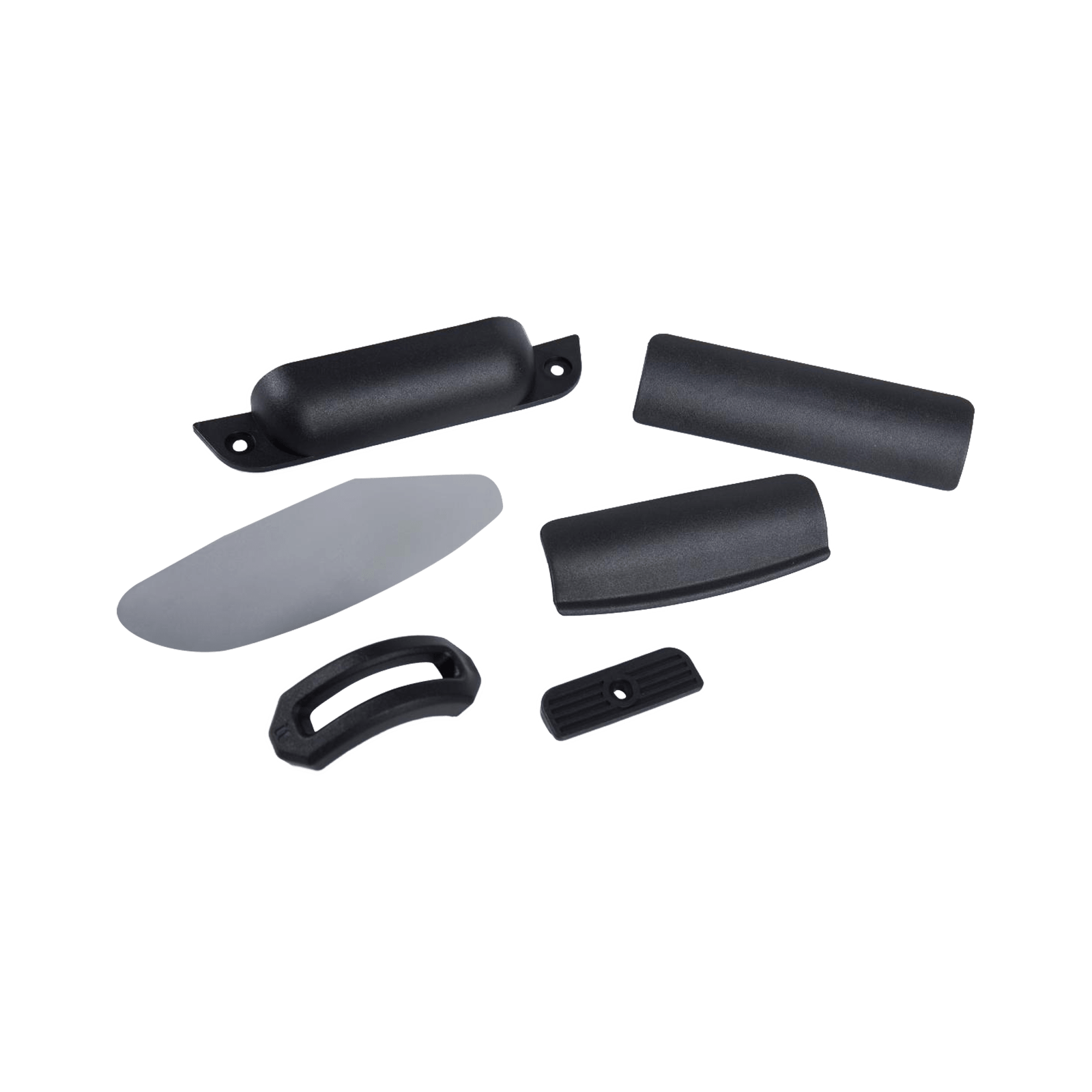
A telescopic trolley bar is loaded every time you lean on it, lift the case, or let the bag rest against your leg in a queue. That is why many manufacturers, our own included, use aluminum-magnesium alloy bars and double-tube designs. They resist bending under load and stay stable even with a fully packed case. If the bar feels loose or wobbles in the shop, it will only get worse later. The same logic applies to handles. They must be firmly attached, comfortable to grip, and able to withstand the pull of baggage handlers without cracking. Handle shape and attachment points can look identical across two suitcases and perform completely differently after fifty trips.
Locks: The Reason Your Checked Bag Can Get Inspected
On international itineraries, especially ones touching the United States, a TSA-recognized lock matters because inspectors can open a locked bag without breaking it. A customizable TSA-compatible luggage lock gives you security on the road and lets agents use their master key instead of cutting the zipper. For routes that never pass through US security, a sturdy three-dial combination lock is usually sufficient. What you want to avoid is a lock mechanism that jams after airport temperature swings or rough handling.
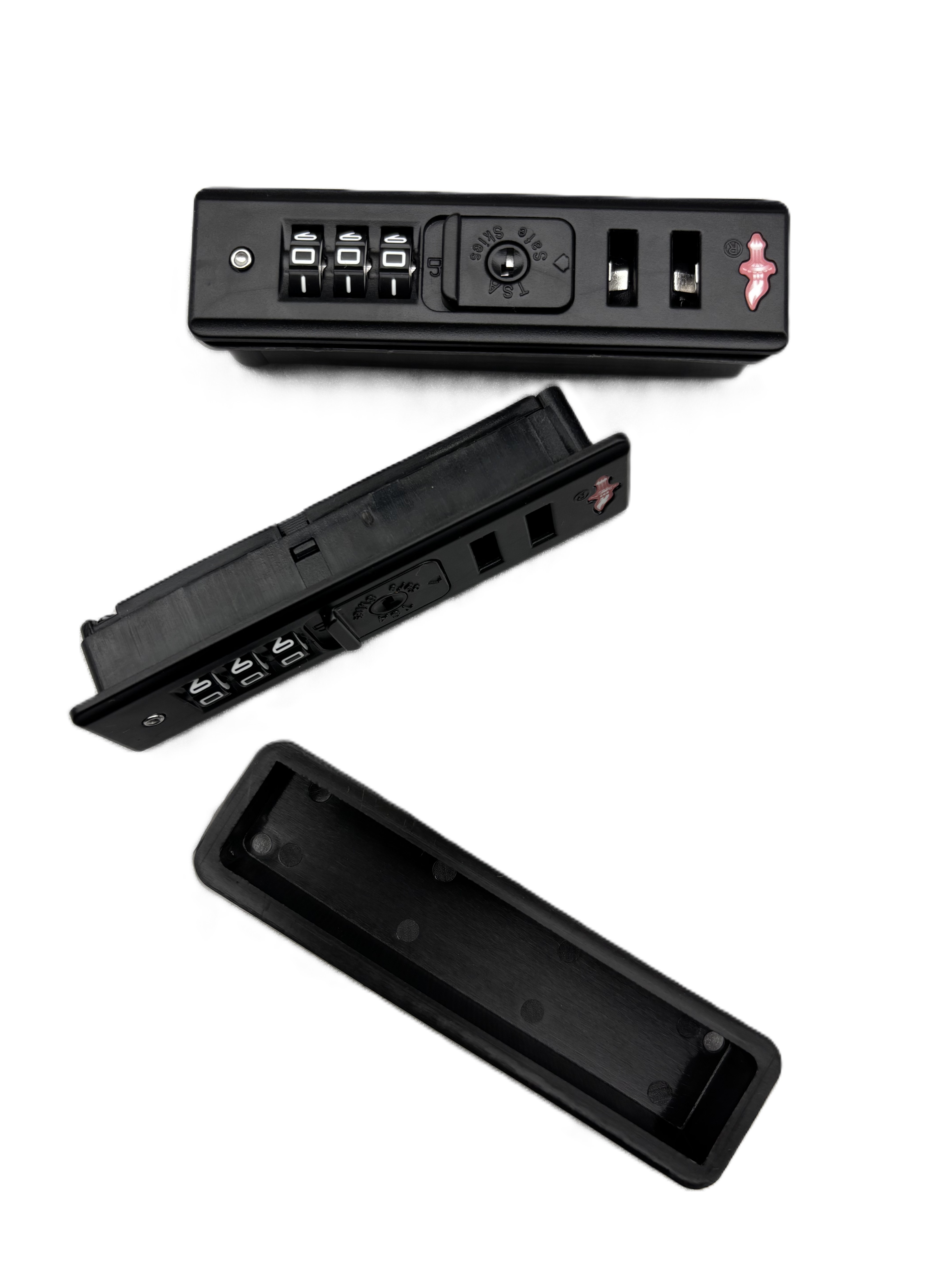 Wholesale OEM/ODM factory wholesale customized color safety portable luggage locJiaxing Sport Hardware & Machinery Co., Ltd is China wholesale OEM/ODM factory wholesale customized color safety portable luggage lock s...View Product →
These parts are the reason luggage brands rely on specialized factories rather than assembling cases entirely in-house. Understanding the building blocks of durable and functional travel bags helps you judge a suitcase by what is inside the shell, not just by the cosmetic finish.
Size, Expandability, and How You Actually Pack
A single carry-on is enough for a three-day business trip or a week-long trip in warm weather with laundry access. Beyond that, the choice is between a medium checked case of 24 to 26 inches and a large one of 28 inches. The largest cases feel generous until you hit a 23 kg limit. A 28-inch hard shell filled with shoes, toiletries, or camera gear reaches that number sooner than most people expect.
An expandable case adds roughly five to seven centimeters of depth, which is useful for shopping trips home, but the extra volume still counts against you on weight-limited checked bags and strict carry-on scales. Weigh the tradeoff honestly. For most international itineraries, the practical sweet spot is a 20-inch carry-on plus a 24- to 26-inch spinner for checked luggage.
Features such as a front-opening laptop pocket, USB charging port, cup holder, or side hanger narrow the choice once the basics are covered. A 20-inch carry-on with wide trolley and USB charging illustrates how functional extras can be built without pushing the bag over the most common overhead-bin dimensions.
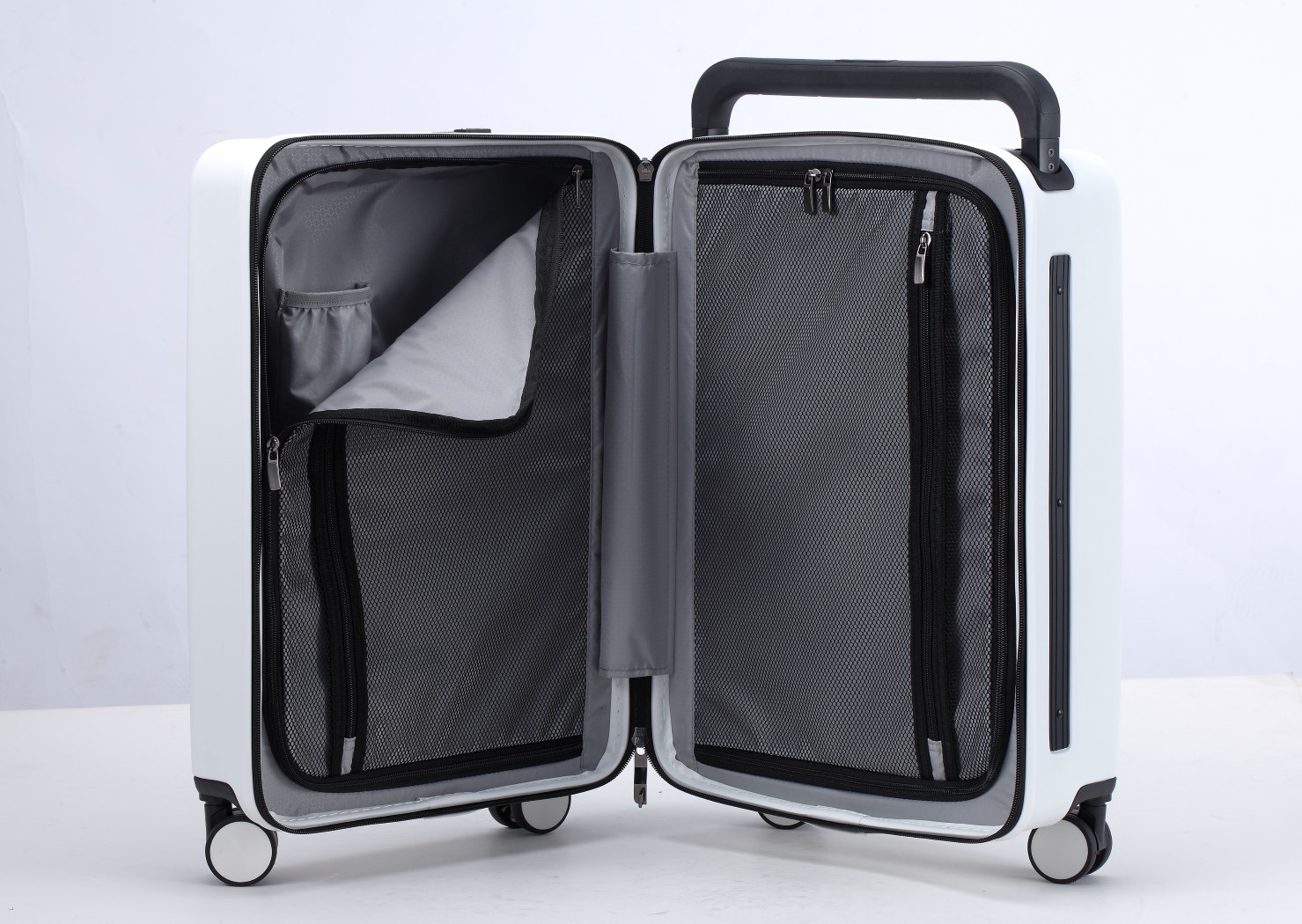 Wholesale 20-inch wide trolley luggage carry on boarding case with USB charger Jiaxing Sport Hardware & Machinery Co., Ltd is China wholesale 20-inch wide trolley luggage carry on boarding case with USB charger supp...View Product →
A Practical Buying Checklist
When comparing models, run through this checklist in order of importance:
- Airline compliance: measure the bag with wheels and handles included against the strictest carrier on your route.
- Empty weight: keep checked bags under 3.5 kg and carry-ons under 3 kg if possible.
- Wheel quality: prefer four smooth-rolling spinners with replaceable parts.
- Trolley and handle strength: aluminum-magnesium or double-tube bars win over thin single tubes.
- Lock system: TSA-recognized for US routes, reliable combination locks for others.
- Spare-part availability: cases with replaceable wheels, trolleys, and handles outlast one-piece designs.
None of this rules out soft-sided cases. A good Oxford shell with a strong frame, four spinner wheels, and a reliable trolley is a legitimate option for travelers who overpack or want external pockets. The point is that the decision should rest on components and limits, not on a shell that looks attractive in a store display.
Why Component-Level Quality Wins on Long-Haul Routes
From a factory perspective, a suitcase is a shell plus a handful of moving parts, and the moving parts do most of the aging. Wheels roll over rough pavement, trolley bars slide in and out hundreds of times, handles take the full weight of a packed case, and locks are opened and shut in hot, cold, and wet conditions.
This is why serious factories test components before assembling finished cases. At our production facility, luggage test machines cycle wheels and trolley bars under load, and shells are checked for flex and impact behavior. The goal is a component set that stays predictable in year three, long after the surface finish has worn. When a wheel eventually needs replacement, you want a spare that matches the original housing exactly; a factory that makes both the components and the finished suitcase can deliver that consistency.
The practical takeaway has not changed in decades of luggage production: choose a suitcase that passes the strictest airline limits on your route, keep empty weight low, and judge the product by its wheels, trolley, handles, and lock. Buy those right, and the rest of the bag has a much better chance of lasting as long as you do.