

 Español
Content
A luggage handle almost never fails at a convenient moment. It gives out in the taxi line, at the top of an escalator, or halfway across a station concourse with ten minutes to spare. We have been manufacturing luggage handles, pull rods, wheels, and locks in Jiaxing since 2003, and the same question reaches us again and again: is the whole suitcase finished, or can this be fixed? Usually it can. In most cases one small part has failed, and the bag around it still has plenty of trips left in it. This guide covers how to diagnose the fault, what you can repair yourself, and how to choose a replacement that actually fits.
First, Work Out What Broke
Handles fail in a handful of predictable ways, and each one calls for a different response. Before reaching for a screwdriver, spend two minutes working out which one you are dealing with.
Press the handle down and pull it up a few times. Does the telescopic action feel gritty, or does it refuse to move at all? Hold the bag still and wiggle the grip from side to side. Is there play at the screws, or does the grip itself flex? Then look closely at the base, where the handle meets the shell. A hairline crack there is a very different problem from a wobbly screw, and treating the two in the same way wastes time and sometimes makes things worse.
| Symptom | Likely cause | Can it be fixed at home? |
|---|---|---|
| Grip wobbles but stays attached | Mounting screws have backed out | Usually yes, with a screwdriver |
| Handle will not extend | Grit in the joint or a slightly bent tube | Sometimes, with cleaning and lubrication |
| Extends but will not lock | Worn locking pin or spring inside the rod | Rarely, the pull rod needs replacing |
| Grip cracked or snapped off | Impact, cold plastic, or long-term fatigue | No, replace the handle |
| Base cracked where it meets the shell | Overloading or lifting the bag by the handle | No, replace the handle and check the shell |
Fixes Worth Trying Before You Take Anything Apart
Most handle problems fall into one of three groups: something is stuck, something is loose, or something is cracked. The first two are often fixable in a hotel room. The third rarely is.
A handle that will not move
Resist the urge to pull harder. A stuck telescopic handle is usually a dry, gritty joint or a slightly bent inner tube, and force turns a small problem into a permanent one. Push the handle down a centimetre or two, keep the bag upright so the tubes stay aligned, and ease it back up. A dry silicone or PTFE spray worked into the joint, followed by ten slow up-and-down cycles, frees a surprising number of handles that have simply collected grit, sand, and road salt. If the tubes are visibly bent, stop there. That pull rod needs replacing, not persuading.
A grip that feels loose
Loose mounting screws are the most fixable fault on any suitcase. Open the lining, find the two screws that hold the handle base, and tighten them by hand first, then finish gently with a screwdriver. A drop of thread-locking fluid keeps them from backing out again on the next trip. Do not overtighten into plastic, because stripped plastic threads are far harder to deal with than loose ones. If your handle is riveted rather than screwed, that repair belongs in a workshop, since the old rivet has to be drilled out first.
If the grip still moves after the screws are tight, the plastic boss inside the handle has probably worn. We put together a short piece on what to do when a luggage handle is loose that explains how to tell a loose screw from a worn base, because that difference decides whether you tighten or replace.
The field repair that gets you home
There is an old trick that works better than it looks: loop a belt, a strap, or a scarf around the carrying handle and pull the bag along rather than lifting it. The load moves to the base plate instead of the broken part, which is exactly where the structure is strongest. A few wraps of tape around a split grip does something similar for a short journey. Neither is a real repair, but both will get you through an airport without carrying twenty kilos in your arms.
Replacing a Handle or Pull Rod, Step by Step
On most hard-shell and soft-side bags, swapping a handle is a kitchen-table job. You need a Phillips or hex screwdriver, a small container for the screws, and about fifteen minutes.
- Empty the bag and lay it flat on a table, handle side up.
- Open the lining zip or pull the lining back to reach the inside of the shell.
- Photograph the handle and the screw positions before you touch anything.
- Undo the mounting screws and keep them in the container, because they are easy to lose and hard to match.
- Lift the old handle away and note how it sits: metal plate, plastic base, or a moulded recess.
- Check the shell around the screw holes for cracks, since a cracked mounting area will keep working loose.
- Compare the new part against the old one before fitting it, using the measurements in the next section.
- Thread the screws by hand first, tighten them in a cross pattern, and test the handle with the bag empty before you load it.
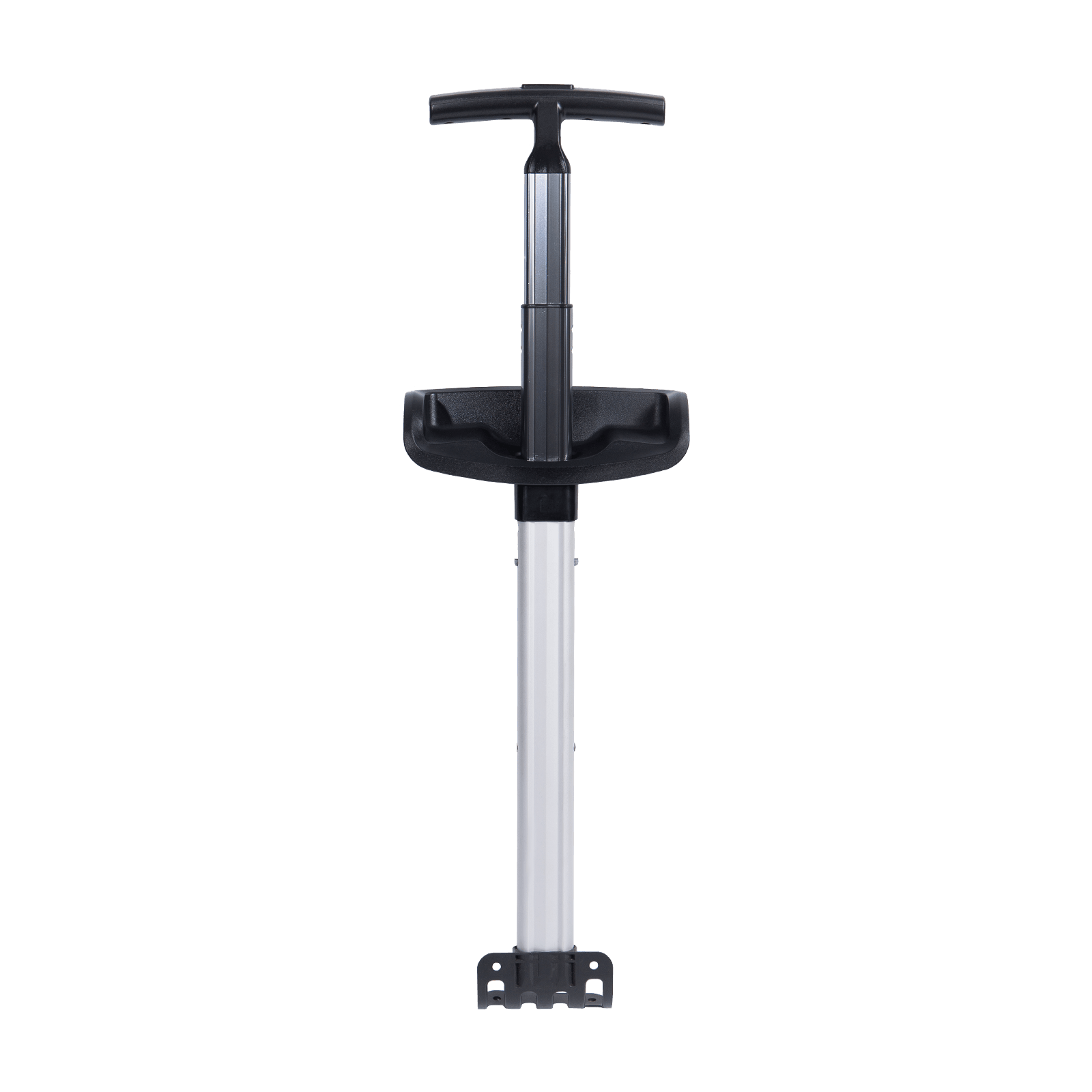
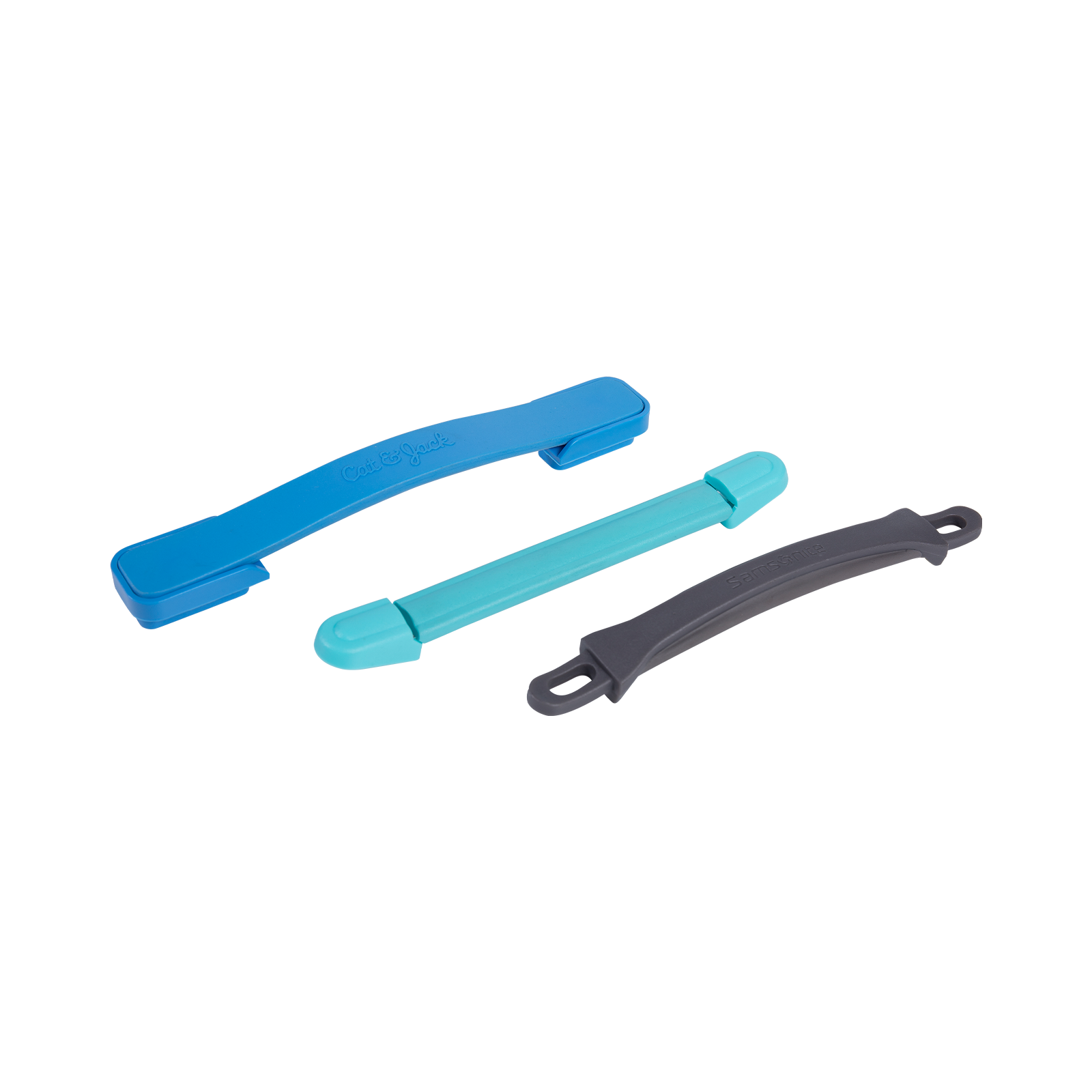
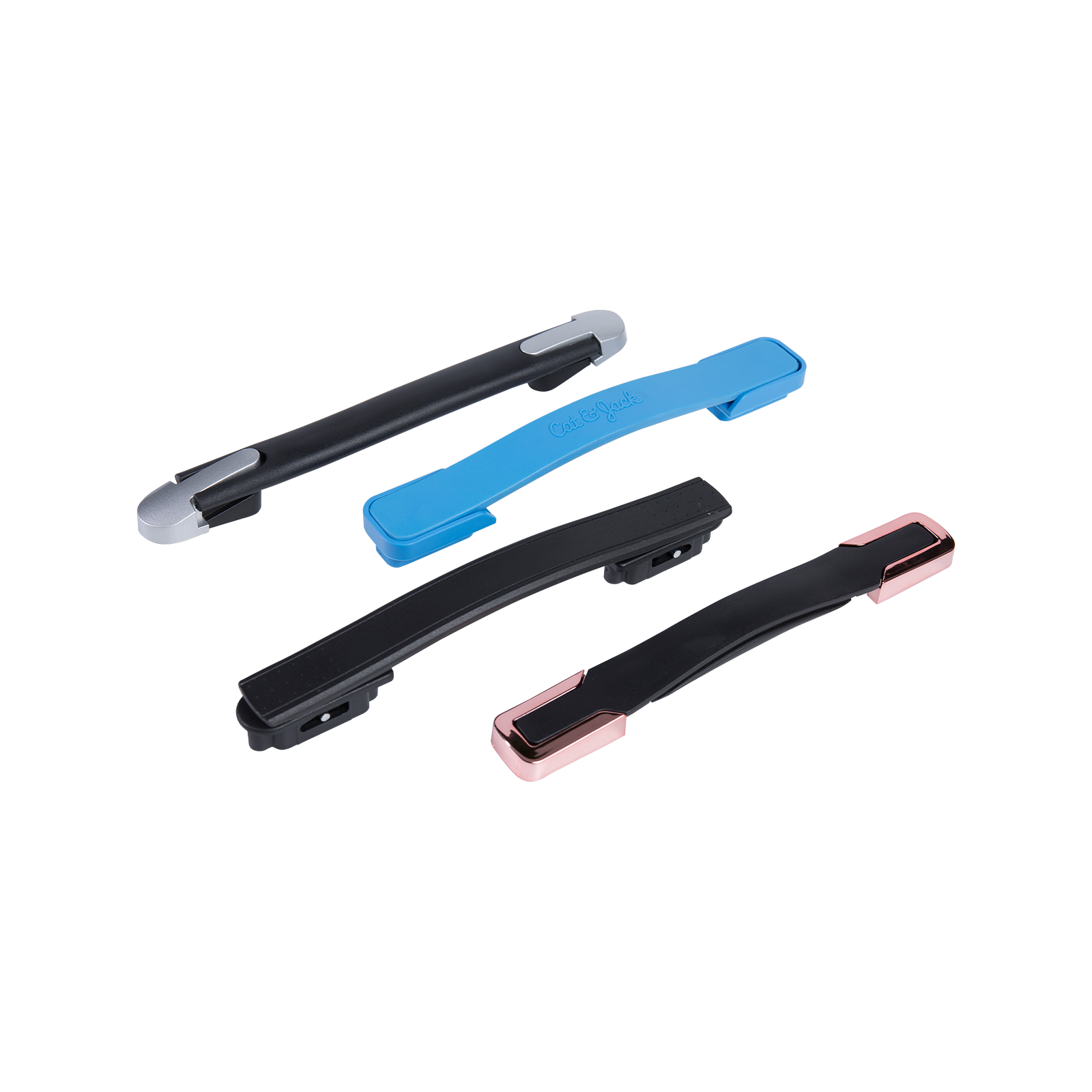
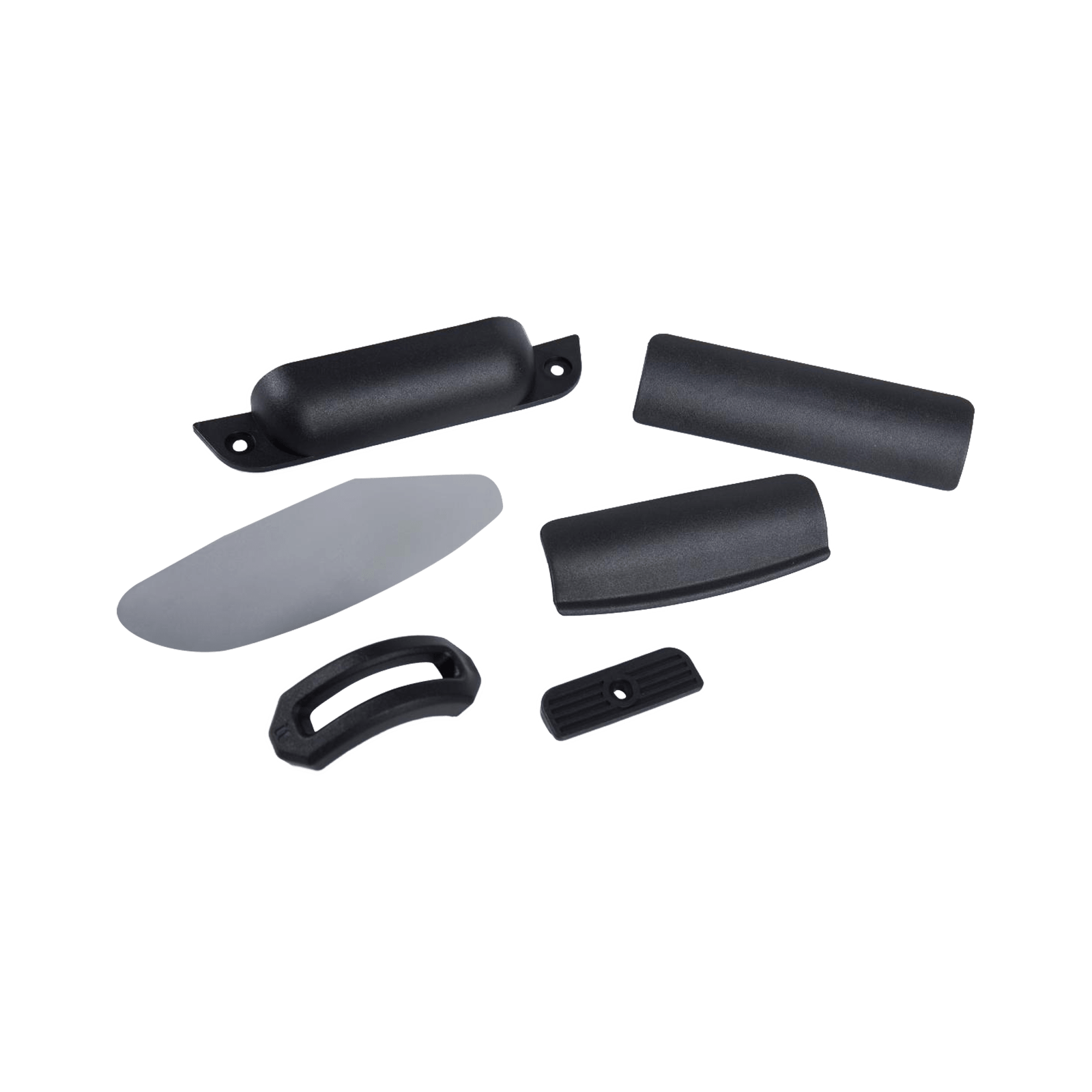
When you need a part for a single repair or for a short production run, a standard plastic handle with a reinforced base covers most bags with no tooling cost and no minimum order headaches. It is the least glamorous part on the shelf and the one that saves the most suitcases.
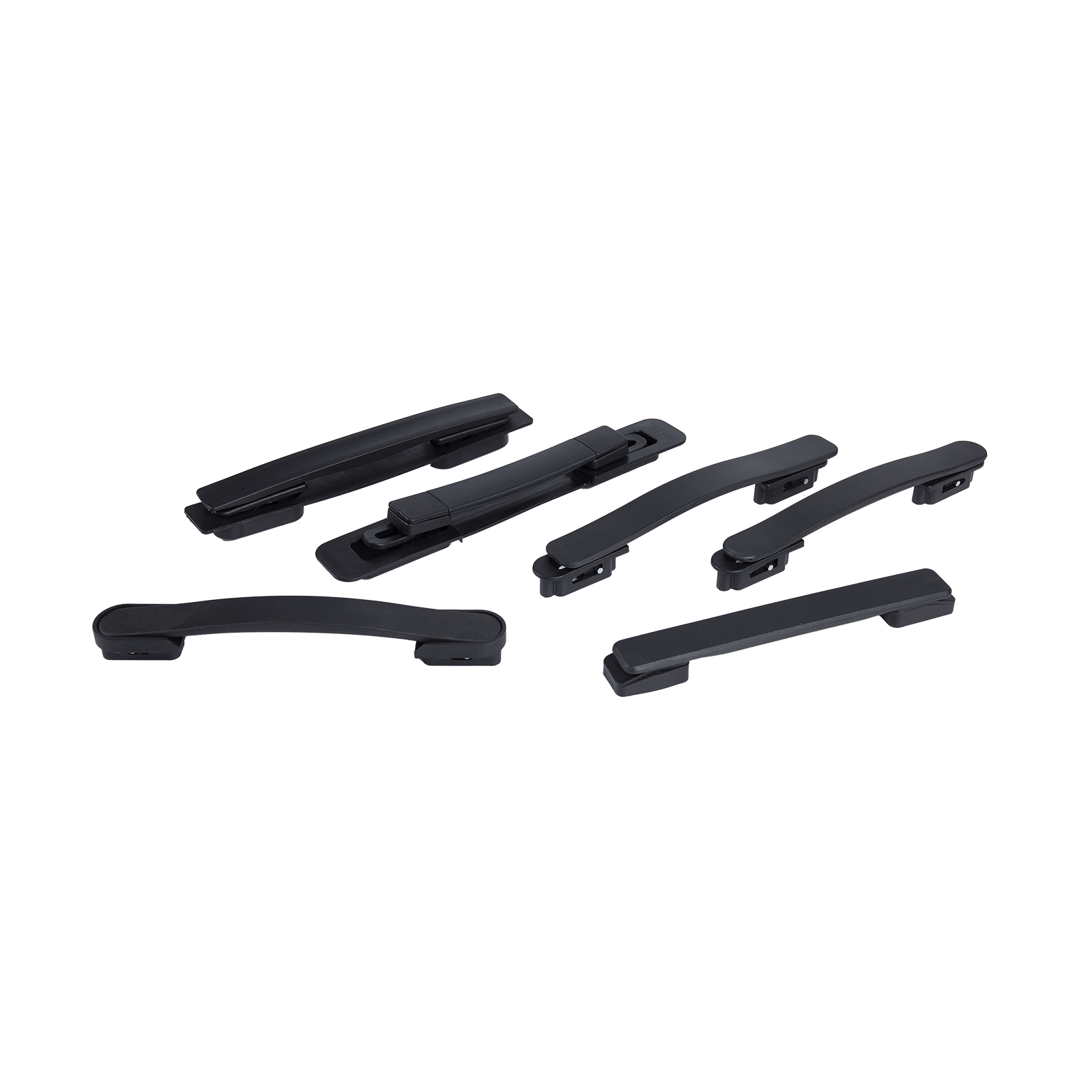 Plastic Luggage Handle with Plastic or Zinc Seat OptionsA lightweight plastic handle for suitcases, backpacks, and handbags; choose seat material, finish, and custom color before measuring your old part.View Product →
The Numbers That Have to Match
Handles are not universal. Two grips that look identical in a photograph can differ by two millimetres in screw spacing, and two millimetres is enough to make the part useless. Before ordering anything, measure the old handle with a ruler and, if you have one, a pair of calipers.
| Measurement | How to take it | Why it matters |
|---|---|---|
| Screw hole spacing | Distance from centre to centre of the two mounting holes | The one number that decides whether a handle fits at all |
| Grip width and length | Across and along the grip, at its widest point | Comfort in the hand and clearance inside the shell |
| Tube diameter | Across the top of the telescopic tube | Determines whether it slides into the existing frame |
| Length and number of sections | Fully extended and fully collapsed | Affects packed height and how the bag balances when pulled |
| Base material and shape | Plastic, zinc alloy, or aluminium, plus the shape of the mount | Load capacity and how solid the handle feels with a full bag |
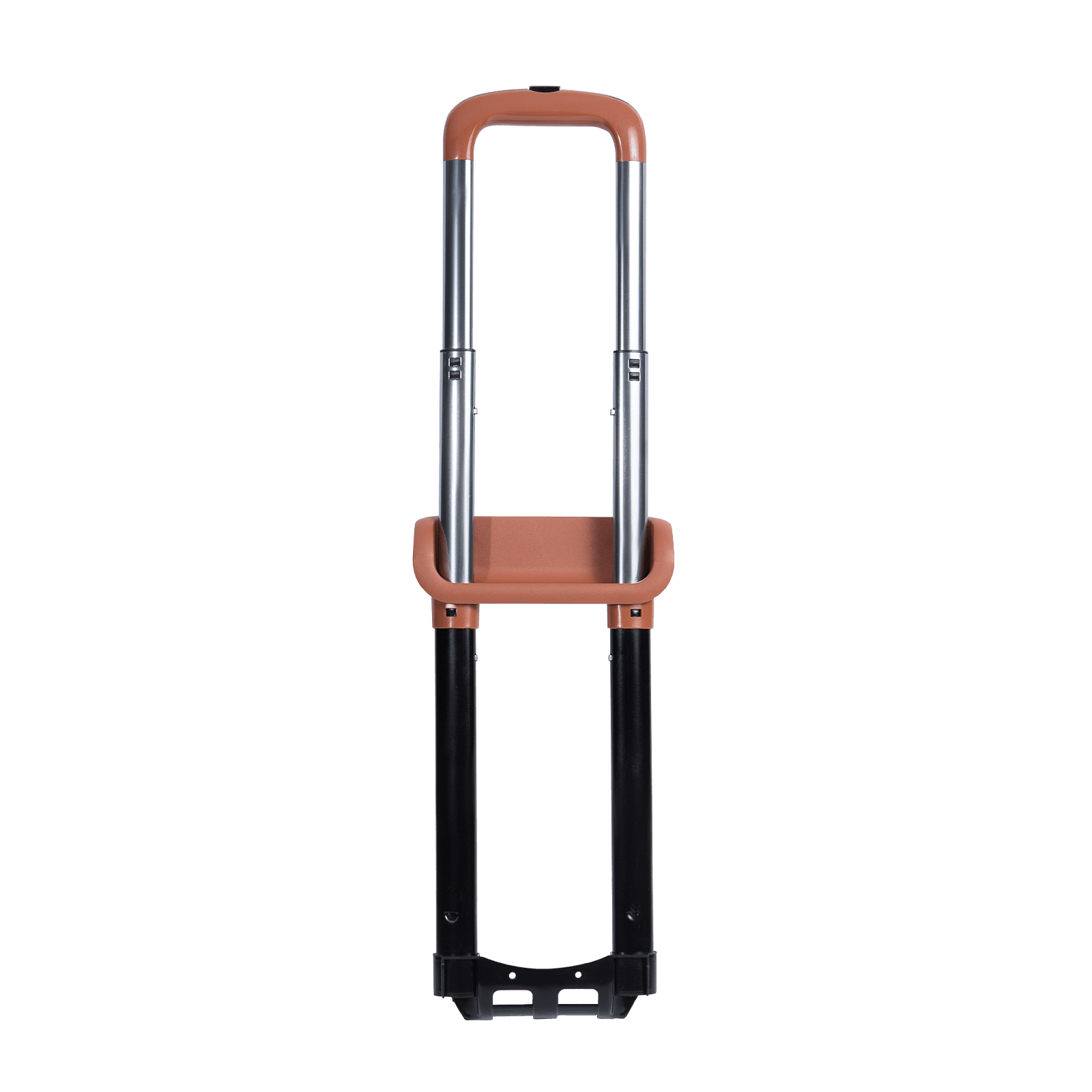
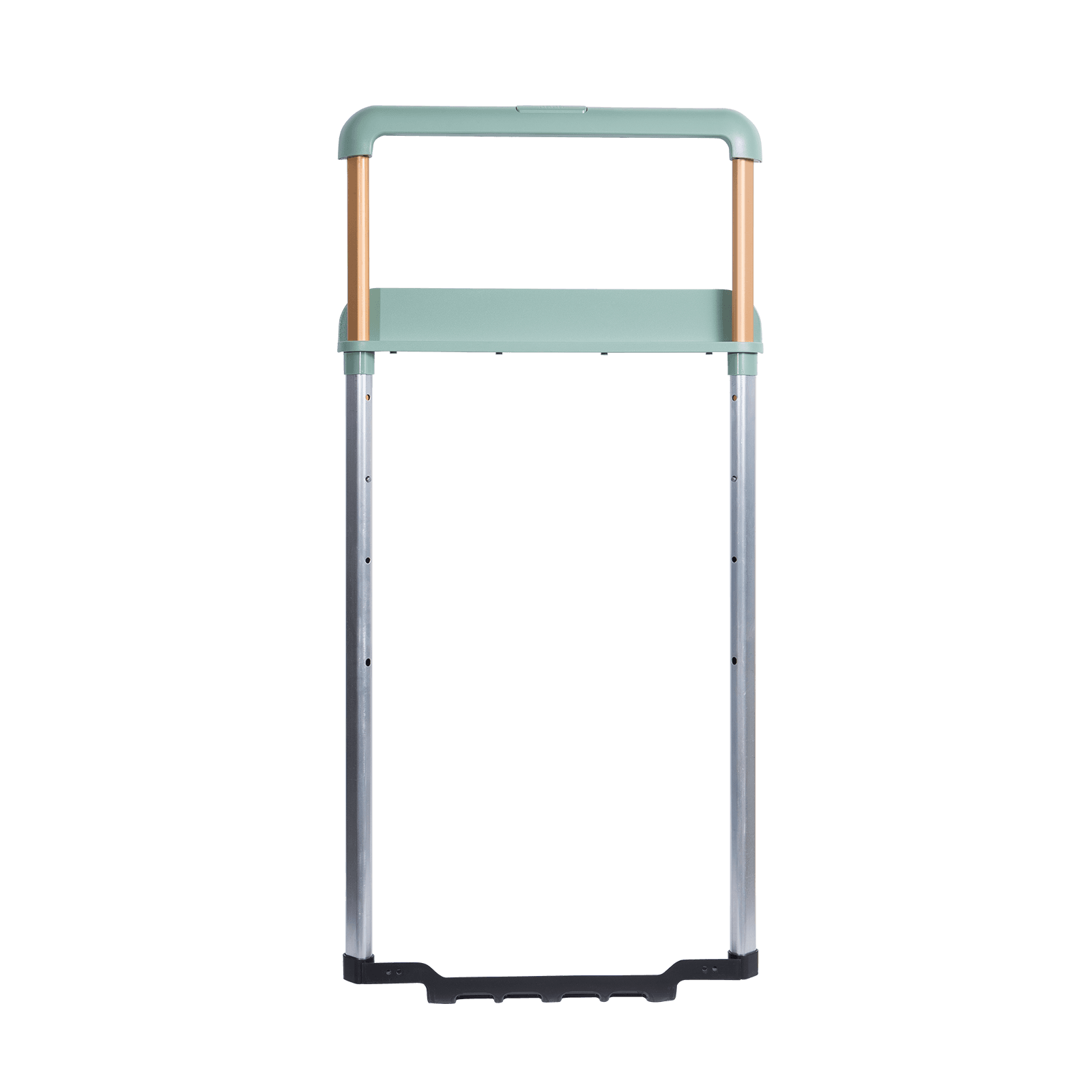
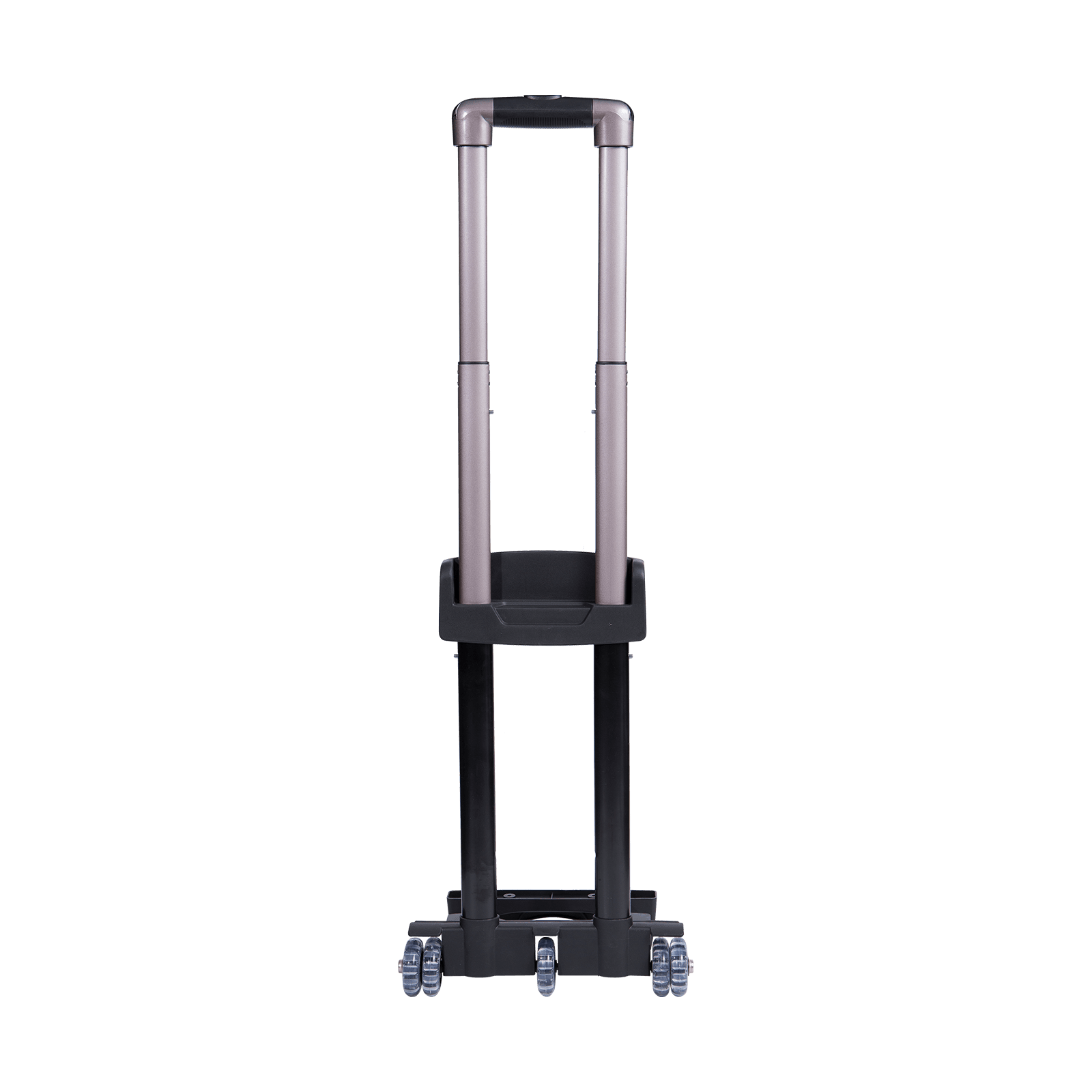
If the pull rod has gone as well as the handle, it is often simpler and cheaper to replace the whole trolley assembly rather than hunt for a matching tube. Replacement trolleys come in double-tube, lightweight aluminium, and iron-and-aluminium versions, made for both soft and hard luggage, and they are the part we get asked about most often by repair shops.
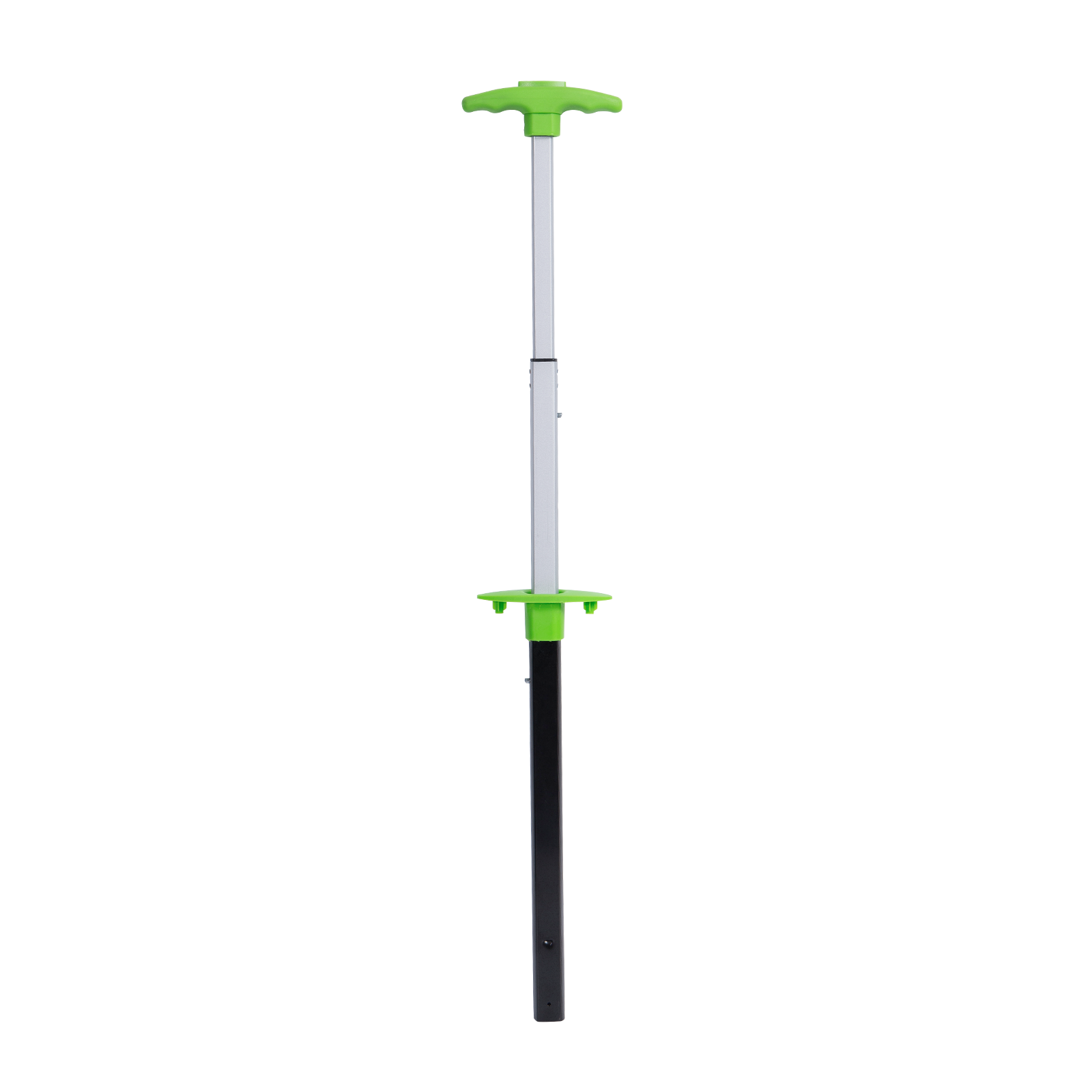 Luggage Trolley Replacement Parts in Iron or AluminumA replacement trolley assembly for repairing luggage when the pull rod and handle both fail, available in iron or aluminum with custom sizing and colors.View Product →
Repair or Replace: A Quick Way to Decide
Once you know what failed, the decision is fairly mechanical. These are the rules of thumb we pass on to customers who ask whether a bag is worth saving.
- Cracked grip or cracked base: replace the handle. Adhesive does not hold a loaded handle, whatever the label promises.
- Stripped screw holes: try a slightly longer screw, or a small backing plate inside the shell. If the plastic around the holes has split, the bag is finished.
- Pull rod that no longer locks or extends evenly: replace the trolley. The locking mechanism sits inside the tube and cannot be repaired reliably.
- Shell, zips, and wheels still sound: a new handle is a cheap repair on an otherwise healthy bag.
- Cracked corners or a broken frame: usually time to retire it.
What We Look At When We Build a Handle
After more than twenty years of making these parts, we judge a handle by a few things a buyer cannot see in a product photograph. The first is the base. A zinc alloy base spreads load far better than a plastic one, which is why it holds up longer on heavy bags, while a plastic base keeps the weight and the price down for lighter cases. The second is the tube: aluminium and magnesium-aluminium tubes save weight but only perform if the wall thickness is right. The third is the mounting itself, where screw spacing, plate shape, and the way the base sits against the shell decide whether the handle stays tight after a hundred flights.
We test handles and wheels on dedicated luggage testing machines, prototype new designs on our 3D printers, and work to an ISO 9000 quality system. We have been building luggage hardware for suitcase makers and brands since 2003, and the lessons have mostly come from returned parts rather than from the drawing board.
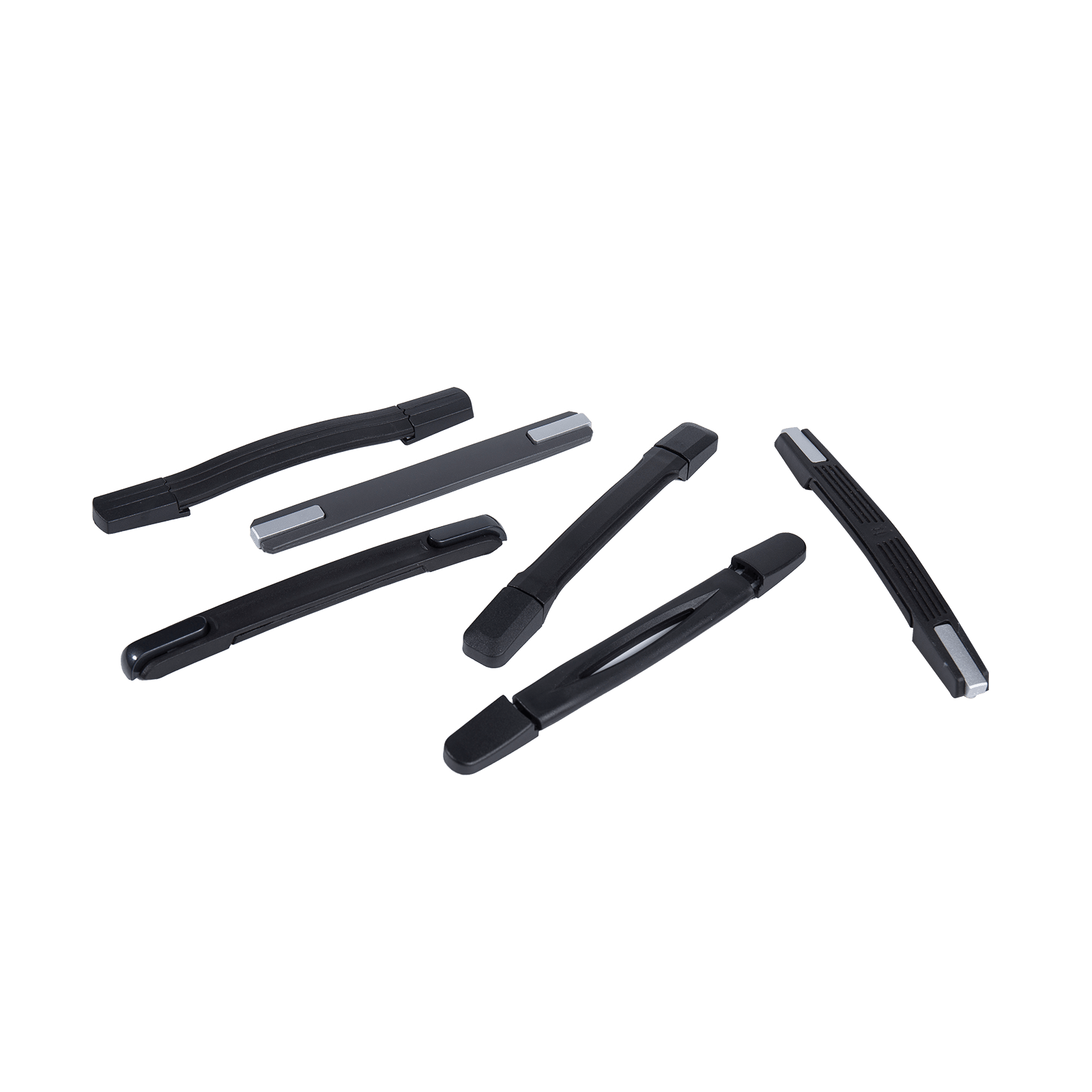 Customizable Plastic Luggage Handle with Plastic or Zinc SeatA lightweight bag handle for suitcases and other bags; compare plastic or zinc seats, natural, painted, or electroplated finishes, and custom colors or logos.View Product →
The short version is this: diagnose before you disassemble, tighten before you replace, and measure before you order. A luggage handle is one of the few parts on a suitcase that a traveler can genuinely deal with alone, and a bag that is otherwise sound deserves ten more minutes of attention rather than a place in the bin. If you are stuck on a measurement or a mounting type, send a photo. After two decades of handles, wheels, and pull rods, we can usually tell what you are looking at.