

 Español
Content
- 1 First, Work Out Which Handle Has Failed
- 2 Tools and Materials Worth Having Ready
- 3 How to Fix a Broken Top Grip Handle
- 4 How to Fix a Loose, Wobbly or Spinning Handle
- 5 How to Repair a Telescoping Trolley Handle
- 6 When Replacement Is the Smarter Repair
- 7 Temporary Fixes That Get You Home
- 8 How to Stop It Happening Again
- 9 Quick Answers to Common Questions
Few things deflate a trip faster than reaching for your suitcase, lifting it, and feeling the handle give way. Maybe it wobbles now, maybe the grip has split, or maybe the telescopic tube refuses to slide out at all. Whatever the symptom, most suitcase handle failures are fixable, and plenty of them can be sorted out on a hotel desk with a small screwdriver and twenty minutes of patience.
We have been moulding and assembling luggage handles and trolley systems in our Jiaxing workshop since 2003, so we have seen just about every way a handle can fail. Below is the same advice we give to travellers and to the repair shops that buy our replacement parts: work out what actually broke, then choose the simplest fix that will hold.
First, Work Out Which Handle Has Failed
A suitcase usually carries three handles, and they fail for completely different reasons. Before you buy anything or reach for the tape, identify the part that is actually causing trouble. Treating a loose trolley tube as if it were a split grip wastes time and often makes the damage worse.
| Handle type | Typical failure | Usual fix | Difficulty |
|---|---|---|---|
| Top grip handle | Grip splits, base plate cracks, screws pull out | Re-tighten, add a backing plate, or fit a new handle | Easy |
| Side handle | Rivets loosen, plastic ears snap | Replace rivets with bolts or swap the handle | Easy to moderate |
| Telescopic trolley | Tube bends, button sticks, locking pin jams | Straighten small bends or replace the trolley assembly | Moderate |
Have a look at the handle while the case is empty. Load makes small cracks open up and hides loose screws, so an empty suitcase tells you far more than a full one.
Tools and Materials Worth Having Ready
You do not need a full workshop. A small kit covers nearly every handle repair a traveller will meet:
- A Phillips and a flathead screwdriver, ideally a compact multi-bit driver
- A small adjustable spanner or a set of hex keys for bolted handles
- Pliers and, for riveted handles, a drill with a 3 to 4 mm bit
- Replacement screws, washers and a few millimetres of thread-locking fluid
- A strip of webbing or a spare luggage strap as a temporary grip
- A torch, because the inside of a suitcase lining is surprisingly dark
If your case has a zip opening along the lining, use it. It gives you direct access to the back of the handle base and turns a fiddly job into a five-minute one.
How to Fix a Broken Top Grip Handle
The top grip is the handle you lift with, and it takes the most load. Most are held by two or four screws that pass through a plastic or zinc base plate and anchor into a backing plate inside the shell. When the grip splits or the screws start to pull through, the sequence below usually works:
- Open the lining zip and check whether the handle is screwed or riveted. Screwed handles can be repaired in place; riveted ones need the rivet heads drilled out.
- Remove the screws and lift the old handle away, keeping the washers and backing plate safe.
- Inspect the shell around each hole. Cracked or elongated holes need a wider washer or a small aluminium backing plate to spread the load.
- Measure the distance between the fixing holes before ordering a replacement, because bolt spacing varies between models.
- Fit the new handle, add a drop of thread-locking fluid to each screw, and tighten firmly but not violently. Over-tightening cracks plastic base plates.
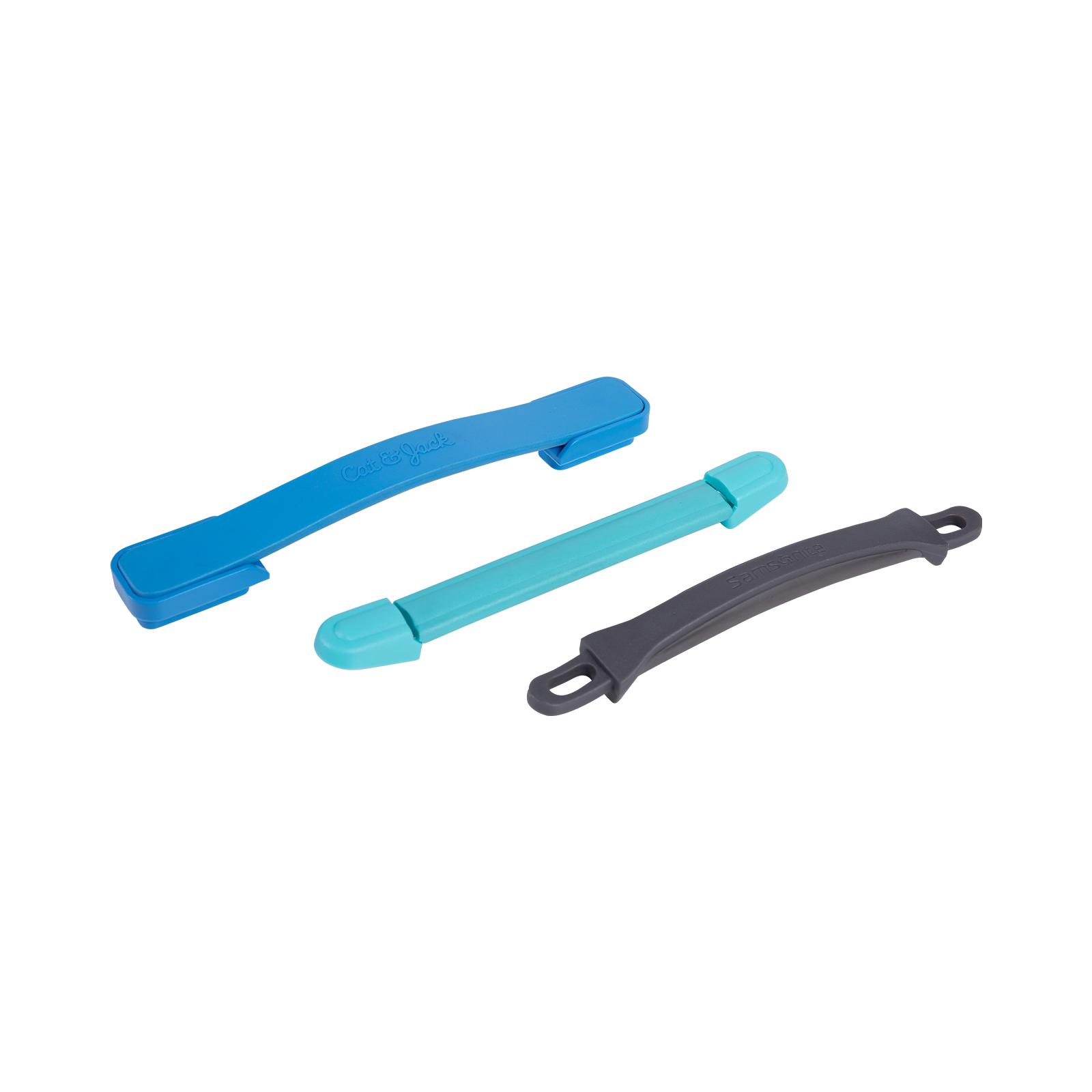
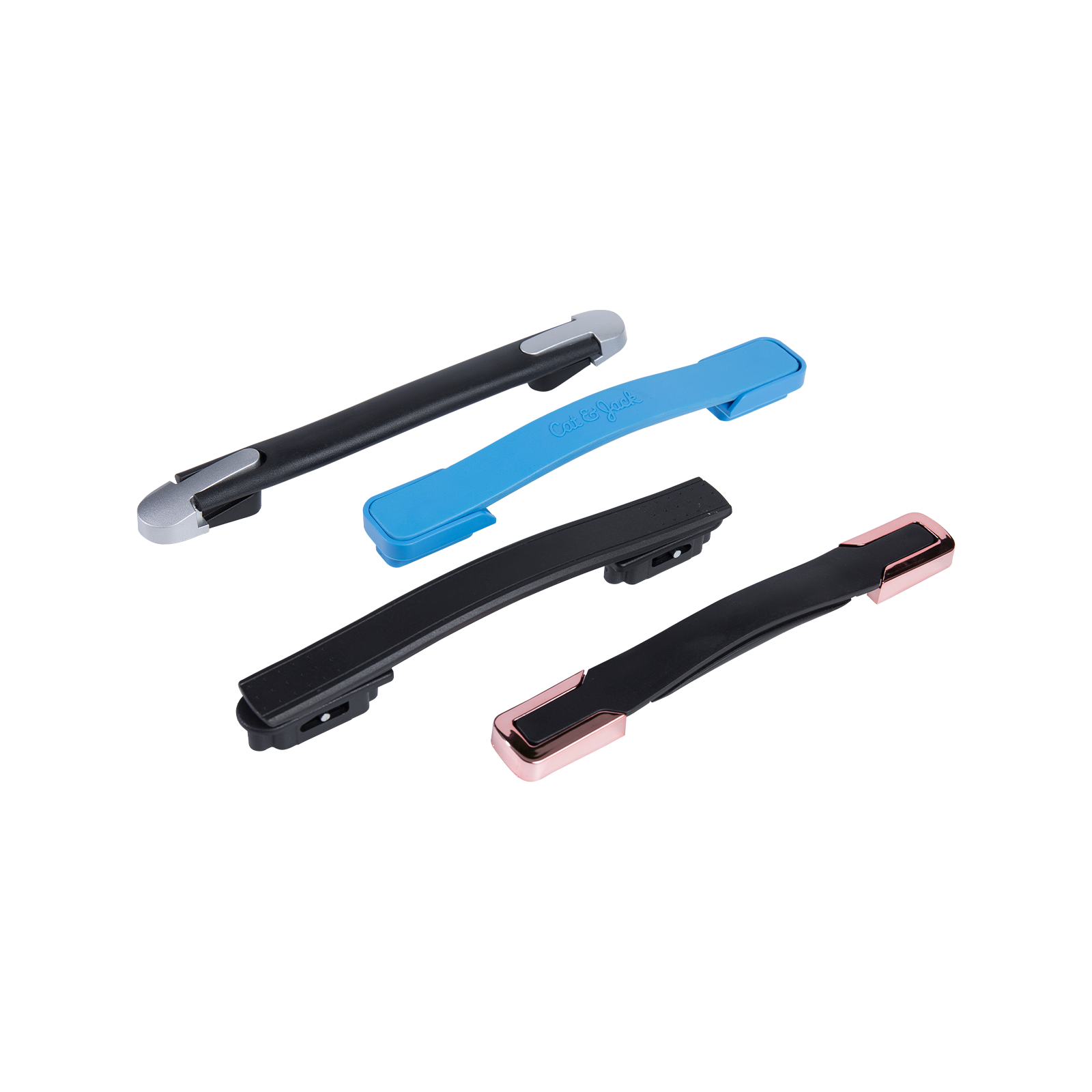
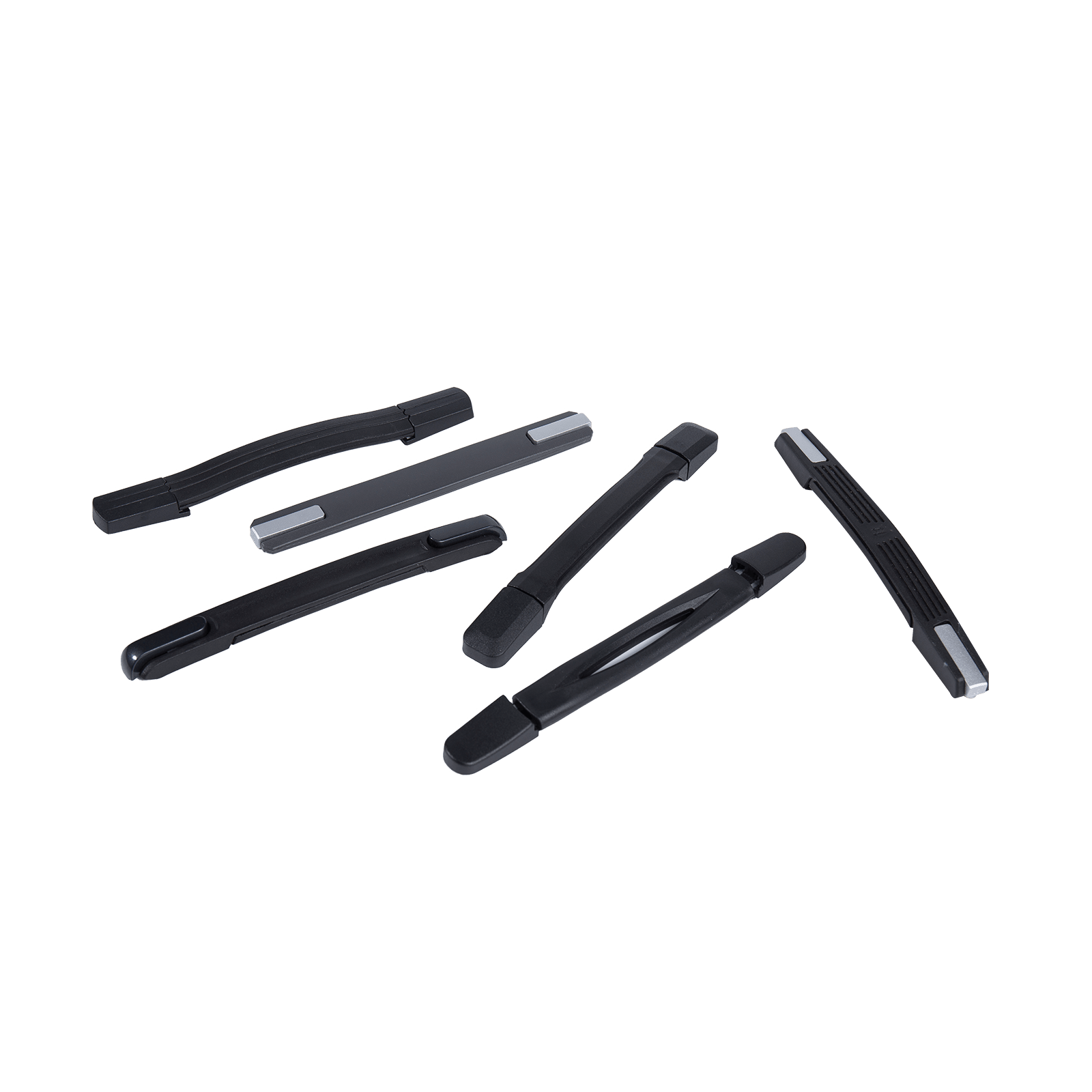 Plastic Luggage Handle with Plastic or Zinc BaseLuggage handle with customizable color and logo, available with plastic or zinc base options for varied bag designs and appearance needs.View Product →
If the grip itself has split but the base is sound, you can sometimes fit just the grip. In most cases, though, a complete handle with a fresh base plate lasts longer than a patch.
How to Fix a Loose, Wobbly or Spinning Handle
A handle that rocks rather than breaks is usually a fastener problem, and it is worth fixing early. Loose screws enlarge their holes with every lift, and once the hole is oversized, a simple tighten will not hold.
Take the handle off, clean any old adhesive or plastic dust out of the holes, and refit with slightly longer screws and wide washers. If the original holes are badly worn, rotate the handle a few degrees and drill fresh ones through the base plate, then seal the old holes with a dab of silicone. For riveted handles that have started to move, drill out the rivet and replace it with a short stainless bolt, a washer on each side, and a locking nut. That repair is stronger than the original and easy to repeat if it ever loosens again.
How to Repair a Telescoping Trolley Handle
Trolley failures are usually mechanical rather than cosmetic. The common complaints are a tube that will not extend, a button that sticks, or a handle that bends after the case is dropped onto a kerb.
If the tube will not slide
Pull the inner tube out gently while pressing the release button. If it moves but catches, the locking pin is probably misaligned. A little graphite powder in the joint often frees a sticky button, but do not use oil, which attracts grit into the tube.
If a tube is bent
Small bends can be persuaded back with careful hand pressure, but aluminium tubes work-harden and tend to kink a second time. A bent tube that carries load is a genuine safety issue, so replacement is the honest answer rather than a cosmetic straighten.
If the whole assembly is tired
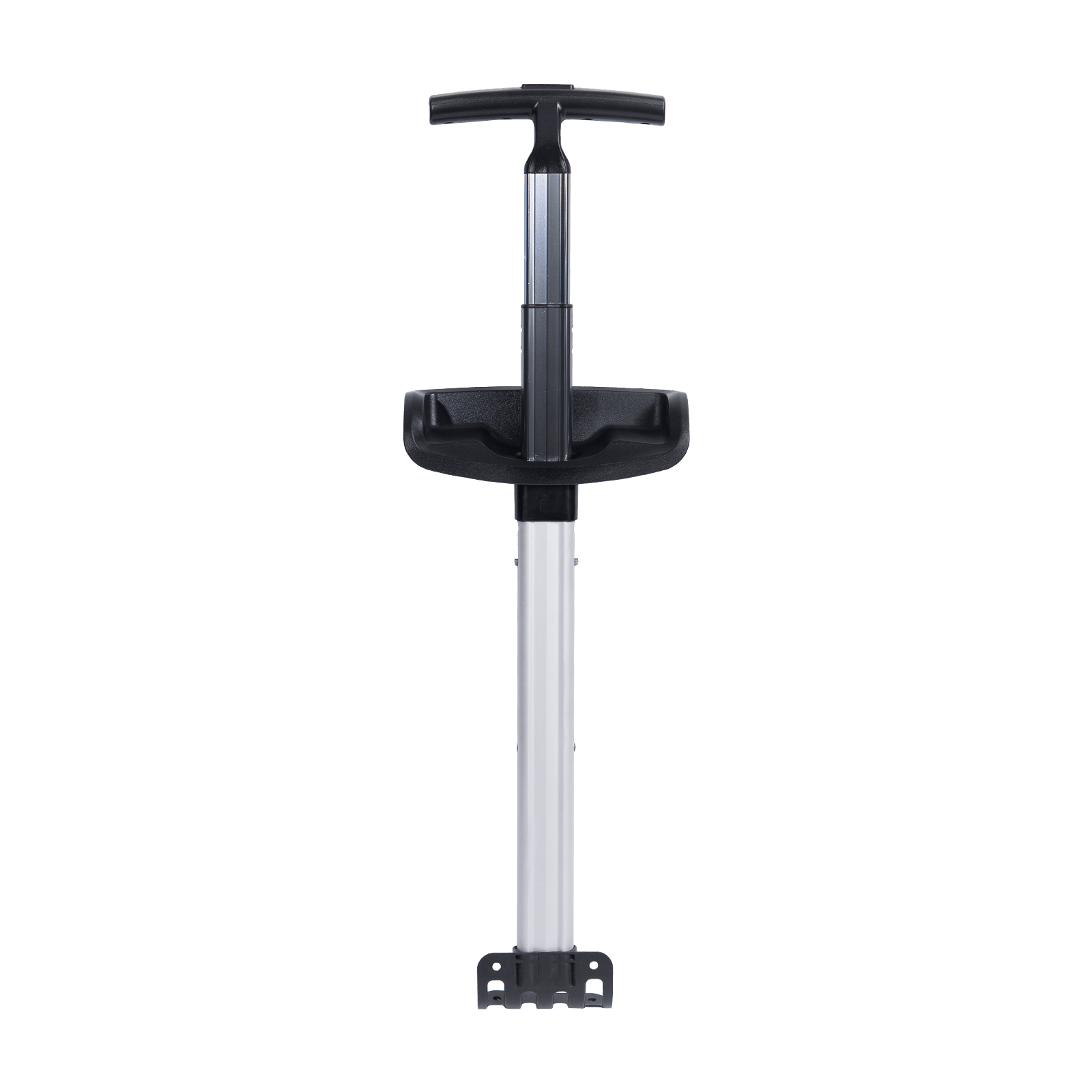
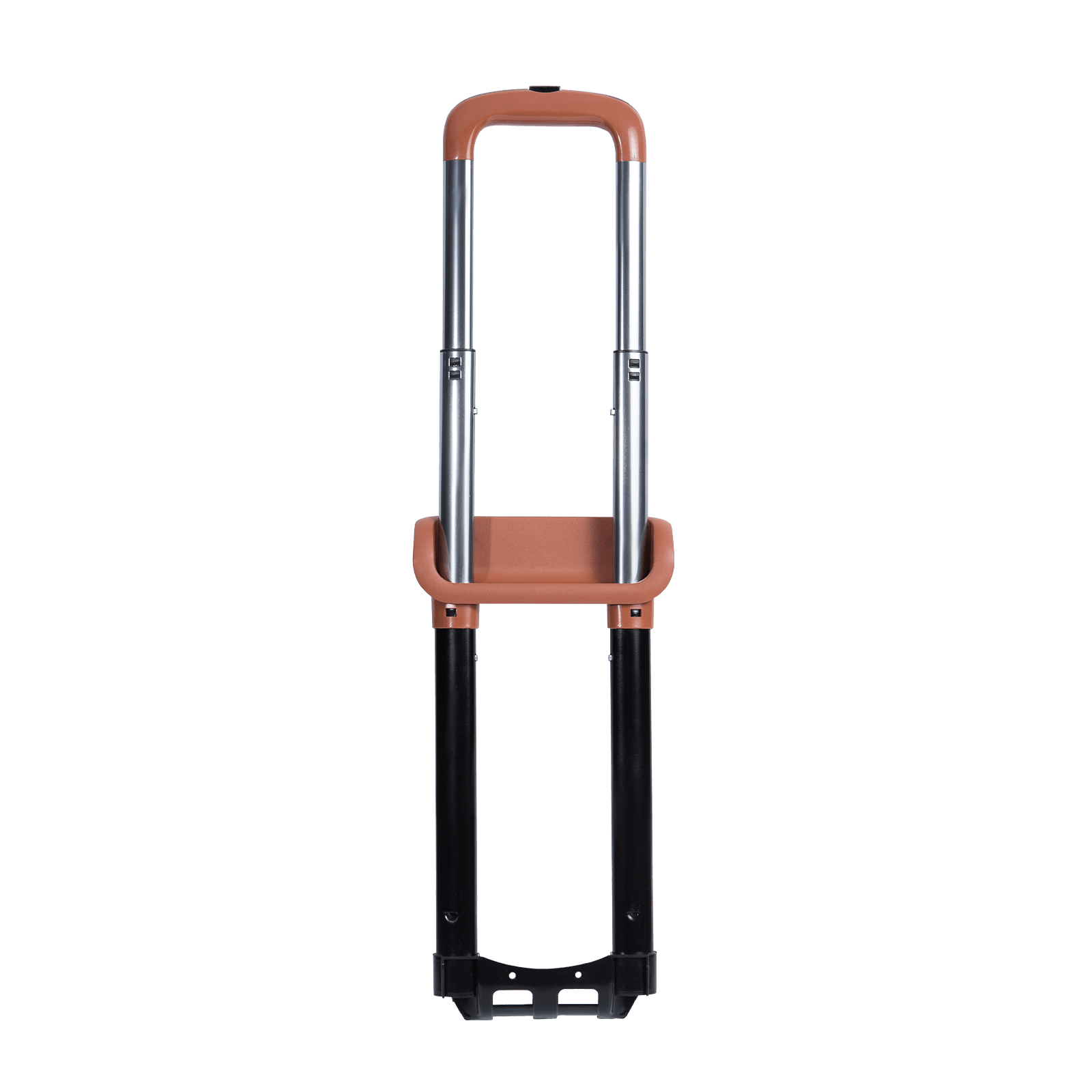
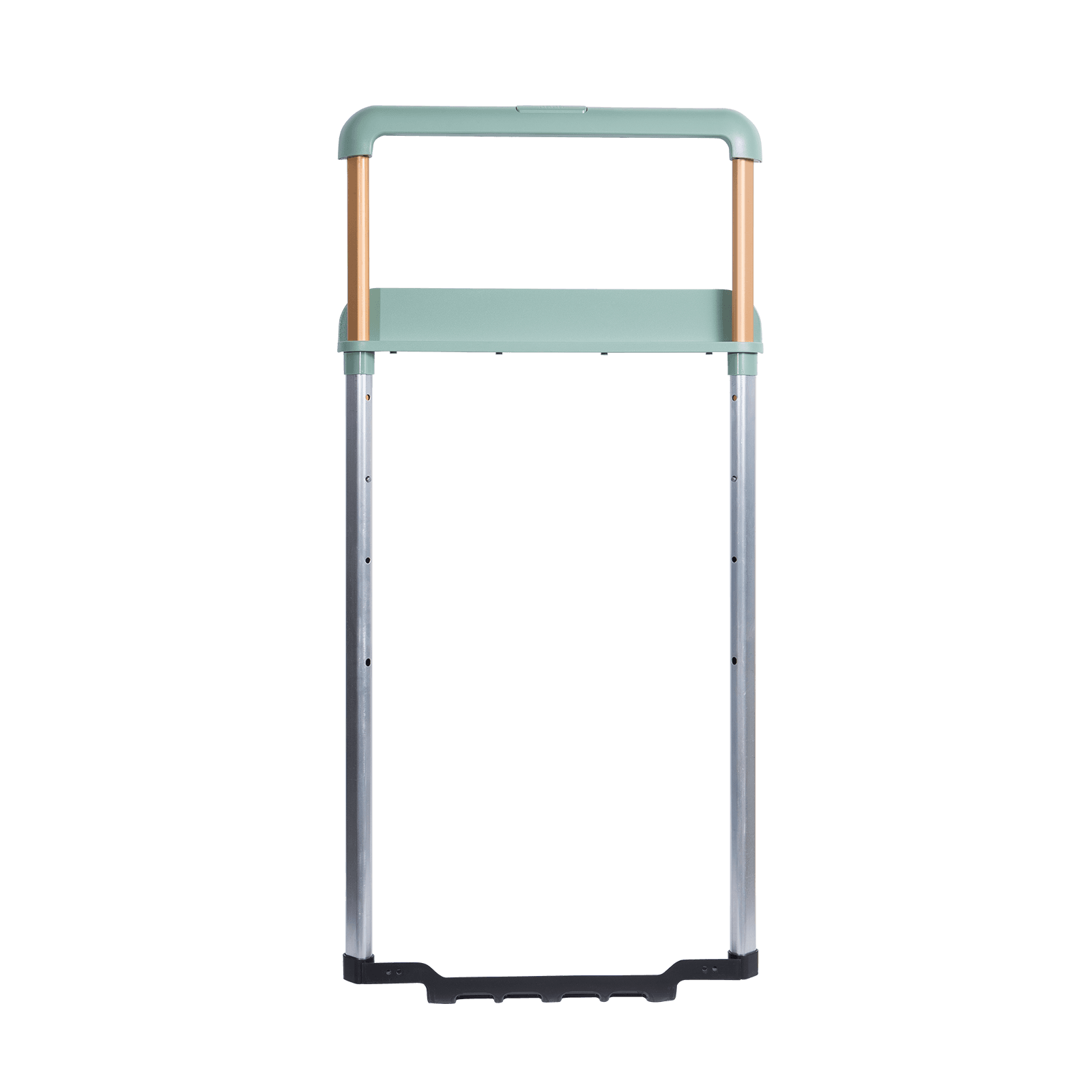
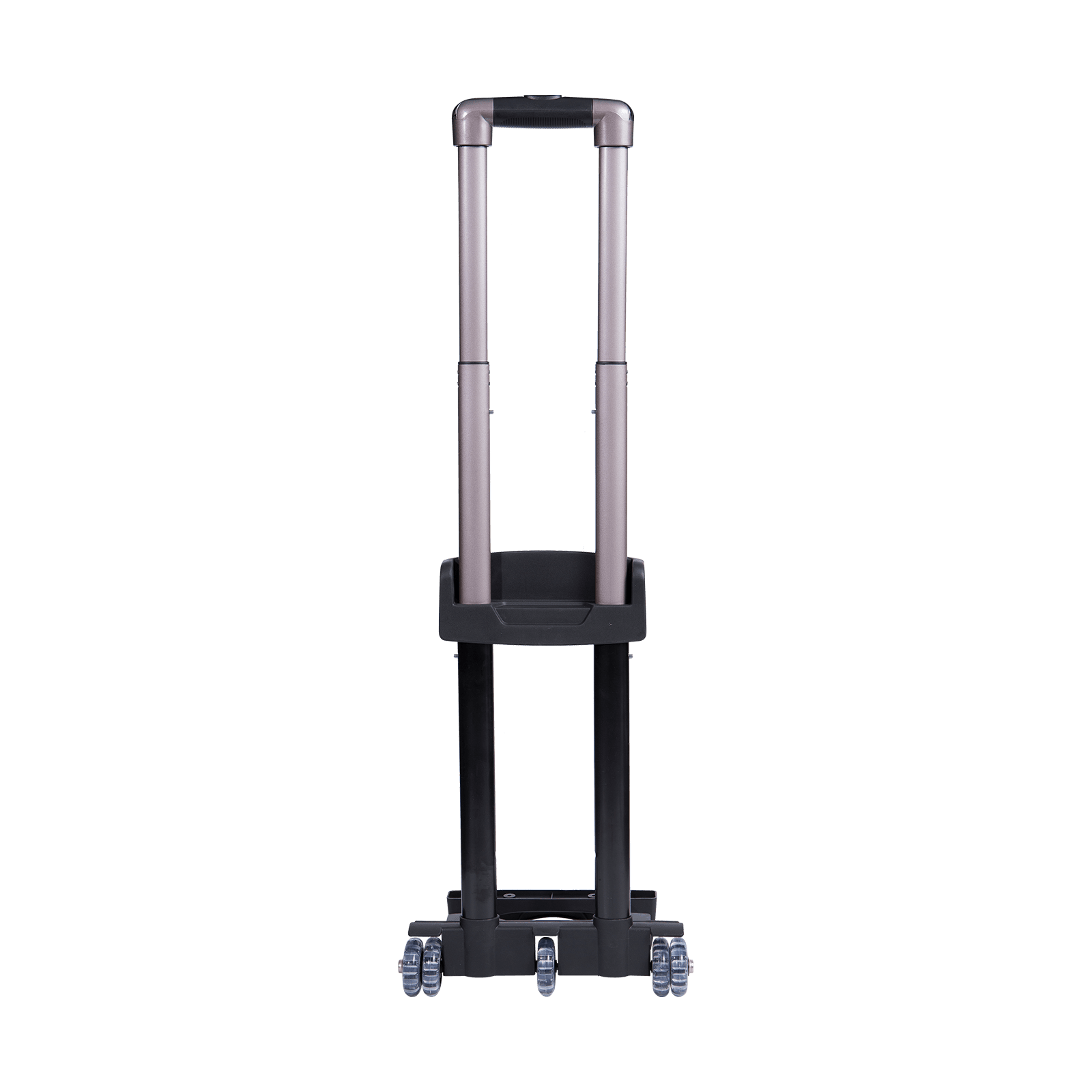
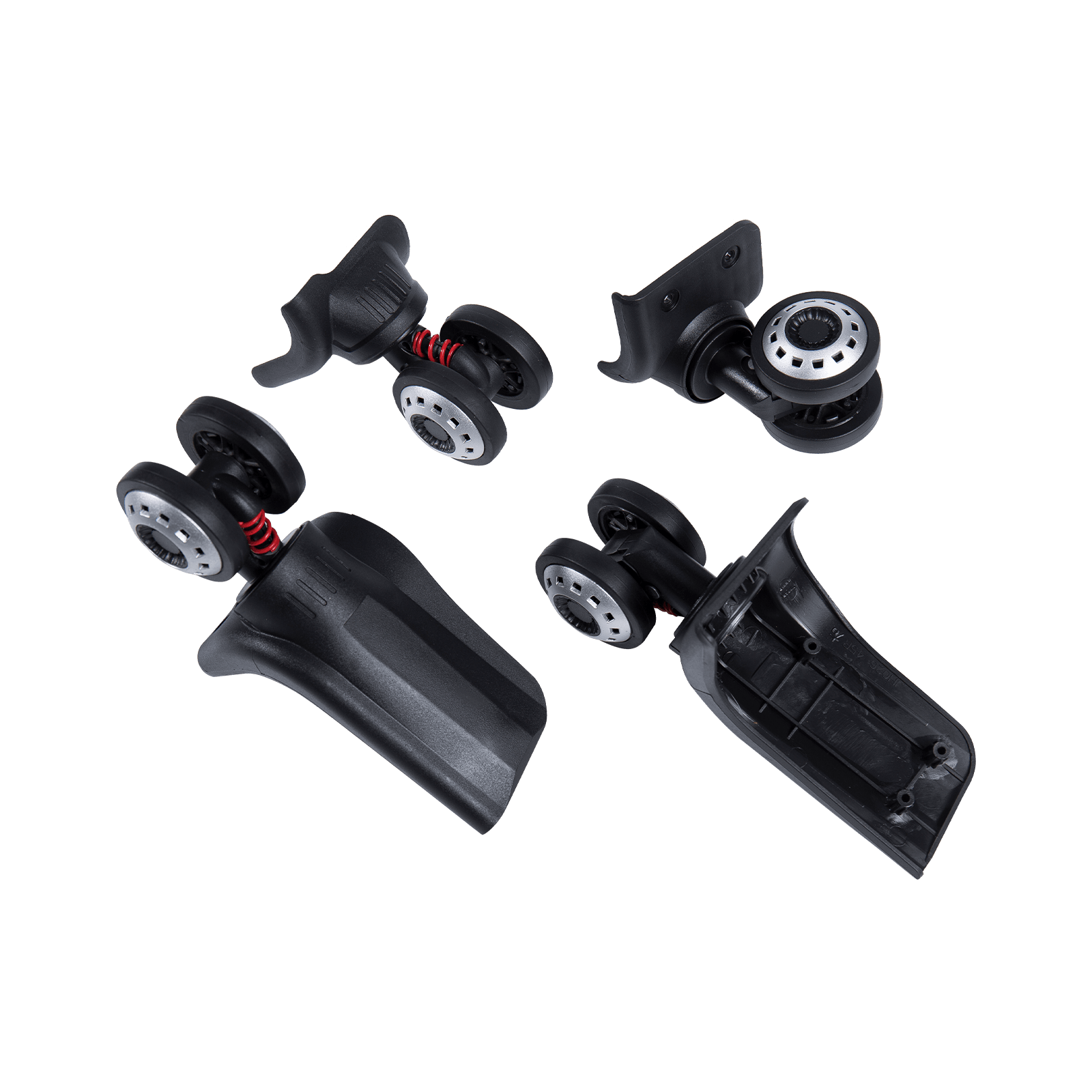
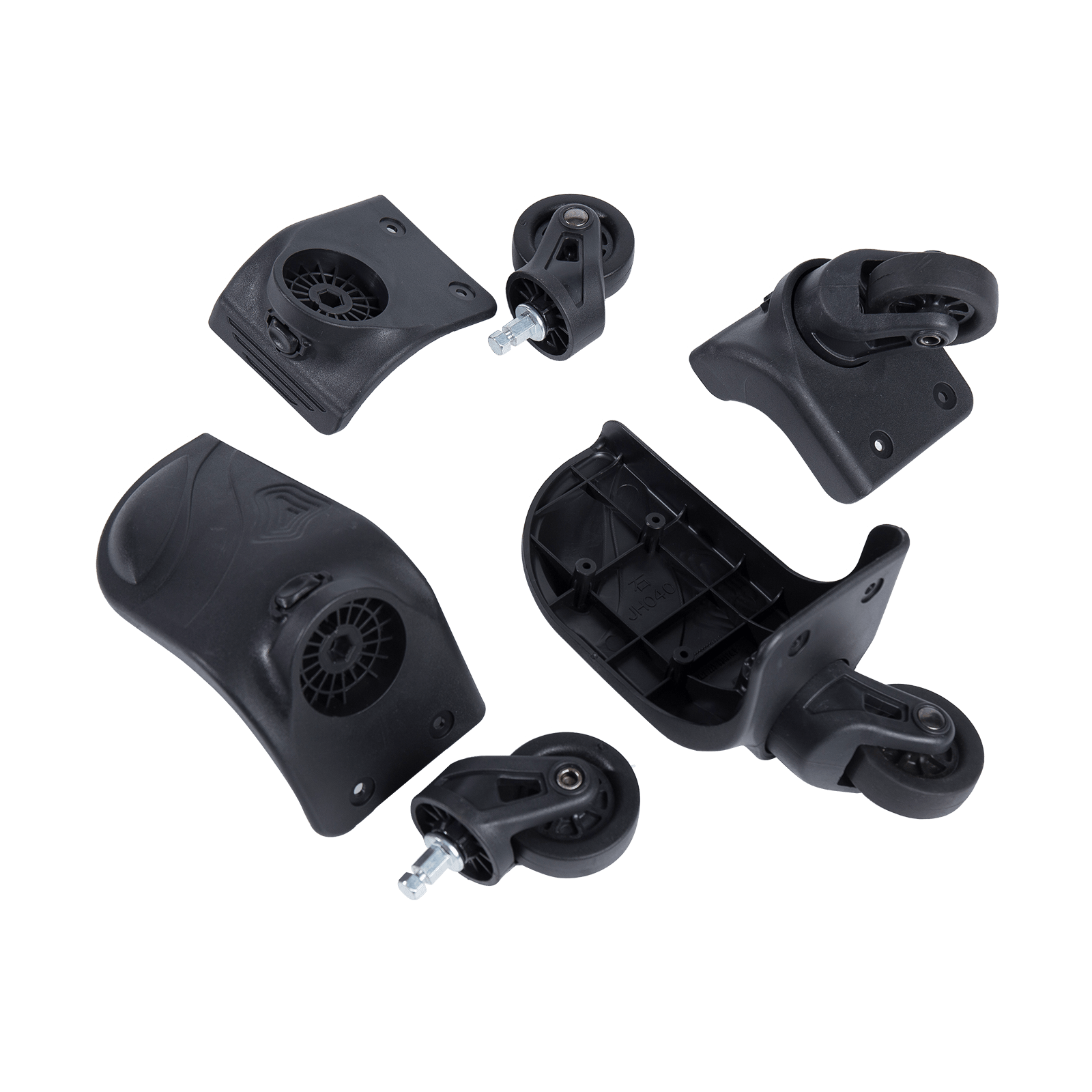
On most hard-shell cases the trolley is held by a handful of screws at the top bracket and a base plate near the wheels. Undo those, slide the assembly out, and fit a matching replacement. Check tube diameter, overall length and the position of the fixing holes before ordering.
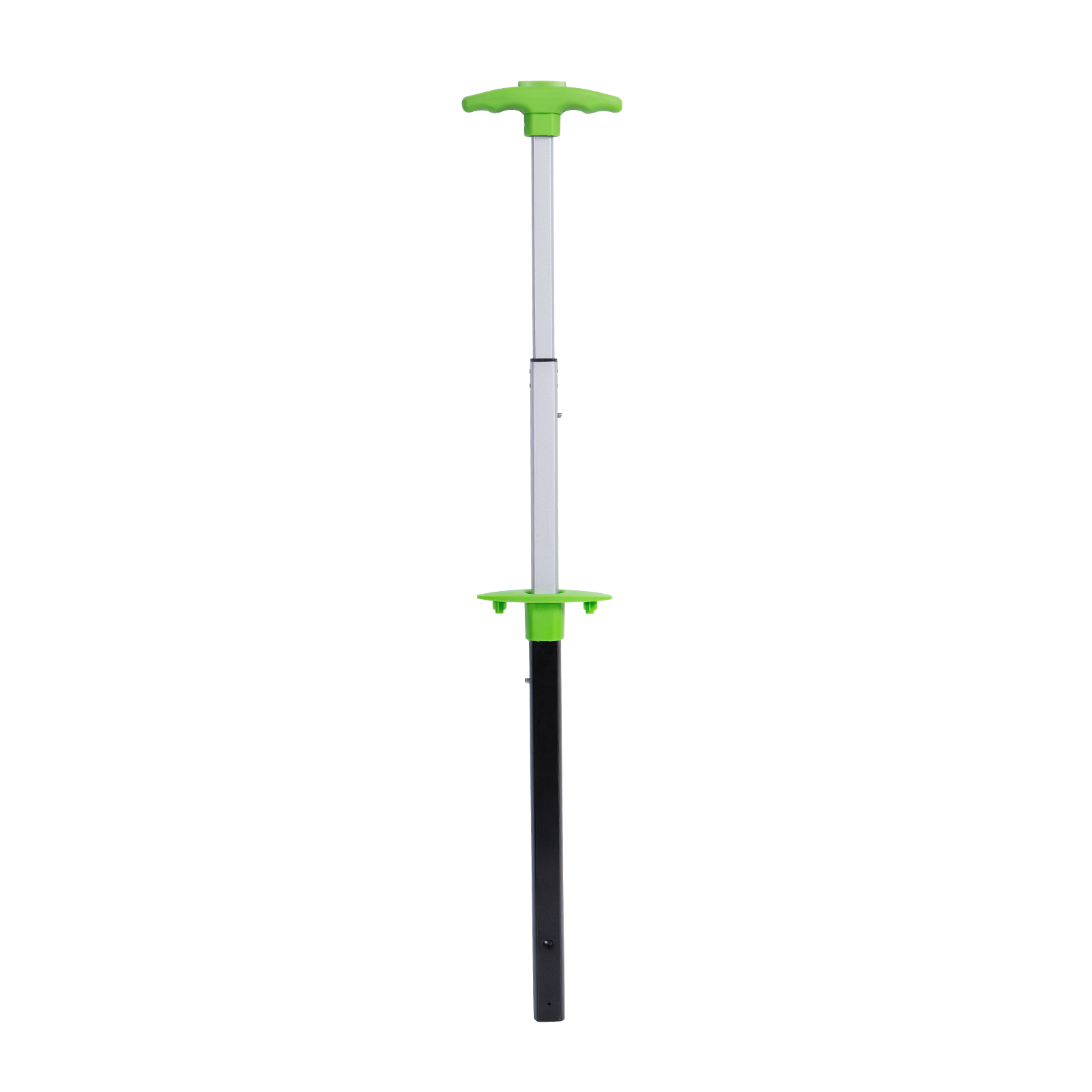 Custom Luggage Trolley Replacement Parts in Iron or AluminumReplacement trolley accessories with iron or aluminum material options, customized size, Pantone color matching and logo options for luggage repair or production.View Product →
When Replacement Is the Smarter Repair
Repair is worth it when the damage is limited to fasteners, washers or a split grip on an otherwise healthy case. Replacement makes more sense when the base plate has cracked through, several fixing points have failed at once, or the handle has already been repaired twice. A handle that fails under load can send a full case onto your foot or someone else's, so structural damage deserves a proper fix rather than another round of tape.
Matching the part matters more than the price. Note the hole spacing, the width of the base plate, and whether your case uses a plastic or metal base. If you are unsure whether a repair is realistic, this short guide on how easy it is to replace or repair a travel bag handle covers the decision in more detail.
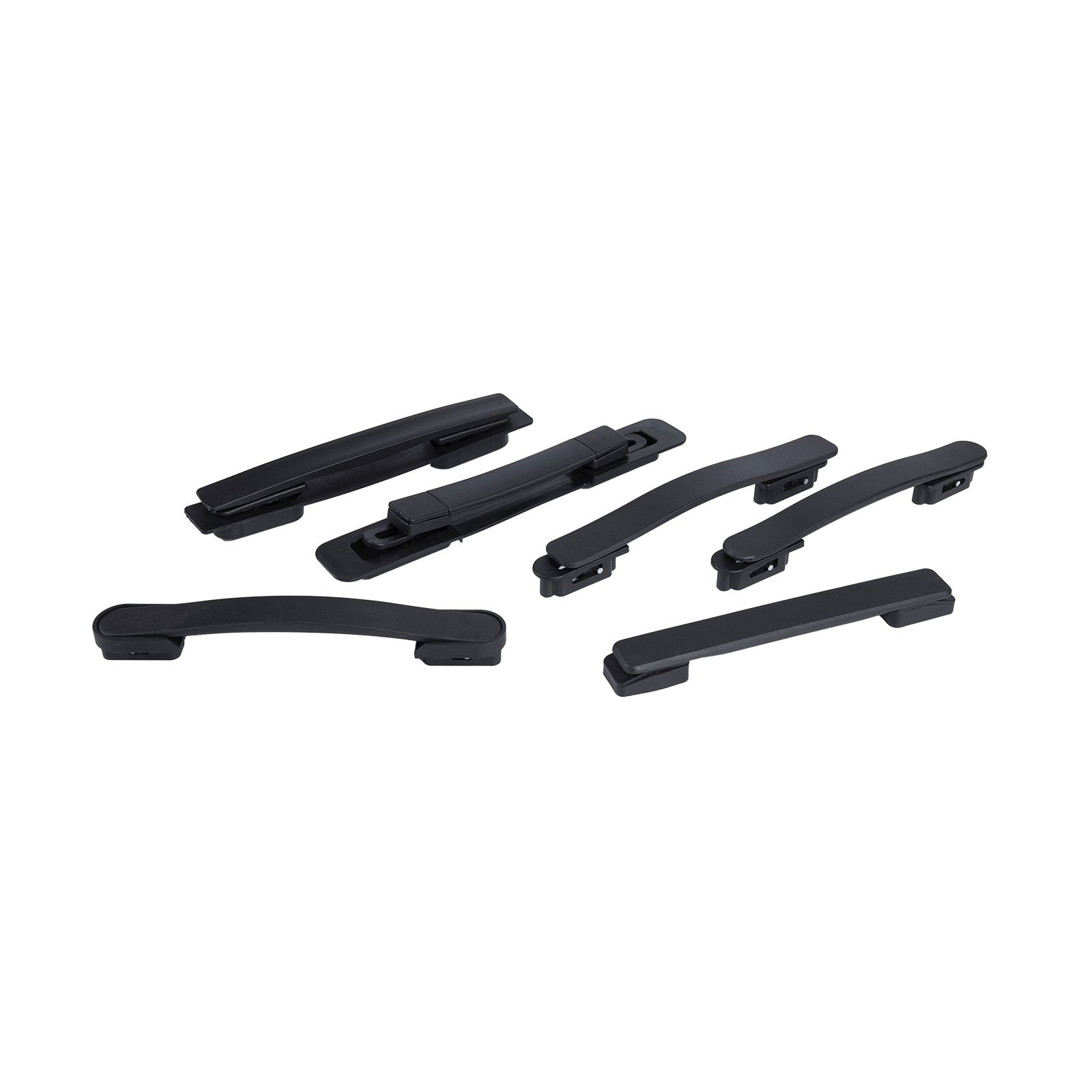 Plastic Luggage Handle with Plastic or Zinc Seat OptionsLightweight plastic luggage handle for suitcases, backpacks and handbags, with customizable color, logo options and plastic or zinc seat choices.View Product →
Keep the old handle until the new one is fitted. It is a useful template for drilling and a quick reference for hole positions.
Temporary Fixes That Get You Home
Sometimes you are in an airport at midnight and the repair has to wait. These stopgaps are safe enough for light loads:
- Wrap the grip tightly with duct tape or a length of webbing to stop it splitting further.
- Thread a luggage strap around the case body and carry it over your shoulder instead of lifting by the handle.
- Use the side handle for lifting and wheel the case rather than carrying it.
- Ask the airline or hotel to tape the handle before check-in, which many will do without charge.
Treat every one of these as a temporary measure. None of them restores the load rating of the original handle.
How to Stop It Happening Again
Handle failures are rarely random. In our experience they follow a few predictable patterns: lifting a case that is over its weight limit, hauling it up stairs by the grip, and buying handles whose base plate is too small for the load. Before each trip, spend thirty seconds checking that the screws are snug and that the base plate shows no hairline cracks. When you lift, use the side handle with two hands if the case is heavy, and let the wheels do the work on flat ground.
When you do buy a replacement, look at the base plate before anything else. A zinc or reinforced plastic base spreads stress across the shell far better than a thin flat one, which is why the handles we produce for luggage factories are tested with loaded cases rather than bare components.
Quick Answers to Common Questions
Can I replace just the grip instead of the whole handle?
Sometimes, if the grip is a separate slide-on piece and the base is intact. On moulded one-piece handles the grip and base come as a unit, so the whole handle is replaced.
What if the screw holes in the shell are stripped?
Move up one screw size, add a wide washer, or fit a small backing plate inside the lining. Filling the hole with a two-part epoxy and re-drilling after it cures also works well on hard shells.
Is a repaired handle as strong as a new one?
A repair with fresh bolts, washers and a sound base plate is often stronger than the original fixings. A repair that reuses cracked plastic is not, and it will fail again at the worst moment.
A broken suitcase handle is annoying, but it is rarely the end of the case. Identify the part, check the fasteners, and decide honestly whether this is a screwdriver job or a replacement job. Do that, and your luggage will keep earning its keep for plenty more trips.